Should the Wizards Give Wittman A Sympathy Firing?

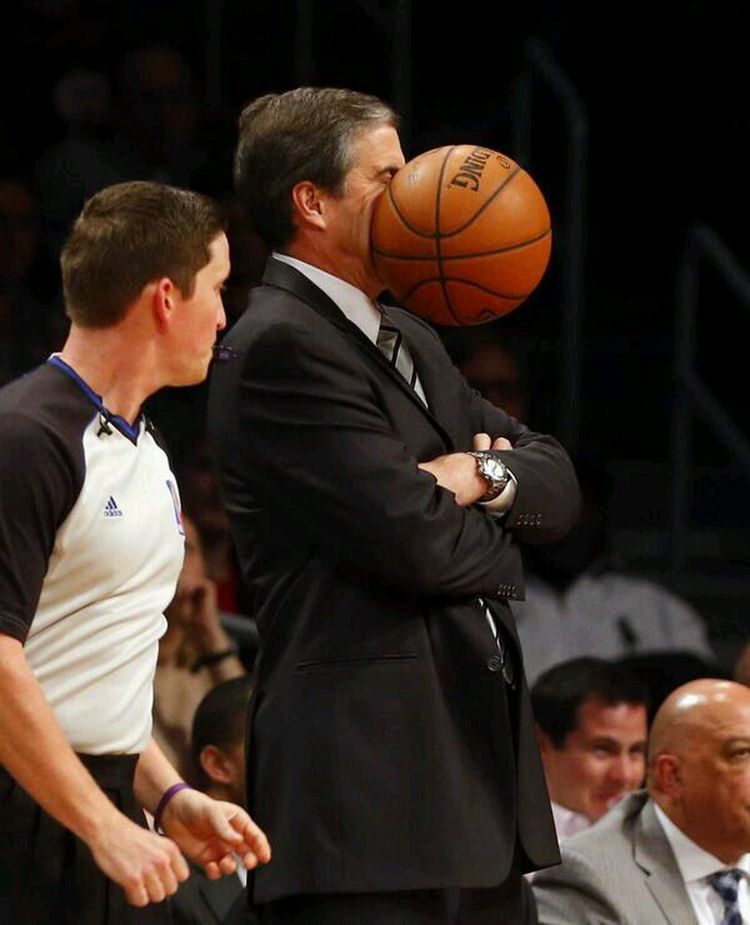
NBA-Coach-Randy-Wittman-Face-Smashed-By-Basketball

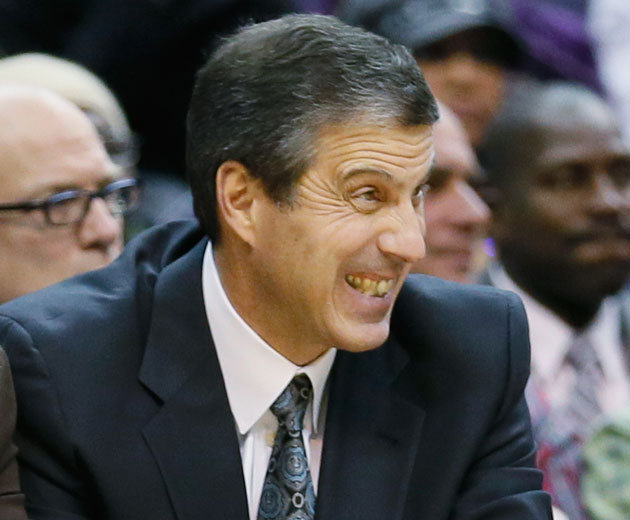
Here’s how weird things have gotten for me as I follow the Washington Wizards: I feel sympathy for a coach I never would have hired in the first place. Team president Ernie Grunfeld and owner Ted Leonsis awarded the full-time coaching job to Randy Wittman, who’d done a solid job as interim coach when they fired Flip Saunders. According to reports at the time, they neither considered nor interviewed other candidates for the position. Had it been my call…well, Wittman wouldn’t have been the choice.

Despite the howls of fans angered by a three-game losing streak, Wittman isn’t a bad coach. He isn’t a good one either — at least not by NBA standards. He’s standard issue NBA coaching material. Good at some things, not so good at others. On balance, probably on the “below” side of average, but close enough to the league standard that he’s not a drag on his team’s performance. When he gets fired by the Wizards, he could take a year off, go down to college and be great at that level. Sure, a guy like Phil Jackson, Pat Riley or Greg Popovich would win a few more games with the same roster, but a) those guys aren’t coming to Washington, and b) the Wizards wouldn’t be title contenders even with an elite coach.

I’m not saying it would be pointless to fire Wittman and replace him with Someone Else — maybe Mr. Else could get an extra win or two from this team over the remainder of the season. But no coach is going to transmogrify this group into a title contender for one simple reason: the roster is inadequate. They’re good enough to avoid missing the playoffs in the misbegotten East. They might even be good enough to win a playoff series if they’re reasonably healthy and they can avoid a first round matchup with Indiana or Miami. But there isn’t a coach on the planet who could get them further — not with this roster.

As you’ll see in the table below, Wittman has been given a team that’s effectively six deep. Bradley Beal could be a seventh, if he starts performing the way he did in the second half of last season. Wittman’s options are further diminished by minutes restrictions for Beal and (more importantly) Nene.

There are plenty of things I’d love to see the team do differently — starting with taking fewer two-point jump shots. (Umm, fellas — those shots are open for a reason.) Maybe better coaching could change some of those things. But, NBA reality is that everyone knows what everyone else is doing strategically. Coaches come up with stuff to surprise each other now and then, but most games are decided by overall talent and execution.

A coach’s most important job is getting lineups on the floor that maximize his team’s chances of winning. Those lineup decisions have largely been taken from Wittman by the team’s wafer-thin roster. Unless Nene’s Achilles gets better or someone on the Wizards bench radically improves, the coaching staff is stuck with few options to patch over the lack of depth. That this situation was entirely predictable (in fact, was predicted before the season) makes it no less frustrating.

Below is this week’s Player Production Average (PPA) update. PPA is a player rating stat I developed that credits players for things that contribute to winning and debits them for things that don’t — each in proper proportion. PPA is pace adjusted, accounts for defense and includes a degree of difficulty factor. In PPA, 100 = average, higher is better and 45 = replacement level.

PLAYER GMS MPG LW PPA
John Wall 31 37.2 149 147
Trevor Ariza 26 34.2 154 146
Trevor Booker 23 22.0 118 139
Marcin Gortat 31 32.5 130 130
Nene Hilario 24 29.4 132 120
Martell Webster 30 31.2 151 120
Bradley Beal 22 34.9 84 76
Chris Singleton 11 12.9 48 66
Jan Vesely 22 15.8 53 55
Otto Porter 12 12.2 -47 23
Glen Rice 11 9.9 21 21
Eric Maynor 22 9.5 18 13
Al Harrington 7 18.6 6 6
Kevin Seraphin 23 10.0 -15 2
Garrett Temple 29 10.8 -21 -2

Normally, I update weekly, but this one went a couple weeks — eight games total. The Wizards went 4-4 during that stretch, including their current three-game winning streak. The performance levels of John Wall, Trevor Ariza and Marcin Gortat appear to have largely stabilized.

Wall’s “grade” is interesting because it’s at once encouraging and disappointing. On the encouraging side, this is the longest sustained period of well-above average play of his career. So far, he’s the most productive guard in the East. But…his per minute production is still not close to “franchise cornerstone” level. And while he’s the East’s best PG, he still ranks behind nine Western Conference PGs in per minute production.

I have a similar reaction to Gortat’s score. He’s a solid producer, but…he ranks only about 20th among centers. The Wizards need more from him, especially on the boards and on defense.

Ariza is — by some strange coincidence — playing the best basketball of his career in a contract year.

Other positives: Trevor Booker becoming a solid producer upon entering the starting lineup (though his team defense continues to be a problem), Otto Porter improved from a HUGE negative to a net positive, and Kevin Seraphin finally got out of the negative PPA range.

A word on Seraphin — the big man currently rates as the NBA’s least productive center. He managed the same “feat” last season. There seems to be some kind of a message there, but I could be over-thinking things.

Oh yeah, Chris Singleton also showed signs of life with not atrocious play in a couple garbage time appearances.

On the negative side: Nene’s production is (unsurprisingly) down as he tries to play through that Achilles injury. Martell Webster’s play declined significantly this update, as well. And, of course, the Wizards continue to get absolutely nothing from their backup PGs.

With teams now able to sign free agents to 10-day contracts, I’m hoping the Wizards front office will start bringing in D-League PGs for tryouts until they find one they like. I’d also like to see them try some PF/C types in hopes of getting even replacement level play off the bench. They can make room by releasing one or more from the group of Temple, Seraphin, Harrington and Maynor. Yes, I know there’s no way they’d just cut Maynor because of the player option he holds for next season. It could be a correct move, however.

Even 7 Isn’t All That Lucky for Wizards

Short of trading additional future assets, getting lucky with a D-League pickup, or getting radical in-season improvement from one or more players currently on the roster, there just isn’t getting around the reality that this year’s Washington Wizards is solidly mediocre — at best.

I went into this week’s update on the team trying to conjure up a “modest proposal” type of post. Best I could come up with was the notion of shortening the game to 32 minutes so that teams would need to play only their top seven. And, Washington’s top seven is pretty good.

In this imaginary “top 7” league, so far this season, Washington would move up the standings a bit. According to my estimates, their top 7 would rank 4th in the East behind Miami, Atlanta and Indiana.

Overall, their top 7 rates 12th best, which sorta gives some perspective to how weak the East is so far this season. Washington’s seven best players rate as 4th best in the East, but would be only 9th best in the West.

Just to extend the silliness to its “logical” end — in this hypothetical, Washington would win a first round series against Brooklyn only to get bludgeoned in round two by Miami. The West would be a dogfight, but (if my PPA ratings held sway — and in this alternate reality, they do) San Antonio would emerge victorious. That would set up a repeat of last season’s Heat-Spurs final. Which the Heat would win.

Of course, the league isn’t going to shorten the game time anymore than it can guarantee Washington’s top seven can actually stay healthy. The bright side: a fully healthy Wizards team might be good enough to win a first round series if they can make the postseason. The downside: “fully healthy” seems like a fantasy.

To this week’s Player Production Average (PPA) update. PPA is a player rating stat I developed that credits players for things that contribute to winning and debits them for things that don’t — each in proper proportion. PPA is pace adjusted, accounts for defense and includes a degree of difficulty factor. In PPA, 100 = average, higher is better and 45 = replacement level.

PLAYER GMS MPG LW PPA
Trevor Ariza 18 36.1 172 154
Martell Webster 22 33.0 148 151
John Wall 23 37.7 168 149
Nene Hilario 16 32.6 134 132
Marcin Gortat 23 34.6 150 130
Trevor Booker 15 20.1 114 118
Bradley Beal 14 39.5 81 84
Jan Vesely 17 17.6 54 53
Chris Singleton 7 15.6 29 48
Glen Rice 11 9.9 4 21
Eric Maynor 20 10.0 16 18
Al Harrington 7 18.6 7 6
Kevin Seraphin 18 8.3 -32 -15
Garrett Temple 21 10.3 -23 -21
Otto Porter 4 12.0 -70 -47

No real surprises for a team that lost two of three since the last update (and barely won the third). Ariza, Wall and Gortat led the “decliners.” The “improvers” were of the awful to slightly less awful variety — Singleton getting to replacement level, Rice getting out of single digits, Seraphin becoming a bit less negative.

Sorta looping back to the “modest proposal” portion of this post, here’s another look at the Wizards this season — one that shows the hard demarcation between their top 7 and their bottom 8.

Wiztop7bottom8

Wizards Lack of Depth Continues to Hurt

Get used to repeats of that old Wizards pattern — keeping the score tight (even holding a lead in the fourth quarter) only to lose in the end. The problem isn’t that Washington lacks a mystical “ability to close,” it’s that their bench can’t hold the leads its starters provide, and its starters wear down at the end of competitive games.

This is not the fault of Randy Wittman and the coaching staff. Most of the failing bench players are producing at levels consistent with career norms. Eric Maynor, a fan whipping boy so far this season, is playing worse than usual, but not abnormally so. He’s been unproductive throughout his career — that’s he’s even less productive should surprise no one. The same is true of Kevin Seraphin, Jan Vesely, Chris Singleton and Garrett Temple. They’ve established themselves as unproductive. There’s little reason beyond hope to imagine them becoming productive.

With the “make the playoffs or else” mandate, Wittman has little option but to play his key players heavy minutes and pray they don’t get hurt. And that’s exactly what’s happening. John Wall and Bradley Beal lead the league in minutes per game at PG and SG. Among SFs, Trevor Ariza ranks eighth and Martell Webster sits 15th. Marcin Gortat is second in minutes per game among centers. The fragile Nene plays the 12th most minutes per game for a PF.

If this was the playoffs, there’d be little reason for concern. But there are 62 games remaining in the regular season, and they’ve already sustained injuries to Ariza, Webster, Nene and Beal. Another injury could put the playoffs out of reach. That would be a shame (as would limping into the playoffs) because at full strength, it’s core rotation players could at least put a scare in a post-season opponent. They’ll need to get (and stay) healthy to do that, however.

For a further demonstration of Wittman’s lack of options, peruse the table below, which shows the (approximately) weekly update of Player Production Average (PPA). PPA is a player rating stat I developed. It credits players for things that contribute to winning and debits them for things that don’t — each in proper proportion. PPA is pace adjusted, accounts for defense and includes a degree of difficulty factor. In PPA, 100 = average, higher is better and 45 = replacement level.

PLAYER GMS MPG LW PPA
Trevor Ariza 15 36.1 146 172
John Wall 20 37.8 169 168
Marcin Gortat 20 34.6 152 150
Martell Webster 19 32.5 156 148
Nene Hilario 16 32.6 133 134
Trevor Booker 12 16.5 96 114
Bradley Beal 13 40.2 81 81
Jan Vesely 14 18.1 75 54
Chris Singleton 6 17.5 51 29
Eric Maynor 19 10.3 35 16
Al Harrington 7 18.6 6 7
Glen Rice 9 8.0 -10 4
Garrett Temple 18 10.1 -14 -23
Kevin Seraphin 15 7.9 -27 -32
Otto Porter 2 10.5 -70

Ariza is playing a lot like he’s in a contract year, which is to say — superbly. His production is All-Star level, though it would astonish me if he actually received the honor. But, with Lebron more a PF these days, it’s arguable that Ariza has been the East’s second best SF so far this season (behind Paul George).

Recovered from injuries last season, Gortat is producing at a good level again. Like Ariza, his timing is superb — he’s in a contract year as well.

Wall seems to have settled in at All-Star level production. PPA currently has him rated as the top PG in the East, and fifth most productive overall behind Chris Paul, Stephen Curry, Ty Lawson and Mike Conley.

This week’s update shows Vesely’s production dropping off. Hopefully he can turn things around. Whether or not he does, the coaching staff would be wise to give more minutes to Booker, who continues to be an “about average” producer. That’s nothing to get excited about, but it makes him a solid reserve.

Finally, note that the Wizards have seven players who rate below replacement level so far this season. Collectively, they’ve played 823 minutes — nearly 17% of the team’s total. This is a direct result of the front office’s persistent failure to properly assess players, and their inability to address the team’s glaring need for depth. This misjudgment is costing the team wins now, and could cost them even more as the season wears on.

Wizards Must Try Not To Let Success Go To Their Heads

Seen on Twitter the past few days is the heady news that the Washington Wizards went .500 in November — tied for the franchise’s third best winning percentage for month in the past 30 years. Forgive me if I don’t join the parade. For a team like the San Antonio Spurs — a good team that competes for championships — the same record would be their ninth worst in the same time span.

A .500 record for a month is not cause for celebration. The Wizards have a good starting group, but an awful bench. The net result: precisely average. The team is improved, but that’s not the same thing as being good. In a weak East where several teams are tanking, even a meh team can make the playoffs.

All that said, let me reiterate — the Wizards are improved. John Wall is the best PG in the East, and currently ranks 7th overall at his position. The team is getting well-above average play from Martell Webster, Trevor Ariza, Marcin Gortat and Nene. The team’s depth makes any success feel tenuous, but they have a core of good players for this season.

One common thread of Wizards discussion I’d like to address before posting the weekly PPA update is this notion that PG Eric Maynor was at some point “good” and that he’s abruptly and inexplicably gotten worse in Washington.

The facts are that Maynor has been a sub-par player throughout his career. That people believed otherwise is testament to attributing to Maynor that which should have been attributed to his teammates. In other words, folks believed Maynor was causing (or contributing) teammates to be better when, in fact, those other players were producing on their own.

The reason I’m addressing this topic is that asserting that Maynor was at some point “good” or “serviceable” is to let the Wizards’ front office off the hook. In reality, signing Maynor was a terrible waste of resources, and evidence that Ernie Grunfeld and his team still haven’t figured out how to evaluate players. They thought they were getting a steal. Instead, they were getting a lemon. And what’s head-bangingly frustrating is that fairly rudimentary look at the numbers would have told them so.

With that out of the way, here’s the weekly Player Production Average update. PPA is a player rating stat I developed. It credits players for things that contribute to winning and debits them for things that don’t — each in proper proportion. PPA is pace adjusted, accounts for defense and includes a degree of difficulty factor. In PPA, 100 = average, higher is better and 45 = replacement level.

PLAYER GAMES MPG LW PPA
John Wall 17 37.6 158 169
Martell Webster 17 33.6 144 156
Marcin Gortat 17 34.4 139 152
Trevor Ariza 12 35.6 123 146
Nene 14 33.3 127 133
Trevor Booker 9 14.0 102 96
Bradley Beal 13 40.2 82 81
Jan Vesely 11 17.9 81 75
Chris Singleton 3 8.7 51
Eric Maynor 16 10.5 50 35
Al Harrington 7 18.6 7 6
Glen Rice Jr. 6 6.3 -5 -10
Garrett Temple 15 11.5 -18 -14
Kevin Seraphin 13 8.5 -39 -27

What jumps out? On the plus side, the team has a good group of starters. Wall appears to be doing what I predicted at the start of the season — making The Leap to becoming a top-shelf PG. Webster, Gortat, Ariza and Nene round out a quality lineup.

On the down side, there’s the rest of the team. Booker has dipped below average for the first time this season on scant playing time. So far this season, the team falls apart on defense when Booker is on the floor.

Vesely appears to be the beneficiary of lowered expectations from fans. He was so inept last season that anything positive gets exaggerated. He is better than last season in that his play hasn’t been a total train wreck. But, he remains well below average.

Some fans (and perhaps the Wizards as well) hoped that Singleton would provide some kind of significant contribution when he returned from a foot injury. Thus far…not so much. Very small sample size, however.

Maynor’s production has slipped below replacement level. Seriously, the Wizards would do better (or at least do no worse) giving his minutes to someone from the D-League. What’s scary: as bad as he’s been, Harrington, Rice, Temple and Seraphin have been worse.

The Wizards will need to either a) get some level of production from The Bench That Grunfeld Built, or b) bolster the bench with a trade or from the D-League. Without radical improvement from its reserves, this team seems perfectly constructed for a first-round playoff ouster — regardless of the opponent.

Wizards Reward For Best Week: Brutal Schedule

The Wizards just had their best week of the season, going 3-1 and seeing PG John Wall receive the NBA’s Player of the Week award. Their reward? Four games in five nights with travel between each of the games. Yikes!

The uptick in Wall’s production was as welcome as it was abrupt. His shooting had been atrocious, but became deadly, and he continued doing a first-rate job of finding teammates for open shots at the basket. His play was similar in quality to his transcendent March — when he performed like one of the game’s top five players.

In other good news for the team, Wall wasn’t the only player who improved. Martell Webster enjoyed his return to the starting lineup, and Marcin Gortat and Nene also seemed to settle into their roles. Bradley Beal boosted his production a bit as well, though the youngster still has a ways to go.

The upcoming week will be a challenge for the depth-starved Wizards. They have the makings for a solid top seven, but everything after that remains a major question mark.

Here’s the weekly Player Production Average (PPA) update. PPA is a player rating stat I put together that credits players for things they do that contribute to winning and debits them for things that hurt the cause (each in regression-analyzed proper proportion). PPA includes defense, is pace-adjusted, and incorporates a “degree of difficulty” factor based on the strength of the opposing lineup. In PPA, 100 = average, higher is better, and replacement level is 45.

PLAYER GAMES MPG LW PPA
John Wall 13 37.8 111 158
Martell Webster 13 31.4 110 144
Marcin Gortat 13 33.5 116 139
Nene Hilario 11 32.5 118 127
Trevor Ariza 8 35.1 123 123
Trevor Booker 8 12.6 110 102
Bradley Beal 13 40.2 71 82
Jan Vesely 7 17.3 95 81
Eric Maynor 12 10.4 66 50
Al Harrington 7 18.6 6 7
Glen Rice 5 6.8 -5 -5
Garrett Temple 11 9.2 -36 -18
Kevin Seraphin 10 8.7 -33 -39

As Captain Obvious said, “The bench remains a major weakness.” Jan Vesely’s effectiveness declined as his playing time increased. Trevor Booker’s individual numbers are good, but the defense is a catastrophic failure thus far when he’s on the floor. Al Harrington was awful before he sat with knee trouble. Kevin Seraphin has been even worse than last season — and last season he was the league’s least productive center.

Guard depth is scary as well. Eric Maynor is drawing ire for his crummy play, but what he’s doing is exactly what fans should have expected from him. His PPA this season: 50. His career PPA before this season: 49. His peak PPA for a season was 57. This is his normal level of play. What’s scary: Temple has been worse.

For now, I don’t envy the options head coach Randy Wittman has. The team desperately needs at least two someones from the bench to step up production — one big and one guard. Unfortunately, the roster assembled by Ernie Grunfeld isn’t jammed with “good bets” on a guy or two who might suddenly start playing better.

I’ve been suggesting since offseason that the team’s best option for depth may be to use SF Trevor Ariza at PF (as a stretch four), especially if injured rookie Otto Porter can give them productive minutes at SF. Ariza is likely to be more productive as an S4 than Harrington has been, and he may provide the opposition with challenging match-ups at that spot.

No matter how I look at the various lineup permutations, the team’s rotation is skimpy — at best. With reasonable health for its rotation, the Wizards should be a playoff team. Lose anyone from the top seven or eight, and the playoffs are dicier, even in the East. And, I don’t think can sustain an extended absence from Wall, Nene or Gortat, however.

Wizards Off To Even Worse Start Than Last Season

wittman face

If you thought last season’s horrific start by the Washington Wizards couldn’t be duplicated, think again. Through their first three games of the years, the Wizards have been even worse than they were last year.

Season Ortg Drtg Diff PytW82
2013-14 102.7 112.4 -9.7 18.1
2012-13 92.3 99.0 -6.7 22.5
Change -10.4 13.4 -3.0 -4.4

Ortg = points scored per 100 possessions

Drtg = points allowed per 100 possessions

Diff = ortg – drtg (scoring/efficiency differential is a better measure of team strength than a team’s record)

PytW82 = “Diff” translated into projected wins if that differential was maintained over an 82-game schedule

As you can see from the table above, the Wizards have been 10.4 points per 100 possessions better offensively this season than last, BUT they’ve been 13.0 points per 100 possessions worse on defense. The net result: through three games, they’re -3.0 in efficiency differential — a change of 4.4 wins over the course of a full season.

Last season, the team was missing PG John Wall. This year, they’re missing both Nene and Emeka Okafor — two of the team’s more important defenders last season. Marcin Gortat, an adequate defender at best, has been slow to grasp the team’s defensive scheme.

Unfortunately, there probably aren’t any quick fixes to the defense. The team emphasized that end of the court during training camp, but it’s challenging to overcome the loss of quality defensive big men — they’re the linchpin of every good defense in the NBA.

Which, of course, leads to the obvious question: Why did the Wizards go through an offseason without addressing the critical need for depth behind its 30+ year old front line?

Which, of course, leads to another obvious question: Why does Ted Leonsis continue to let Ernie Grunfeld run his basketball team?

Wizards Plan Doesn’t Add Up

Wizards owner Ted Leonsis assures us fans that they have a plan and that they’re sticking to it. However, I think The Plan is a lot messier than it seems to be on the surface — and I don’t think it includes a clear and realistic path to building a championship contender.

What is The Plan exactly? It includes young players like John Wall, Bradley Beal and Otto Porter. It includes trading for veterans like Nene, Emeka Okafor, Trevor Ariza and (most recently) Morcin Gortat. It includes shopping for what Leonsis called a “brand name” free agent. That aspect of The Plan was articulated well by Daniel Friedberg at RealGM. Wrote Friedberg:

The recent transactions by the Wizards (the Marcin Gortat trade, declining the fourth year options of Jan Vesely and Chris Singleton) will give them $15 million in cap space in the summer of 2014, making them major players in free agency. That exact amount also depends on what they choose to do with Gortat. While all the sorcery in the world won’t bring LeBron, Carmelo or Bosh to the nation’s capital, a playoff run this year will make this squad more of a draw for lower tier free agents. After a half decade of basement-dwelling drudgery, the Wiz faithful finally have reason for optimism.

But how much optimism is warranted? The Wizards could indeed have $15 million (or even a little more) in cap room next offseason. All they have to do is renounce Gortat, Ariza, Trevor Booker, Jan Vesely, Kevin Seraphin and Chris Singleton. The last three don’t matter much. They’re bad NBA players and will be gone after the season.

If the Wizards are to make a playoff run this season, Gortat and Ariza will be major contributors, and Booker is likely to be at least a significant part of the rotation. A Wizards “get into the playoffs” rotation is probably going to include Wall and Eric Maynor as the PGs, Beal and Martell Webster or Garrett Temple as the SGs, Ariza and Webster as the SFs (with a possible contribution from Porter), Nene, Booker and Harrington at PF, and Gortat and Nene at center.

That rotation will have to look something like this:

  • PG: Wall and Maynor
  • SG: Beal and Webster/Temple
  • SF: Ariza and Webster
  • PF: Nene and Booker/Harrington
  • C: Gortat and Nene

It’s at this point that the “logic” of the whole getting into the playoffs will make the Wizards more attractive to free agents part of The Plan breaks down. If the Wizards sign a significant free agent next offseason, that free agent cannot be addition. Since the team can’t have cap space unless it’s willing to give up Gortat, Ariza, Booker, etc., any free agent signing will be replacement of those players. In effect, they’ll be trading the departed players for the new guy.

So, put yourself in the mind of a “brand name” free agent. If you’re interested in playing for a winner, why would you pick the Wizards? The group that “won” (meaning they got into the playoffs) can’t be kept together if the team decides to sign you. Key contributors would have to be let go — guys without whom Washington would have missed the postseason.

In other words, a potential free agent can’t go to the Wizards to “join” a winning team — he has to take the place of important contributors and hope that what he has to offer plus the continued development of the team’s remaining players is enough to do more than keep the team treading water. I don’t see how that package would be attractive to a prominent free agent who wants to compete for a championship.

The Wizards’ cap situation provides some flexibility, which is a positive. If the salary cap rises to $62 million (which is what’s expected), Washington could clear as much as $16 million in cap space. That sounds like a lot, but when the cap increases, maximum salaries increase as well. That $16 million would be sufficient to pay a maximum salary to a player with 0-6 years of experience, but would fall short for players with 7-9 years or 10+ years.

If the Wizards decide to let everyone leave so they can sign Chris Bosh, they’ll either need to convince Bosh to take a starting salary $4.2 million less than the maximum he could receive — and $4.5 million less than he’s due to receive under his current contract — OR work a sign and trade with Miami OR trade away other players (like Beal or Porter) to clear additional cap space.

Let’s say they go after Detroit’s Greg Monroe instead. Monroe would have to take slightly less money (about $2.6 million over the four years of a maximum contract), AND Detroit would have to decide not to match. But let’s say all that happens. At that point, the Wizards would have eight players under contract and about $2 million in cap space to fill the rest of their roster — and they’d be working without a first round pick, which they traded to get Gortat. Who, in this scenario, would be playing elsewhere next season.

Which means, the team would continue to lack depth, especially up front where they’d be reliant on Monroe, an aging Nene and whatever they could get from the second round or the free agent “remnants” bin.

The question really comes down to this: What goals does the front office really have? If the Wizards are serious about contending for a championship with this group, the path to contender status is heavily reliant on player development and hoping to get lucky in free agency or the draft. If their goal is to make the playoffs and then see if they can go on a lucky run, they’re probably setting themselves up to make moves that will keep them treading water.

All that said, the team could still become a title contender if some combination of Wall, Beal or Porter develop into true franchise players. The front office has already committed to Wall as its franchise bedrock with the absolute maximum contract they could give him. Wall hasn’t shown to be worth that kind of money yet, though his breakthrough may be coming.

Beal’s rookie season was a lot like Ray Allen’s, a guy who will be in the Hall of Fame, but wasn’t a true franchise player. Porter, of course, is a question mark — his hip injury has kept him on the sidelines. As a college prospect, he graded as a good-but-not-great prospect.

I’m definitely not saying the team is going to stink. They have sufficient resources to be a perennial playoff team for the next few seasons. That path to being a title contender is less clear, however. The two major trades the past couple years (acquiring Okafor and Ariza; then trading Okafor and a first for Gortat) don’t really look like the moves a team aspiring to win a championship in the near future would make. They seem more like the moves of a team content to make the playoffs in the short term, but without a genuine plan to transition from playoff contender to championship contender.

My expectation for the 2014 offseason is that the team will essentially punt on free agency. My guess: they’ll re-sign Gortat and Ariza to four-year contracts in the name of continuity, and use the MLE to add frontcourt depth rather than taking a plunge in the free agent waters. Then they’ll hope that development from Wall, Beal and Porter will be enough to make them title contenders before age and injury wear down their 30-plus year olds up front.

It’s not the way I would have done it, but there’s at least a chance it could work.

Projection: Wizards Will Win 43 and Make Playoffs This Season

Will John Wall make The Leap to All-Star status this season?

NBA preseason doesn’t mean an awful lot. It’s perhaps a bit more important for a team like the Wizards — a bad team trying to get into the playoffs for the first time in awhile. But even then the information it provides isn’t all that…informative.

The regular season Wizards will get a significant boost from the preseason Wizards because of their move last Friday to acquire center Marcin Gortat. The veteran takes the spot vacated by the injured Emeka Okafor, who was sent to Phoenix (along with a first round pick).

I’ll get to my projection/prediction for the season in a moment, but first, a look at the preseason numbers. I’m not wasting time with the team-level stuff. The Wizards were terrible on offense and excellent on defense during the exhibition games. That’s theoretically a way to win games — a 68-65 win counts as much in the standings as one that’s 114-111. Still, being good on both ends would be preferable. If there’s any takeaway from the team-level preseason numbers it’s that the team was similar to the one they had last year (not surprising considering their few personnel changes), which was characterized by terrible offense and excellent defense.

Looking at the individuals, I’d conclude that most of the roster underwhelmed. Bradley Beal and Trevor Booker played well; Nene was okay, but not performing at the level he’s maintained throughout his career; and the rest…pretty bad. John Wall, the guy they’re building around, was awful. He shot badly from everywhere (.415 from two-point range; .118 from three-point range; just .727 from the free throw line), and committing 4.4 turnovers per 36 minutes.

Below is a table showing an “estimated” Player Production Average (PPA) for each player. I say “estimated” because PPA is based on league average season by season. That average is fairly consistent year to year, but there are fluctuations. Since it’s preseason, there isn’t enough data to calculate a true league “average” so I use an approximation of league average. Also, full PPA adjusts for pace, accounts for individual defense and includes a “degree of difficulty” factor — none of which I’m including in looking at the preseason numbers. In PPA, average is 100, higher is better, and replacement level is 45.

Player G MPG ePPA PPA
Bradley Beal 7 30.3 146 92
Trevor Booker 6 20.5 144 96
Nene 5 22.2 118 119
Glen Rice 6 14.0 70
Jan Vesely 7 20.3 67 19
Trevor Ariza 7 23.4 52 108
Martell Webster 6 23.5 49 114
Al Harrington 5 16.6 43  81
Eric Maynor 6 21.0 38 32
Kevin Seraphin 7 25.9 27 22
Garrett Temple 5 15.6 25 60
John Wall 7 28.1 12 139

That last column is the player’s PPA in 2012-13. Except for Al Harrington, who missed most of last season with a staph infection.

Again, don’t read too much into the preseason numbers. The play of Beal and Booker are hopeful signs. Also good to see Jan Vesely doing something positive on the floor — he actually led the team in rebounding in preseason.

I’m not overly worried about Wall’s poor play, although it would have been nice to see him pick up where he left off at the end of last season.

If you’re thinking you’ll see better play from Eric Maynor once the season begins, stop it. At best the Wizards are likely get replacement level production from him.

Other potential cautions: Martell Webster and Kevin Seraphin were bad. Webster’s play is potentially worrisome because he hasn’t established himself to the point where his production level is a given. Last year, he had a terrific preseason, and it translated into a solid regular season. This year? Hard to say.

Seraphin’s preseason performance, is unfortunately matches up with most of the data on him. He was inefficient, turnover prone and rebounded like a SF.

Ariza’s preseason stats don’t mean a whole lot. He’s well-established and fairly consistent. He’ll provide the team with another season of stellar defense and meh offense, which will grade out to about average.

2013-14 Projection

Given the team’s offseason moves, it was clear that the team’s fortunes this season rested on the health of three players: Wall, Nene and Okafor. Now that they’ve traded for Gortat, their fortunes rest on the health of three players: Wall, Nene and Gortat. They don’t have quality depth behind any of these three.

While my projection relies on statistical data, there’s a fair amount of guesswork in divvying up minutes. The table below shows my estimates of games played, minutes played, and PPA. The estimates for games and minutes are a combination of player history, analysis of similar players in the NBA record, and logic. PPA estimates incorporate each player’s individual performance history, analysis of historical similars, and aging effects.

POS  Player  G MPG LS 2013-14
PG John Wall 66 35.8 139 160
PG Eric Maynor 75 13.0 32 34
G Garrett Temple 60 10.9 60 45
SG Glen Rice 42 11.4 75
SG Bradley Beal 68 34.0 92 108
SF Otto Porter 41 20.0 75
SF Trevor Ariza 61 29.6 108 105
SF Martell Webster 60 24.6 114 97
PF Nene 62 29.1 119 146
PF Chris Singleton 34 10.0 24 43
PF Jan Veseley 60 10.0 19 51
PF Al Harrington 66 18.0 81 78
PF Trevor Booker 58 19.7 96 106
C Marcin Gortat 74 29.0 125 146
C Kevin Seraphin 69 18.2 22 46

LS = last season, except for Harrington.

My approach projects Wall making The Leap to All-Star level production, whether he makes the team or not. It also projects significant improvement from Beal, although it suggests he’s another year from making The Leap himself. I’m also expecting bounce-back years in per minute production from Nene and Gortat.

I’m expecting regression from Webster both in terms of overall production and in health.

I crunched the numbers on several different scenarios. In a best-case situation that assumes near perfect health, the Wizards could win 48 games. My worst case projection has them at 34 wins.

Final prediction: 43-39, and the Wizards get the 7th seed in the playoffs.

For those who are curious, here’s how the projections looked with the various possibilities between Okafor, Gortat and neither.

  • Current roster (with Gortat): 43-39
  • With healthy Okafor: 42-40
  • Without Gortat or Okafor (no trade): 38-44

What Else Would They Be?

Eric Maynor is supposed to be an upgrade at backup PG. Unfortunately, he's not.

Mike Lee offered up this piece about Wizards President Ernie Grunfeld, Coach Randy Wittman optimistic about upcoming season. Leaving aside the “well, of course, what else would they be?” factor, there were some tidbits that are worth a little scrutiny.

Grunfeld on expectations for upcoming season: ”We’re excited about the upcoming season. We finished last year off strong. Obviously, our young players have worked hard in the offseason. They’ve shown improvement and we want to build on what we started to establish last year. Obviously, our initial goal is to be a playoff contender and ultimately, by the end of the year, make the playoffs.

Standard GM babble that doesn’t mean much of anything. The first sentence that catches my eye is that one about young players working hard in the offseason. This is a story being repeated right now in every NBA city by owners, executives, coaches, players, journalists, pundits and fans alike. It sounds and feels good, but if every team’s young players are working hard and getting better…how much advantage does one team get over another?

In reality, a large number of those stories are chicken manure. Some guys worked hard; others didn’t. Some guys used their time well and improved their games; others didn’t.

And there’s yet another thing to consider — let’s say for the sake of discussion that Kevin Seraphin, Jan Vesely and Chris Singleton all put in a ton of work this offseason and really, truly, genuinely got better. How much will it make a difference? These guys were among the league’s least productive players last season. They’re each coming from such a low level that they could make major improvements and still be bad.

Wittman on his expectations for Kevin Seraphin: “I have high expectations for all of our guys coming in. Do I have expectations for Kevin to have a better year than he did last year? Yes. … Kevin…his confidence level now, and how he holds himself now, being here pretty much all summer working on his game to make that next step. Yeah, I expect that from our young guys to continue that growth. I think we saw it with Jan. Jan had a good summer, whether it was just with us in the summer league or what he did, playing with his national team. You know, those are positive things and you hope that now they can carry that over into the season.”

The team is still prepping for training camp so they’re still peddling optimism. You’re not going to hear a coach saying something like, “Seraphin was really bad last season and we’ll have to see if he’s improved before we’ll count on him as a part of the rotation.”

It would surely be nice if Seraphin could somehow regain the form he showed at the end of the season before last. That guy was at least a competent NBA player. Last season, he was awful — the league’s least productive center, according to my analysis. Seraphin is a weird bundle of contradictions. He has a massive, muscle-bound frame (he says he currently weighs 277 and has a body fat percentage 0f 9.5%), but he rebounds like a small forward. He has a smooth looking post-up game, but those smooth-looking shots miss more often than they hit. And he’s a turnover machine.

Confidence is wonderful, but it needs to come with competence. After his terrible play last season, I’m skeptical about whether he’ll ever be a useful NBA player. By all means give him a chance in training camp to show he’s improved. But I wouldn’t count on him as part of the rotation.

Grunfeld on meeting offseason goals: “I think we had some goals of what we wanted to accomplish. We wanted to upgrade our backup point guard position and Eric [Maynor] has been with us now, three weeks in a row. He’s very solid, very steady. He brings a little poise to the game. He knows how to play. So we feel we’ve upgraded that position. We wanted to get a stretch four and Al [Harrington] will provide that for us. And we also wanted to make sure our young players continue to develop. Our young players, like Seraphin and Vesely, as Randy just spoke about, and Bradley Beal. I think one of the things that Brad also did was improve his ball handling, and try to play better in the pick and roll. He worked on his body and is outstanding shape. As all of our young players are. So, we wanted to see improvement from within and we wanted also address some of the positional needs that we felt like we had and I think we have. And I feel like the continuity of having 11 players back from last year’s roster will also help us.”

Here, Grunfeld is making the same assertion I’ve been seeing all summer — the Wizards have upgraded at backup PG by signing Eric Maynor. Maybe Grunfeld and “everyone” will turn out to be correct, but I don’t think so. My analysis reveals Maynor as unproductive throughout his career — both before and after his knee injury.

Last season, A.J. Price was better. Per 36 minutes, Maynor generated exactly one assist more than Price. But, Price shot better from the floor and the free throw line, got nearly twice as many rebounds, and had 1.2 fewer turnovers per 36 minutes.

For what (in my analysis) is actually a DOWNgrade at backup PG, the Wizards spent their biannual exception. On the first of day of free agency. Which meant that they didn’t have the BAE to spend later when they could have signed other reserve PGs who would have been upgrades over Price, or when they could have signed a reserve big man like DeJuan Blair. But, hey, who needs depth in the frontcourt when you have Seraphin and Jan Vesely?

Wittman on maintaining continuity: “We’re going, as a coaching staff, the last two or three weeks, evaluating how we want to conduct camp, and it’s so much easier when you’ve got … 11 that understand why we’re doing things, how we’re going to do things. That makes it a lot easier in my mind, in terms of evaluating how much you throw at them and how they handle it and all that. So that’s a positive. We established ourselves from a standpoint defensively, and that’s not going to change. That’s got to be first and foremost as we head into camp, that foundation that we built and that they built. They bought into this system and that system won’t change. They know what that system is already compared to last year with as many new faces as we had, that you had to teach that new system. That’s always a positive.”

The team has been selling “continuity” as part of its plan since they made the trade to get Emeka Okafor and Trevor Ariza. As I’ve written in other places, I think they have the “let’s keep everyone together” part too early in their plan. Continuity is outcome, not a goal. When a team starts winning, it makes sense to keep it together. When a team loses, it’s nuts to say, “We’ll start winning if we keep these guys together.”

No, teams are bad because the players are unproductive. The GM of a bad team shouldn’t be thinking about continuity, he should be thinking about how he get rid of dead weight on his roster and bringing in better players.

Then of course there’s consideration given to what the team’s goals are. In this case, their goal is to compete for a playoff spot. When you’re 178 games under .500 over the past decade (by some weird coincidence, the number of years Grunfeld has been at the helm), I guess that qualifies as a stretch goal. And, they have a realistic goal of achieving it, especially if Okafor’s neck heals. Still, it might have been wise to get another big man (not a SF masquerading as a PF like Al Harrington) in case something happened to one of the team’s 30+ year old bigs.

Speaking of Harrington — while it made Wall (and some fans) happy to sign an officially designated “stretch four” (a power forward who shoots jump shots and doesn’t rebound much), Harrington’s biggest contribution will be to keep Vesely, Singleton and (possibly) Seraphin off the floor. Each of that group landed among the league’s 15 least productive players last season, and it’ll be a net gain if some combination of Harrington and Trevor Booker can consume some of the 3,246 minutes they played last season.

Think about that a sec. Three of the 15 least productive players in the game last season were on the floor for 16.3% of the team’s minutes. Wow.

So, Harrington can help just by playing reasonably competent basketball (which he’s done in the past) and keeping those three on the bench. That said, I continue to think that the team’s best stretch four is Trevor Ariza — a tough-as-nails competitor who can shoot the three.