Wizards Update: Is Wall A Top 5 PG?

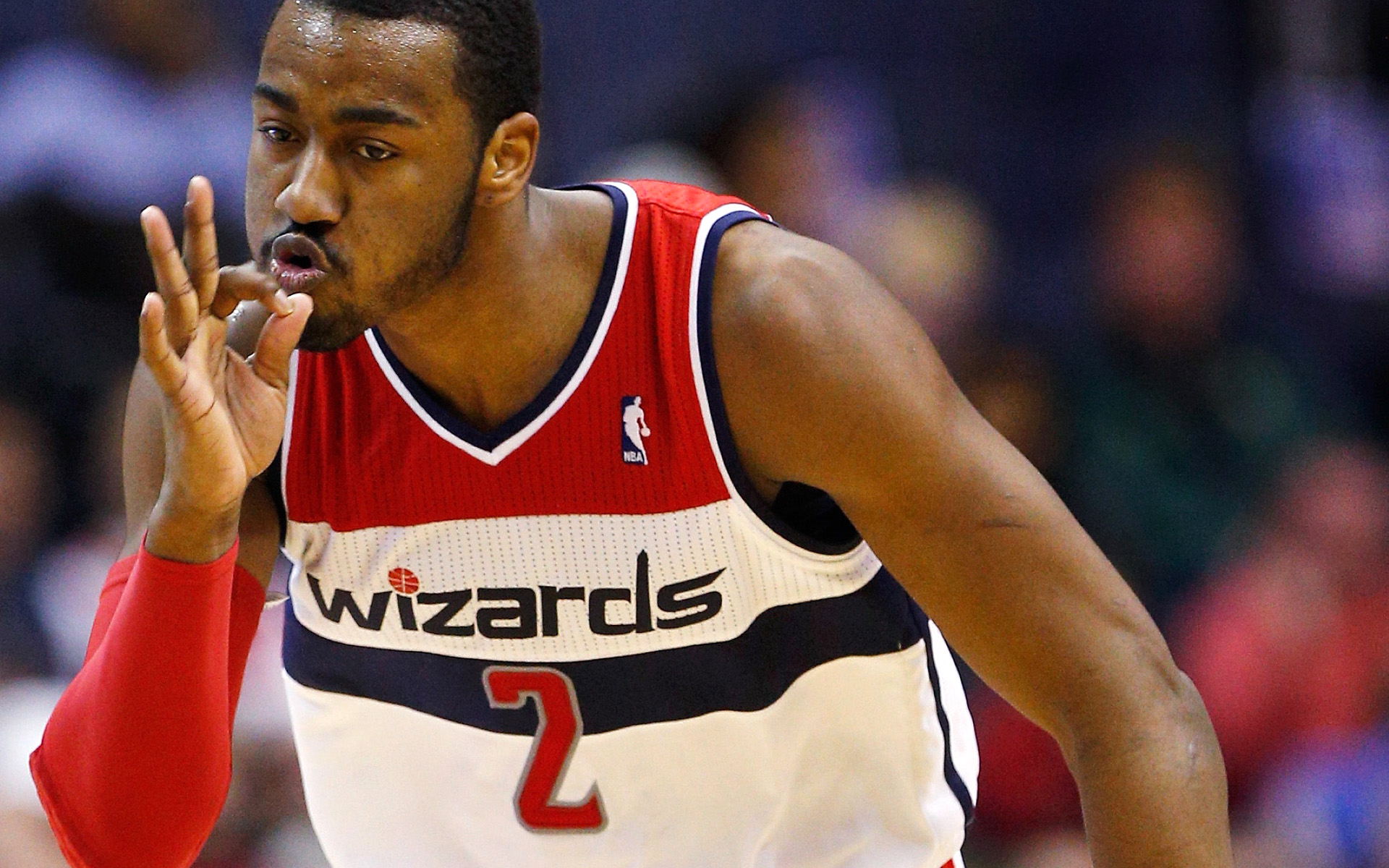
Now in his fifth year, Wizards PG John Wall is having the best season of his career. He’s drawn accolades from observers around the league, and some Washington fans have even started wondering if he might be a fringe MVP candidate. The MVP talk and the “he’s the best PG in the league” assertions are premature, however. He’s terrifically productive, but there’s still room for significant improvement.

Put away the pitchforks and torches. While Wall isn’t quite where fans want to place him, this is really good news for the Wizards. He’s a phenomenal player whose best days are likely still in the future.

While Wall’s passing and offensive creativity elicits praise, his greatest contribution is on the defensive end. In the defense part of my metric (Player Production Average — PPA for short), Wall rates as the league’s best defensive PG. That’s not a typo. Number one. Top of the heap. Nobody better. That finding is echoed by ESPN’s Real Plus Minus stat. If the season ended today, he’d be on my first-team All-Defense ballot.

As head coach Randy Wittman told the Sports Junkies this morning, Wall has all the attributes of an outstanding defender — size, quickness, speed, strength, length. And while he’s rated as a good defender in my system in previous years, he’s made the defensive leap this season with suffocating on-ball pressure, hard close-outs on shooters, and impeccable timing in the passing lanes.

The Los Angeles Clippers, led by elite PG Chris Paul, struggled to get into their offensive sets early in Washington’s win last week because of Wall’s pressure. Consider this: Paul has 49 total turnovers this season. Six of them came against the Wizards.

By now you’re probably wondering: If Wall’s so great on defense and he’s such a great passer and the Wizards are winning, why don’t you agree he’s an MVP candidate? Why are you about to tell me he’s not a top five PG?

Which brings me back to a junk metric I created last season: Only Good Stuff. In its simplest form, OGS is points + rebounds + assists + steals + blocks.

Wall is among the game’s more active players when he’s out there. He produces lots of OGS — 7th most in the league, in fact. Here’s the top 10 in OGS:

  1. James Harden — 977
  2. Anthony Davis — 940
  3. Stephen Curry — 922
  4. Kobe Bryant — 917
  5. Lebron James — 917
  6. LaMarcus Aldridge — 869
  7. John Wall — 867
  8. Blake Griffin — 843
  9. Kyle Lowry — 361
  10. Damian Lillard — 835

That’s a pretty impressive group, and Wall sits second among PGs. But, it’s ONLY the good stuff. What if we look at the other side of the ledger — Only Bad Stuff (missed field goal attempts + 0.5 x missed free throw attempts + turnovers + fouls)? Well, Wall’s near the top of that list too — 6th most OBS. The bottom 10:

  1. Kobe Bryant — 502
  2. James Harden — 422
  3. Monta Ellis — 389
  4. Josh Smith — 387
  5. Carmelo Anthony — 384
  6. John Wall — 367
  7. Tyreke Evans — 365
  8. Kyle Lowry — 361
  9. Blake Griffin — 360
  10. Stephen Curry — 351

So, with Wall (and several other of the game’s outstanding players), lots of good AND lots of “bad.” What if we combine the two? Because the categories aren’t weighted based on how much they contribute to winning, let’s call this last category Unweighted Total Stuff (UTS) — OGS – OBS. Here’s the top 10:

  1. Anthony Davis — 687
  2. Stephen Curry — 571
  3. Lebron James — 559
  4. James Harden — 555
  5. Chris Paul — 523
  6. LaMarcus Aldridge — 523
  7. Marc Gasol — 512
  8. Tyson Chandler — 505
  9. John Wall & Damian Lillard — 501
  10. Blake Griffin — 484

Enough with the “stuff,” according to PPA (which is pace neutral, accounts for defense, and includes a degree of difficulty factor), Wall currently sits 8th among PGs on a per minute basis. Westbrook, Curry and Paul are clearly the top three. Lillard is next. Then it’s a tight group of Jeff Teague, Lowry, Mike Conley and Wall.

The scores of Wall’s group are close enough that I’d classify them as “about the same” and reasonable minds can differ on what order they should be in. I won’t argue if you want to push Wall to fifth, though I don’t see justification for ranking him higher at this point.

As mentioned above, Wall rates as the best defender — Lowry and Conley rate as average; Teague as a good-not-outstanding defender. However, Wall is the least efficient on offense among the top PGs by approximately 8 points per 100 possessions.

In TOTAL production, Wall currently sits 5th behind Curry, Paul, Lillard and Lowry. Kyrie Irving slips in ahead of Wall for fifth in per game PPA.

What can Wall do to improve? Shoot better and commit fewer turnovers.

How good has Wall been in December? His PPA for the month is 219 so far. If that was his PPA for the season, he’d rank 4th among PGs, ahead of Lillard, but still behind Westbrook, Curry and Paul.

To this week’s PPA update…

PPA is an overall rating stat I developed that credits players for things they do that help a team win and debits them for things that hurt the cause. PPA is pace neutral, accounts for defense, and includes a “degree of difficulty” factor based on the level of competition a player faces while on the floor. In PPA, 100 = average, higher is better and replacement level is 45.

PLAYER GMS MPG 10-Nov 18-Nov 24-Nov 3-Dec 8-Dec PPA
Marcin Gortat 19 30.2 181 186 170 175 179 178
John Wall 19 35.9 185 180 180 168 167 175
Paul Pierce 19 27.3 140 138 165 134 134 154
Rasual Butler 15 21.6 60 131 116 128 155 140
Andre Miller 19 12.4 72 69 92 103 102 101
Kris Humphries 18 22.0 46 87 90 82 109 100
Nene Hilario 13 33.2 108 102 68 67 83 94
Bradley Beal 10 24.6 122 63 69 94
Garrett Temple 17 17.0 121 112 96 100 98 91
Otto Porter 18 20.1 97 106 101 95 84 81
Drew Gooden 12 15.9 42 40 59 78 64 47
Kevin Seraphin 18 15.3 38 13 17 12 28 34
DeJuan Blair 6 4.6 -41 -40 -40 -74 -56 -47
Glen Rice 5 8.6 -120 -117 -117 -117 -114 -113

The Paul Pierce signing looks better and better. The last time Pierce was this productive was the 2011-12 season. His efficiency numbers have surged as the SF has found the Fountain of Youth. One potential warning sign is a slip in his defensive impact since the season’s opening weeks. After rating solidly above average earlier in the year, he’s down to average in my most recent update.

Andre Miller is another of the Wizards ancients who continues to perform well. The team plays dramatically different when he replaces Wall in the lineup (they slow by 10 possessions per 48 minutes), but they’re crazy efficient when he’s out there. It seems like every game is a masterclass for how to get to the rim despite running in slow motion.

Statistical tidbit: so far this season, Wall is averaging 14.8 assists per 100 possessions. Miller is averaging 14.4.

Beal and Nenê increased production after a couple rough weeks. I hope Wittman continues to use Nenê off the bench where he can face opponent reserves when Washington is on offense, and anchor a weak defensive second unit.

Kevin Seraphin was up for a second straight week. His rebounding has improved the past couple weeks, though his offensive efficiency remains poor. Among the team’s regulars, he’s in a virtual tie with Miller as the least effective defender.

Wizards Trade for Backcourt Upgrade

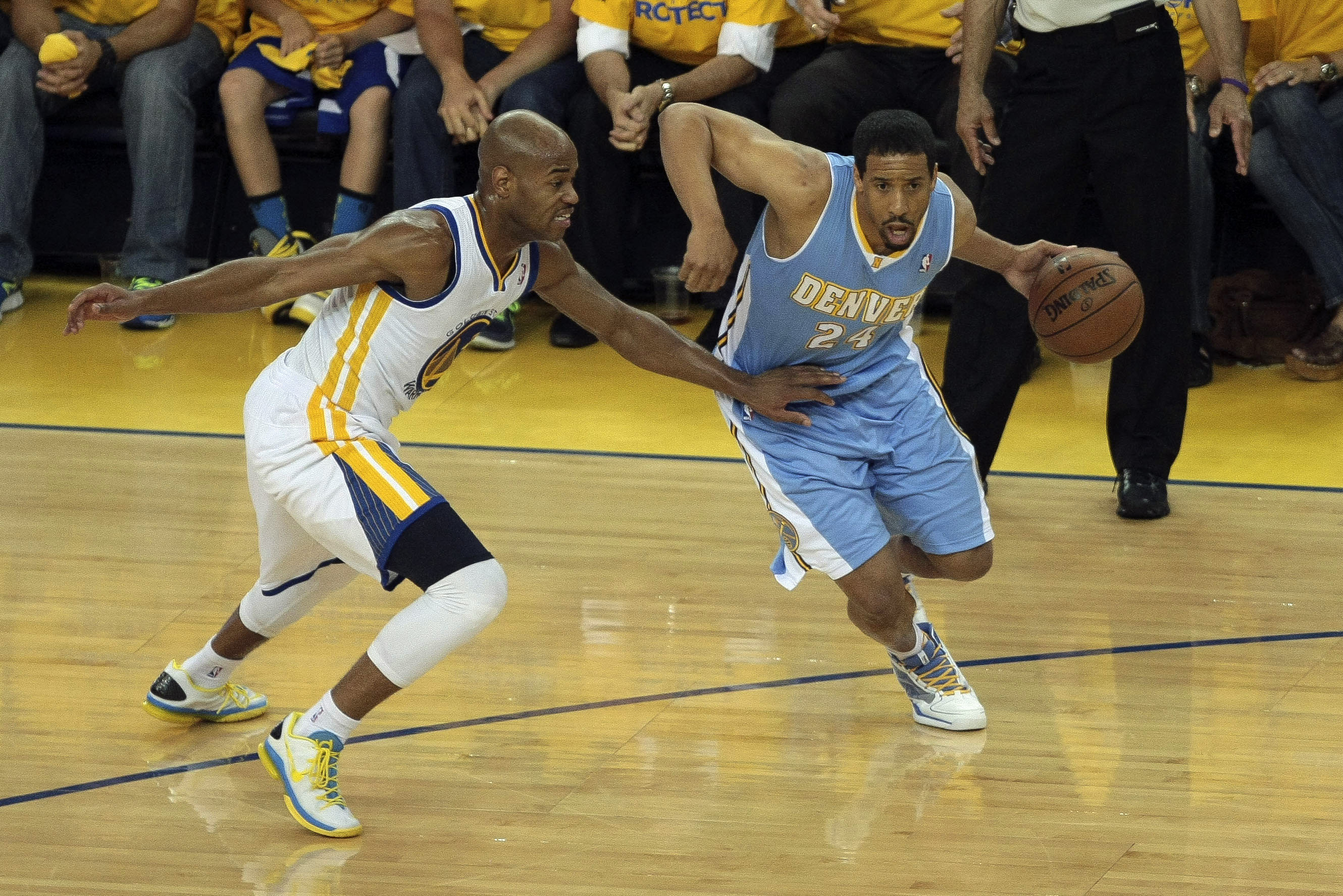
NBA: Playoffs-Denver Nuggets at Golden State Warriors

The Wizards made a deal at the trade deadline, swapping Eric Maynor, Jan Vesely and a second round pick in 2015 in a three-team trade that landed 37-year old Nuggets PG Andre Miller. The trade provides Washington with a much-needed reserve guard, and costs the team little in the long-term.

For their stated goal of making the playoffs, this is a good trade. Miller has declined some in his NBA dotage, but is still productive in his 15th season. Regular readers are likely familiar with my Player Production Average metric (PPA), which credits players for things that contribute to wins, debits them for things that don’t — each in proper proportion. PPA is pace-neutral, accounts for defense and includes a “degree of difficulty” factor. In PPA, 100 = average and higher is better.

Miller’s PPA this season: 94. Last season it was a 96. The previous season: 84. This is a significant dropoff from the 140-range PPAs he posted in his early 30s, but it’s still more than adequate for a third guard. For comparison, Temple’s PPA this season: 20. Maynor’s: 8.

Acquiring Miller doesn’t affect Washington’s cap situation going forward. Vesely’s contract is up at the end of the season. Maynor had another year at $2.1 million, but only $2 million of Miller’s salary for next season is guaranteed. If the Wizards decide to bring him back, it would be the equivalent of signing a free agent PG for $2.525 million. The money they owed Maynor is a sunk cost they would have had to pay regardless.

And yet, I’m ambivalent about the trade. First, I don’t like giving up that second round pick. Some object based on the likelihood of it being a high second rounder. I really don’t care where it falls. In my analysis, second round picks are grossly undervalued by many teams, including the Wizards. They’re opportunities to take chances on guys with ability, but with a “wart” or two. They’re opportunities to obtain inexpensive talent to fill roles — or perhaps more. If it was me, I’d want lots of second round picks to have more shots at finding the next Gilbert Arenas or Carlos Boozer or Chase Budinger or Isaiah Thomas or Marc Gasol or Marcin Gortat or Nikola Pekovic or DeJuan Blair or DeAndre Jordan or Ersan Ilyasvoa or Amir Johnson or etc., etc., etc.

Remember, second rounders typically sign non-guaranteed contracts — if they get a contract at all. They can be sent to the D-League, seasoned overseas, or simply straight out released if they don’t work. Low-risk investment with the possibility of a significant reward. Even if only half your second rounders turn into rotation players, they’re still providing valuable production at bargain price. But I digress.

The second reason I’m ambivalent is that it highlights a long series of mistakes and mismanagement by Ernie Grunfeld and the Wizards front office. It’s nice they could acquire Miller, but they shipped out Maynor — the free agent prize, who just six months ago was supposed to be their upgrade at backup PG. Now they’re paying a second round pick to dump him. Vesely, of course, was the sixth overall pick in the draft (chosen ahead of Kawhi Leonard and Kenneth Faried), who has totaled almost as many turnovers plus fouls as he did rebounds or points.

Over the past few seasons, the Wizards have managed to turn near-max cap space, future 1st and 2nd round picks, a 6th overall pick, and a BAE into Gortat, Ariza and Miller. All of whom have expiring contracts.

And third, I look back with some frustration on the ones that got away. In particular, I think of Shelvin Mack — a guy the Wizards cut twice to keep less productive players — who’s having a solid year in Atlanta.

But, Miller does improve the team’s bench. He should give Randy Wittman lineup options at the end of games, and his success sharing the backcourt with Ty Lawson in Denver bodes well for a partnership with Wall in DC. He’s an experience, efficient pro, who will help the Wizards make the playoffs, even if they still figure to be a first-round out. In that sense, the trade is fine. But it’s a shame the deal was even necessary.

Washington Wizards: Total Mediocrity

beal shoots

Ask a Wizards fan to describe the team, and odds are he’d say the starters are pretty good, but the bench is awful. And he’d probably take a shot at Randy Wittman’s coaching — something Wittman would deserve for no other reason than the passion he’s instilling for two-point jump shots (aka The Worst Shots in the Game; or The Shots the Defense Wants You to Take).

However, an analysis of starting lineups and benches around the league suggests that these assumptions may not be accurate. The analysis used my overall player rating metric, called Player Production Average (PPA), weighted by minutes played. I ran an overall minutes-weighted PPA for each team’s most commonly used starting five, and then for each team’s bench.

PPA credits players for things that contribute to winning and debits them for things that don’t — each in proper proportion. PPA is pace adjusted, accounts for defense and includes a degree of difficulty factor. In PPA, 100 = average, higher is better and 45 = replacement level.

The league’s average starting lineup produced a PPA of 129. Washington’s starters ranks 14th overall with a 127. The average bench produced a PPA of 67. Washington’s bench ranks 15th with a 69.

I’m as surprised as you are.

I suspect that a big reason the Wizards bench rates in the middle is because of Wittman’s short seven-and-a-half man rotation. Most nights, Wittman uses what amounts to a two-man bench of Martell Webster and either Nenê or Booker (whichever didn’t start). Nenê was counted as a starter, by the way. Garrett Temple plays only long enough for John Wall to catch his breath. The rest of the squad gets spot minutes when they can.

What does this show? This is a thoroughly mediocre team — starters AND bench.

Here’s a table showing minutes-weighted PPA scores for the starters and bench of each NBA team, sorted by Starter PPA:

TEAM STARTER PPA BENCH PPA Starter Rank Bench Rank
MIA 173 74 1 11
LAC 166 70 2 14
SAS 165 101 3 1
MIN 158 51 4 26
OKC 156 76 5 8
POR 156 52 6 25
GSW 153 40 7 30
ATL 148 76 8 9
IND 145 56 9 23
HOU 145 67 10 17
DAL 140 83 11 5
NOP 132 77 12 7
DEN 128 72 13 12
WAS 127 69 14 15
CLE 126 42 15 29
PHO 126 85 16 3
TOR 121 65 17 19
DET 120 51 18 27
NYK 119 71 19 13
SAC 118 63 20 20
MEM 118 85 21 4
CHI 116 75 22 10
CHA 116 55 23 24
LAL 114 69 24 16
UTA 109 58 25 22
PHI 107 43 26 28
ORL 106 59 27 21
BRK 100 88 28 2
BOS 93 67 29 18
MIL 70 79 30 6
         
AVG. 129 67    

A few observations:

  • Only Boston and Milwaukee have starting lineups that rate below the league average PPA (100). Incredibly, the Bucks bench rates as slightly more productive than the starters.
  • San Antonio has the league’s third best starting lineup AND the most productive bench.
  • Oklahoma City has the fifth best starting lineup, which is downright incredible because it includes 876 minutes of Kendrick Perkins (PPA: 24).
  • Minnesota is continuing its decades-long practice of not putting an adequate roster around a high-quality PF named Kevin. In years past, the “Kevin” was Garnett. The past few years, it’s been Love. The Timberwolves roll with the 4th best starters and the 5th worst bench.
  • Brooklyn is kind of a reverse image of Minnesota. The Nets’ starting lineup has been bad (minutes-weighted PPA of 100 — good for third worst), but they have the league’s 2nd most productive bench.

Moving on to the Wizards’ PPA update…no real surprises.

PLAYER GMS MPG LW PPA
Trevor Ariza 38 34.8 144 151
John Wall 43 37.0 147 143
Trevor Booker 34 21.2 137 136
Marcin Gortat 43 32.6 135 136
Nenê Hilario 36 29.6 102 104
Martell Webster 41 30.4 105 100
Bradley Beal 34 32.9 84 89
Jan Vesely 28 16.0 72 72
Chris Singleton 14 10.6 60 60
Glen Rice 11 9.9 18 21
Kevin Seraphin 31 9.9 20 17
Eric Maynor 22 9.5 13 13
Al Harrington 7 18.6 7 6
Otto Porter 21 9.8 3 4
Garrett Temple 41 11.5 6 3

Trevor Ariza had a good week while the rest of the team performed “about the same.” Webster’s production slipped for a fourth consecutive update — he’s now right at league average. If Washington is to break out of this rut of mediocrity, they need someone to significantly boost his production. The prime candidate would seem to be Bradley Beal, who had a terrific second half last season.

Wizards Manage Yet Another .500 Week

There’s a good chance I’ll be able to type these exact words in many of my Wizards entries the rest of the season: since my last update, the Wizards have a .500 record. That’s because this is a slightly below average team in a historically bad conference. And so, the team is likely to continue muddling through at around .500 — a bit worse when they play a tough patch of the schedule; a bit better in an easier stretch.

The team needs several things if it hopes to become a contender for anything more than squeaking into the playoffs:

  1. Better management.
  2. Better coaching.
  3. Better players.

Simple, right? It’s tough to envision a scenario where team owner Ted Leonsis replaces Ernie Grunfeld, however. The Wizards have had the league’s third worst winning percentage during Grunfeld’s tenure, yet somehow he’s remained in place. Why would Leonsis replace him now that the team is slouching towards mediocrity?

Before I get to this week’s update, I want to mention something I stumbled upon from a conversation with a fan of the team on the RealGM Wizards message board. This fan asserted that Washington’s starting lineup is “on par” with teams in the East other than Miami and Indiana. This is low bar stuff, of course, but…well…it’s not even true.

While the Wizards starters can be described as “solid,” they actually rank 4th in the East behind Miami, Indiana and Atlanta. The team’s starting five produces at a rate solidly below those three teams. Washington is “on par” with the next few teams in the East — their starters are in the same vicinity as those for Cleveland, Detroit and Toronto.

Overall, the Wizards rank 15th in the quality of its starting lineup, albeit with an aggregate production rating slightly below the league average. So, while many have correctly assessed the Wizards lack of depth as a major problem, the fact is that their starters have been mediocre as a group as well.

Here’s this week’s Player Production Average (PPA) update. PPA is a player rating stat I developed that credits players for things that contribute to winning and debits them for things that don’t — each in proper proportion. PPA is pace adjusted, accounts for defense and includes a degree of difficulty factor. In PPA, 100 = average, higher is better and 45 = replacement level.

PLAYER GMS MPG LW PPA
Trevor Ariza 30 34.3 146 144
John Wall 35 37.2 147 140
Trevor Booker 27 21.5 139 137
Marcin Gortat 35 32.2 130 132
Martell Webster 34 30.4 120 109
Nene Hilario 28 28.7 120 107
Bradley Beal 26 34.0 76 73
Jan Vesely 26 15.9 55 73
Chris Singleton 12 12.1 66 64
Glen Rice 11 9.9 21 18
Otto Porter 16 10.9 23 15
Eric Maynor 22 9.5 13 13
Kevin Seraphin 25 10.3 2 12
Al Harrington 7 18.6 6 7
Garrett Temple 33 10.8 -2 2

Trevor Ariza’s rating is basically flat from last week, but that belies his volatile week. The SF alternated awful games with highly productive ones, with little apparent reason for either performance level.

John Wall seems to have settled in at a solidly productive level, albeit one that’s well short of being worthy of the maximum contract extension he signed before the season.

Booker and Gortat continued performing as they had been in previous weeks, but both Nene and Martell Webster continued to see their production slide. With Nene, I know he’s struggling to play through an Achilles injury. The Wizards haven’t reported any physical problems for Webster, though I’m starting to wonder if there might be something there.

Vesely had a couple good games against Charlotte and New Orleans, and then a couple duds against Indiana and Houston.

Seraphin gave the Wizards a lift in their comeback against the Rockets, but was awful the rest of the week.

The team continues to have a gaping chasm at PG behind Wall. Maynor has been awful; Temple remains one of the league’s least productive players, even as he finally eased out negative PPA territory for the first time all season.

Should the Wizards Give Wittman A Sympathy Firing?

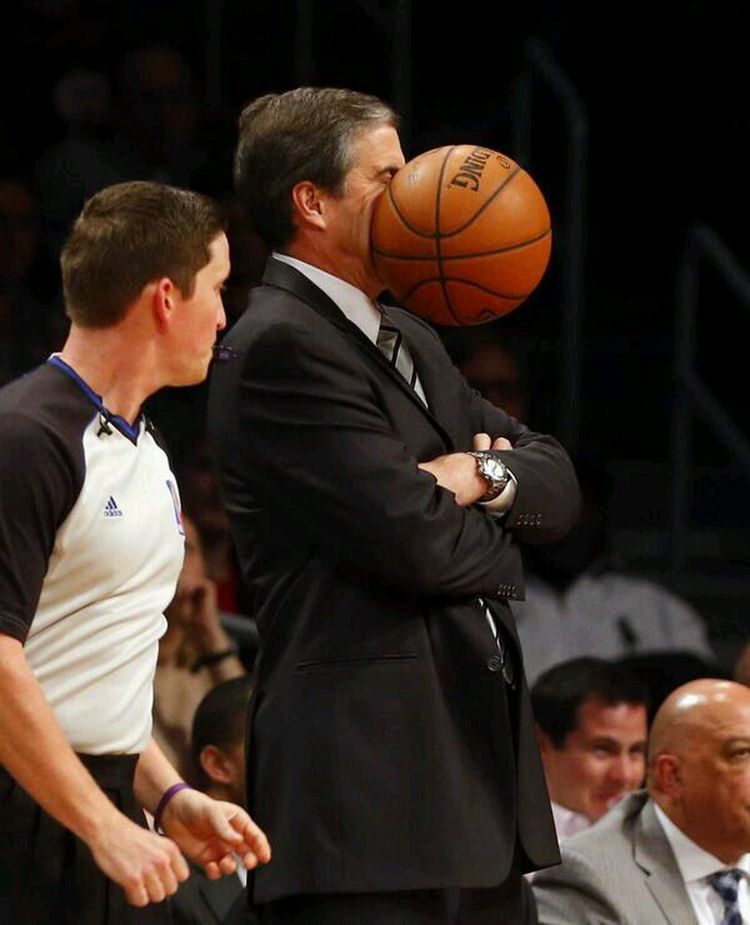
NBA-Coach-Randy-Wittman-Face-Smashed-By-Basketball

Here’s how weird things have gotten for me as I follow the Washington Wizards: I feel sympathy for a coach I never would have hired in the first place. Team president Ernie Grunfeld and owner Ted Leonsis awarded the full-time coaching job to Randy Wittman, who’d done a solid job as interim coach when they fired Flip Saunders. According to reports at the time, they neither considered nor interviewed other candidates for the position. Had it been my call…well, Wittman wouldn’t have been the choice.

Despite the howls of fans angered by a three-game losing streak, Wittman isn’t a bad coach. He isn’t a good one either — at least not by NBA standards. He’s standard issue NBA coaching material. Good at some things, not so good at others. On balance, probably on the “below” side of average, but close enough to the league standard that he’s not a drag on his team’s performance. When he gets fired by the Wizards, he could take a year off, go down to college and be great at that level. Sure, a guy like Phil Jackson, Pat Riley or Greg Popovich would win a few more games with the same roster, but a) those guys aren’t coming to Washington, and b) the Wizards wouldn’t be title contenders even with an elite coach.

I’m not saying it would be pointless to fire Wittman and replace him with Someone Else — maybe Mr. Else could get an extra win or two from this team over the remainder of the season. But no coach is going to transmogrify this group into a title contender for one simple reason: the roster is inadequate. They’re good enough to avoid missing the playoffs in the misbegotten East. They might even be good enough to win a playoff series if they’re reasonably healthy and they can avoid a first round matchup with Indiana or Miami. But there isn’t a coach on the planet who could get them further — not with this roster.

As you’ll see in the table below, Wittman has been given a team that’s effectively six deep. Bradley Beal could be a seventh, if he starts performing the way he did in the second half of last season. Wittman’s options are further diminished by minutes restrictions for Beal and (more importantly) Nene.

There are plenty of things I’d love to see the team do differently — starting with taking fewer two-point jump shots. (Umm, fellas — those shots are open for a reason.) Maybe better coaching could change some of those things. But, NBA reality is that everyone knows what everyone else is doing strategically. Coaches come up with stuff to surprise each other now and then, but most games are decided by overall talent and execution.

A coach’s most important job is getting lineups on the floor that maximize his team’s chances of winning. Those lineup decisions have largely been taken from Wittman by the team’s wafer-thin roster. Unless Nene’s Achilles gets better or someone on the Wizards bench radically improves, the coaching staff is stuck with few options to patch over the lack of depth. That this situation was entirely predictable (in fact, was predicted before the season) makes it no less frustrating.

Below is this week’s Player Production Average (PPA) update. PPA is a player rating stat I developed that credits players for things that contribute to winning and debits them for things that don’t — each in proper proportion. PPA is pace adjusted, accounts for defense and includes a degree of difficulty factor. In PPA, 100 = average, higher is better and 45 = replacement level.

PLAYER GMS MPG LW PPA
John Wall 31 37.2 149 147
Trevor Ariza 26 34.2 154 146
Trevor Booker 23 22.0 118 139
Marcin Gortat 31 32.5 130 130
Nene Hilario 24 29.4 132 120
Martell Webster 30 31.2 151 120
Bradley Beal 22 34.9 84 76
Chris Singleton 11 12.9 48 66
Jan Vesely 22 15.8 53 55
Otto Porter 12 12.2 -47 23
Glen Rice 11 9.9 21 21
Eric Maynor 22 9.5 18 13
Al Harrington 7 18.6 6 6
Kevin Seraphin 23 10.0 -15 2
Garrett Temple 29 10.8 -21 -2

Normally, I update weekly, but this one went a couple weeks — eight games total. The Wizards went 4-4 during that stretch, including their current three-game winning streak. The performance levels of John Wall, Trevor Ariza and Marcin Gortat appear to have largely stabilized.

Wall’s “grade” is interesting because it’s at once encouraging and disappointing. On the encouraging side, this is the longest sustained period of well-above average play of his career. So far, he’s the most productive guard in the East. But…his per minute production is still not close to “franchise cornerstone” level. And while he’s the East’s best PG, he still ranks behind nine Western Conference PGs in per minute production.

I have a similar reaction to Gortat’s score. He’s a solid producer, but…he ranks only about 20th among centers. The Wizards need more from him, especially on the boards and on defense.

Ariza is — by some strange coincidence — playing the best basketball of his career in a contract year.

Other positives: Trevor Booker becoming a solid producer upon entering the starting lineup (though his team defense continues to be a problem), Otto Porter improved from a HUGE negative to a net positive, and Kevin Seraphin finally got out of the negative PPA range.

A word on Seraphin — the big man currently rates as the NBA’s least productive center. He managed the same “feat” last season. There seems to be some kind of a message there, but I could be over-thinking things.

Oh yeah, Chris Singleton also showed signs of life with not atrocious play in a couple garbage time appearances.

On the negative side: Nene’s production is (unsurprisingly) down as he tries to play through that Achilles injury. Martell Webster’s play declined significantly this update, as well. And, of course, the Wizards continue to get absolutely nothing from their backup PGs.

With teams now able to sign free agents to 10-day contracts, I’m hoping the Wizards front office will start bringing in D-League PGs for tryouts until they find one they like. I’d also like to see them try some PF/C types in hopes of getting even replacement level play off the bench. They can make room by releasing one or more from the group of Temple, Seraphin, Harrington and Maynor. Yes, I know there’s no way they’d just cut Maynor because of the player option he holds for next season. It could be a correct move, however.

Even 7 Isn’t All That Lucky for Wizards

Short of trading additional future assets, getting lucky with a D-League pickup, or getting radical in-season improvement from one or more players currently on the roster, there just isn’t getting around the reality that this year’s Washington Wizards is solidly mediocre — at best.

I went into this week’s update on the team trying to conjure up a “modest proposal” type of post. Best I could come up with was the notion of shortening the game to 32 minutes so that teams would need to play only their top seven. And, Washington’s top seven is pretty good.

In this imaginary “top 7” league, so far this season, Washington would move up the standings a bit. According to my estimates, their top 7 would rank 4th in the East behind Miami, Atlanta and Indiana.

Overall, their top 7 rates 12th best, which sorta gives some perspective to how weak the East is so far this season. Washington’s seven best players rate as 4th best in the East, but would be only 9th best in the West.

Just to extend the silliness to its “logical” end — in this hypothetical, Washington would win a first round series against Brooklyn only to get bludgeoned in round two by Miami. The West would be a dogfight, but (if my PPA ratings held sway — and in this alternate reality, they do) San Antonio would emerge victorious. That would set up a repeat of last season’s Heat-Spurs final. Which the Heat would win.

Of course, the league isn’t going to shorten the game time anymore than it can guarantee Washington’s top seven can actually stay healthy. The bright side: a fully healthy Wizards team might be good enough to win a first round series if they can make the postseason. The downside: “fully healthy” seems like a fantasy.

To this week’s Player Production Average (PPA) update. PPA is a player rating stat I developed that credits players for things that contribute to winning and debits them for things that don’t — each in proper proportion. PPA is pace adjusted, accounts for defense and includes a degree of difficulty factor. In PPA, 100 = average, higher is better and 45 = replacement level.

PLAYER GMS MPG LW PPA
Trevor Ariza 18 36.1 172 154
Martell Webster 22 33.0 148 151
John Wall 23 37.7 168 149
Nene Hilario 16 32.6 134 132
Marcin Gortat 23 34.6 150 130
Trevor Booker 15 20.1 114 118
Bradley Beal 14 39.5 81 84
Jan Vesely 17 17.6 54 53
Chris Singleton 7 15.6 29 48
Glen Rice 11 9.9 4 21
Eric Maynor 20 10.0 16 18
Al Harrington 7 18.6 7 6
Kevin Seraphin 18 8.3 -32 -15
Garrett Temple 21 10.3 -23 -21
Otto Porter 4 12.0 -70 -47

No real surprises for a team that lost two of three since the last update (and barely won the third). Ariza, Wall and Gortat led the “decliners.” The “improvers” were of the awful to slightly less awful variety — Singleton getting to replacement level, Rice getting out of single digits, Seraphin becoming a bit less negative.

Sorta looping back to the “modest proposal” portion of this post, here’s another look at the Wizards this season — one that shows the hard demarcation between their top 7 and their bottom 8.

Wiztop7bottom8

Wizards Lack of Depth Continues to Hurt

Get used to repeats of that old Wizards pattern — keeping the score tight (even holding a lead in the fourth quarter) only to lose in the end. The problem isn’t that Washington lacks a mystical “ability to close,” it’s that their bench can’t hold the leads its starters provide, and its starters wear down at the end of competitive games.

This is not the fault of Randy Wittman and the coaching staff. Most of the failing bench players are producing at levels consistent with career norms. Eric Maynor, a fan whipping boy so far this season, is playing worse than usual, but not abnormally so. He’s been unproductive throughout his career — that’s he’s even less productive should surprise no one. The same is true of Kevin Seraphin, Jan Vesely, Chris Singleton and Garrett Temple. They’ve established themselves as unproductive. There’s little reason beyond hope to imagine them becoming productive.

With the “make the playoffs or else” mandate, Wittman has little option but to play his key players heavy minutes and pray they don’t get hurt. And that’s exactly what’s happening. John Wall and Bradley Beal lead the league in minutes per game at PG and SG. Among SFs, Trevor Ariza ranks eighth and Martell Webster sits 15th. Marcin Gortat is second in minutes per game among centers. The fragile Nene plays the 12th most minutes per game for a PF.

If this was the playoffs, there’d be little reason for concern. But there are 62 games remaining in the regular season, and they’ve already sustained injuries to Ariza, Webster, Nene and Beal. Another injury could put the playoffs out of reach. That would be a shame (as would limping into the playoffs) because at full strength, it’s core rotation players could at least put a scare in a post-season opponent. They’ll need to get (and stay) healthy to do that, however.

For a further demonstration of Wittman’s lack of options, peruse the table below, which shows the (approximately) weekly update of Player Production Average (PPA). PPA is a player rating stat I developed. It credits players for things that contribute to winning and debits them for things that don’t — each in proper proportion. PPA is pace adjusted, accounts for defense and includes a degree of difficulty factor. In PPA, 100 = average, higher is better and 45 = replacement level.

PLAYER GMS MPG LW PPA
Trevor Ariza 15 36.1 146 172
John Wall 20 37.8 169 168
Marcin Gortat 20 34.6 152 150
Martell Webster 19 32.5 156 148
Nene Hilario 16 32.6 133 134
Trevor Booker 12 16.5 96 114
Bradley Beal 13 40.2 81 81
Jan Vesely 14 18.1 75 54
Chris Singleton 6 17.5 51 29
Eric Maynor 19 10.3 35 16
Al Harrington 7 18.6 6 7
Glen Rice 9 8.0 -10 4
Garrett Temple 18 10.1 -14 -23
Kevin Seraphin 15 7.9 -27 -32
Otto Porter 2 10.5 -70

Ariza is playing a lot like he’s in a contract year, which is to say — superbly. His production is All-Star level, though it would astonish me if he actually received the honor. But, with Lebron more a PF these days, it’s arguable that Ariza has been the East’s second best SF so far this season (behind Paul George).

Recovered from injuries last season, Gortat is producing at a good level again. Like Ariza, his timing is superb — he’s in a contract year as well.

Wall seems to have settled in at All-Star level production. PPA currently has him rated as the top PG in the East, and fifth most productive overall behind Chris Paul, Stephen Curry, Ty Lawson and Mike Conley.

This week’s update shows Vesely’s production dropping off. Hopefully he can turn things around. Whether or not he does, the coaching staff would be wise to give more minutes to Booker, who continues to be an “about average” producer. That’s nothing to get excited about, but it makes him a solid reserve.

Finally, note that the Wizards have seven players who rate below replacement level so far this season. Collectively, they’ve played 823 minutes — nearly 17% of the team’s total. This is a direct result of the front office’s persistent failure to properly assess players, and their inability to address the team’s glaring need for depth. This misjudgment is costing the team wins now, and could cost them even more as the season wears on.

What Else Would They Be?

Eric Maynor is supposed to be an upgrade at backup PG. Unfortunately, he's not.

Mike Lee offered up this piece about Wizards President Ernie Grunfeld, Coach Randy Wittman optimistic about upcoming season. Leaving aside the “well, of course, what else would they be?” factor, there were some tidbits that are worth a little scrutiny.

Grunfeld on expectations for upcoming season: ”We’re excited about the upcoming season. We finished last year off strong. Obviously, our young players have worked hard in the offseason. They’ve shown improvement and we want to build on what we started to establish last year. Obviously, our initial goal is to be a playoff contender and ultimately, by the end of the year, make the playoffs.

Standard GM babble that doesn’t mean much of anything. The first sentence that catches my eye is that one about young players working hard in the offseason. This is a story being repeated right now in every NBA city by owners, executives, coaches, players, journalists, pundits and fans alike. It sounds and feels good, but if every team’s young players are working hard and getting better…how much advantage does one team get over another?

In reality, a large number of those stories are chicken manure. Some guys worked hard; others didn’t. Some guys used their time well and improved their games; others didn’t.

And there’s yet another thing to consider — let’s say for the sake of discussion that Kevin Seraphin, Jan Vesely and Chris Singleton all put in a ton of work this offseason and really, truly, genuinely got better. How much will it make a difference? These guys were among the league’s least productive players last season. They’re each coming from such a low level that they could make major improvements and still be bad.

Wittman on his expectations for Kevin Seraphin: “I have high expectations for all of our guys coming in. Do I have expectations for Kevin to have a better year than he did last year? Yes. … Kevin…his confidence level now, and how he holds himself now, being here pretty much all summer working on his game to make that next step. Yeah, I expect that from our young guys to continue that growth. I think we saw it with Jan. Jan had a good summer, whether it was just with us in the summer league or what he did, playing with his national team. You know, those are positive things and you hope that now they can carry that over into the season.”

The team is still prepping for training camp so they’re still peddling optimism. You’re not going to hear a coach saying something like, “Seraphin was really bad last season and we’ll have to see if he’s improved before we’ll count on him as a part of the rotation.”

It would surely be nice if Seraphin could somehow regain the form he showed at the end of the season before last. That guy was at least a competent NBA player. Last season, he was awful — the league’s least productive center, according to my analysis. Seraphin is a weird bundle of contradictions. He has a massive, muscle-bound frame (he says he currently weighs 277 and has a body fat percentage 0f 9.5%), but he rebounds like a small forward. He has a smooth looking post-up game, but those smooth-looking shots miss more often than they hit. And he’s a turnover machine.

Confidence is wonderful, but it needs to come with competence. After his terrible play last season, I’m skeptical about whether he’ll ever be a useful NBA player. By all means give him a chance in training camp to show he’s improved. But I wouldn’t count on him as part of the rotation.

Grunfeld on meeting offseason goals: “I think we had some goals of what we wanted to accomplish. We wanted to upgrade our backup point guard position and Eric [Maynor] has been with us now, three weeks in a row. He’s very solid, very steady. He brings a little poise to the game. He knows how to play. So we feel we’ve upgraded that position. We wanted to get a stretch four and Al [Harrington] will provide that for us. And we also wanted to make sure our young players continue to develop. Our young players, like Seraphin and Vesely, as Randy just spoke about, and Bradley Beal. I think one of the things that Brad also did was improve his ball handling, and try to play better in the pick and roll. He worked on his body and is outstanding shape. As all of our young players are. So, we wanted to see improvement from within and we wanted also address some of the positional needs that we felt like we had and I think we have. And I feel like the continuity of having 11 players back from last year’s roster will also help us.”

Here, Grunfeld is making the same assertion I’ve been seeing all summer — the Wizards have upgraded at backup PG by signing Eric Maynor. Maybe Grunfeld and “everyone” will turn out to be correct, but I don’t think so. My analysis reveals Maynor as unproductive throughout his career — both before and after his knee injury.

Last season, A.J. Price was better. Per 36 minutes, Maynor generated exactly one assist more than Price. But, Price shot better from the floor and the free throw line, got nearly twice as many rebounds, and had 1.2 fewer turnovers per 36 minutes.

For what (in my analysis) is actually a DOWNgrade at backup PG, the Wizards spent their biannual exception. On the first of day of free agency. Which meant that they didn’t have the BAE to spend later when they could have signed other reserve PGs who would have been upgrades over Price, or when they could have signed a reserve big man like DeJuan Blair. But, hey, who needs depth in the frontcourt when you have Seraphin and Jan Vesely?

Wittman on maintaining continuity: “We’re going, as a coaching staff, the last two or three weeks, evaluating how we want to conduct camp, and it’s so much easier when you’ve got … 11 that understand why we’re doing things, how we’re going to do things. That makes it a lot easier in my mind, in terms of evaluating how much you throw at them and how they handle it and all that. So that’s a positive. We established ourselves from a standpoint defensively, and that’s not going to change. That’s got to be first and foremost as we head into camp, that foundation that we built and that they built. They bought into this system and that system won’t change. They know what that system is already compared to last year with as many new faces as we had, that you had to teach that new system. That’s always a positive.”

The team has been selling “continuity” as part of its plan since they made the trade to get Emeka Okafor and Trevor Ariza. As I’ve written in other places, I think they have the “let’s keep everyone together” part too early in their plan. Continuity is outcome, not a goal. When a team starts winning, it makes sense to keep it together. When a team loses, it’s nuts to say, “We’ll start winning if we keep these guys together.”

No, teams are bad because the players are unproductive. The GM of a bad team shouldn’t be thinking about continuity, he should be thinking about how he get rid of dead weight on his roster and bringing in better players.

Then of course there’s consideration given to what the team’s goals are. In this case, their goal is to compete for a playoff spot. When you’re 178 games under .500 over the past decade (by some weird coincidence, the number of years Grunfeld has been at the helm), I guess that qualifies as a stretch goal. And, they have a realistic goal of achieving it, especially if Okafor’s neck heals. Still, it might have been wise to get another big man (not a SF masquerading as a PF like Al Harrington) in case something happened to one of the team’s 30+ year old bigs.

Speaking of Harrington — while it made Wall (and some fans) happy to sign an officially designated “stretch four” (a power forward who shoots jump shots and doesn’t rebound much), Harrington’s biggest contribution will be to keep Vesely, Singleton and (possibly) Seraphin off the floor. Each of that group landed among the league’s 15 least productive players last season, and it’ll be a net gain if some combination of Harrington and Trevor Booker can consume some of the 3,246 minutes they played last season.

Think about that a sec. Three of the 15 least productive players in the game last season were on the floor for 16.3% of the team’s minutes. Wow.

So, Harrington can help just by playing reasonably competent basketball (which he’s done in the past) and keeping those three on the bench. That said, I continue to think that the team’s best stretch four is Trevor Ariza — a tough-as-nails competitor who can shoot the three.