Wizards Doppelgangers: The Enigmas

otto porter

In case you missed them, I’ve done two installments using my Statistical Doppelganger Machine to look at the player seasons most similar to Wizards (similar production at similar age):

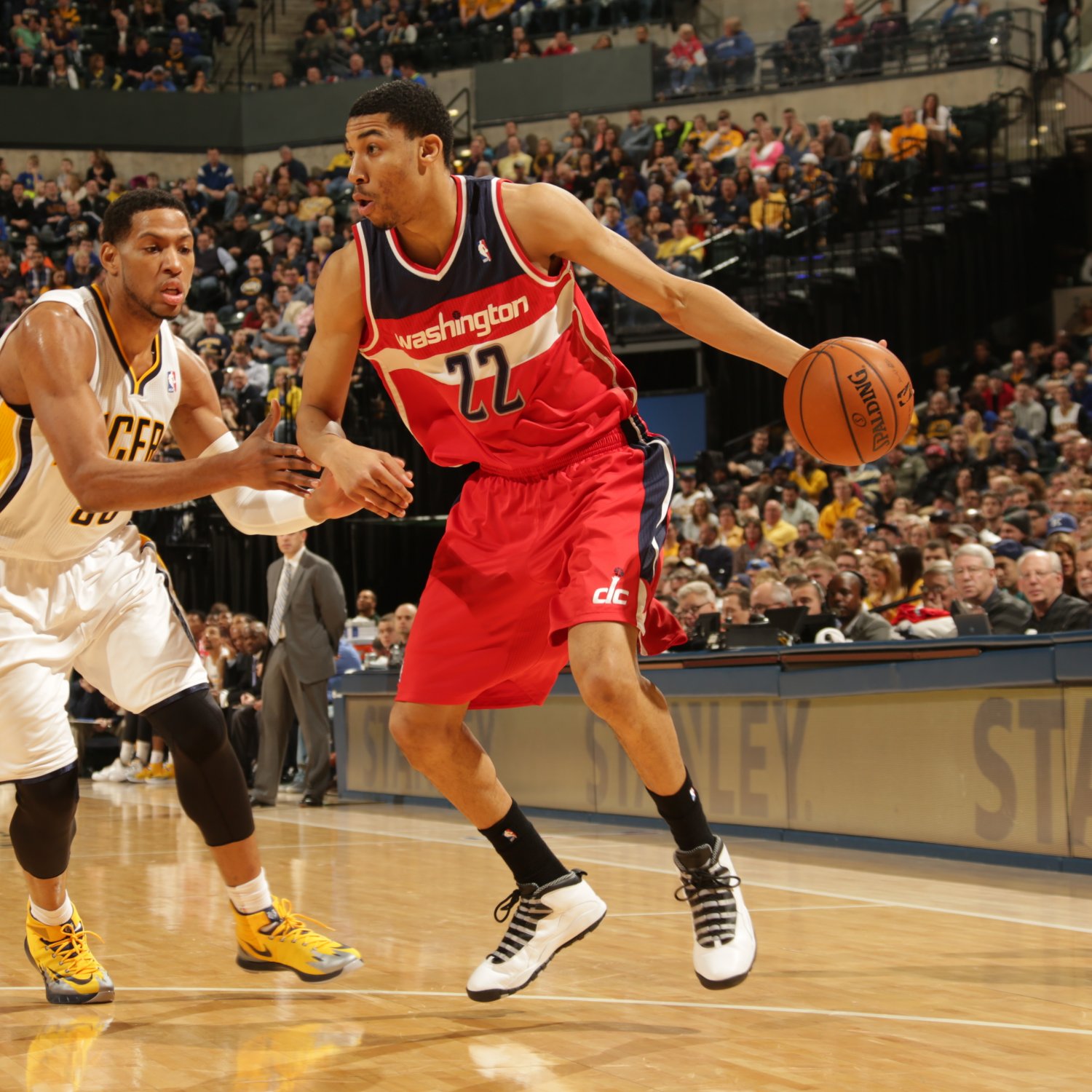
Here’s a look at low-minute Wizards for whom finding comps was challenging because of their scant playing time: Otto Porter, Glen Rice Jr., and Garrett Temple.

Let’s start with the guy likely to play the biggest role for the team this season: Porter.

PLAYER POS SEASON AGE TEAM SIM SCORE PPA SEASON PPA PEAK
Otto Porter SF 2013-14 20 WAS 100 15 15
Lance Stephenson SG 2011-12 21 IND 87 14 116
Cory Joseph SF 2011-12 20 SAS 86 18 94
Jumaine Jones SF 2003-04 24 BOS 86 24 98
Quincy Pondexter SF 2010-11 22 NOH 86 38 67
Shawne Williams SF 2006-07 20 IND 85 39 53
Kareem Rush SG 2002-03 22 LAL 85 3 53
Brandon Bass PF 2005-06 20 NOK 85 37 116
Kevin Martin SG 2004-05 21 SAC 84 32 162
Kedrick Brown SF 2002-03 21 BOS 84 44 97
Gerald Henderson SG 2009-10 22 CHA 84 36 99

Wizards fans know Porter had what amounts to a lost rookie season. He missed training camp with a hip injury, barely played, and was terrible when he did play. When I post my projections Wednesday, I’ll go through a couple different ways I dealt with predicting his performance, but the exercise today is NBA similars.

The list of similars was something of a pleasant surprise. It’s basically a list of players who had a disastrously bad season and then (for the most part) went on to become contributors. That said, “contributors” is a broad term. As a group, Porter’s similars tended to peak young (average age 23.4) and low (average peak PPA: 88). But, they all improved the following season — generally by a bunch.

And, the list includes Kevin Martin, who’s been a good player for nearly a decade, and Lance Stephenson who became an above average performer this season — and is likely to continue improving.

PLAYER POS SEASON AGE TEAM SIM SCORE PPA SEASON PPA PEAK
Glen Rice Jr. SG 2013-14 23 WAS 100 20 20
Scott Padgett PF 1999-00 23 UTA 90 20 96
Will Barton G/F 2012-13 22 POR 87 28 60
Quincy Douby SF 2006-07 22 SAC 86 34 34
Orlando Johnson SG 2012-13 23 IND 85 60 60
Reggie Jackson G 2011-12 21 OKC 84 32 101
Bostjan Nachbar SF 2003-04 23 HOU 84 24 84
Ronnie Price G 2006-07 23 SAC 84 40 54
Thabo Sefolosha SG 2006-07 22 CHI 84 31 129
Nolan Smith G 2011-12 23 POR 84 10 10
Kevin Brooks SF 1992-93 23 DEN 84 18 34

While Porter’s comps were somewhat comforting, it’s difficult to say the same about Rice’s. Like Porter’s list, Rice’s similars tended to peak early (average age: 24.0), but even lower (average peak PPA: 62). But, Will Barton and Reggie Jackson are both still works in progress. And, a few more had a productive season or two in which they helped their team, and one (Sefolosha) became a decent role-playing starter.

All that said, Rice played just 109 total minutes last season. The players who performed like him (similar age, similar production) isn’t a list all-time greats, but that shouldn’t be expected from a second round pick. There’s little reason to think Rice will be unable to work himself into being a contributor.

PLAYER POS SEASON AGE TEAM SIM SCORE PPA SEASON PPA PEAK
Garrett Temple G 2013-14 27 WAS 100 24 60
Rick Carlisle G 1985-86 26 BOS 89 28 28
Pace Mannion SF 1987-88 27 MIL 88 30 61
Pace Mannion SF 1983-84 23 GSW 88 32 61
David Wingate SG 1994-95 31 CHH 88 32 89
Dudley Bradley SG 1985-86 28 WSB 86 60 102
Jason Hart PG 2005-06 27 SAC 86 13 119
Ronnie Price PG 2012-13 29 POR 86 14 54
Randy Brown PG 1995-96 27 CHI 86 50 86
Royal Ivey PG 2006-07 25 ATL 86 38 38
Reece Gaines PG 2003-04 23 ORL 85 11 20

Temple may have been the most difficult player to project because so many of the guys who produced like he did last season didn’t have a follow-up year. In other words, the league took a collective look at players like Temple, and decided to sign Someone Else.

Players like Temple peaked low (average peak PPA: 65) and fairly young (25.5). Two of the 10 most similar got significantly worse the following season, four got better, and four stayed about the same. The list certainly doesn’t offer much hope for improvement.

Later today: Bump and Bruise.

Wizards Doppelgangers: The Ancients

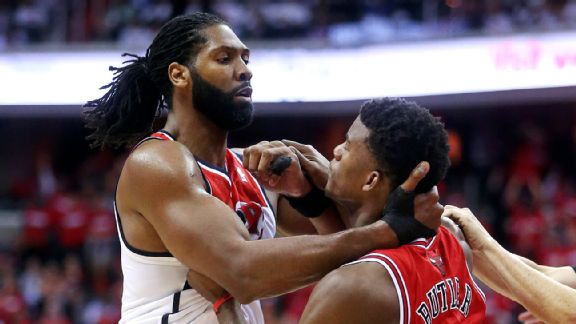
nene fights

In the classic mode of a franchise finished with rebuilding, and ready to repeat their overwhelming success of the previous season, the Washington Wizards went out this offseason and got older. Yes, I’m sure they’d much prefer if we all thought of it as adding “veterans,” and that’s a fine way of looking at it, if you like.

Understand, I’m not against “veterans,” I’m just aware of the reality that athletes over 30 years old typically do two things: get hurt and get worse. Hopefully, Father Time will give the Wizards a reprieve until the summer of 2016 when Kevin Durant is a free agent.

It could happen.

Last week, I ran the Wizards young backcourt (John Wall and Bradley Beal) through my statistical doppelganger machine. Today, let’s look at the oldsters Washington has added in recent years: Nenê, Marcin Gortat, Paul Pierce, Andre Miller, Drew Gooden and Rasual Butler. (Please take a look back at that link above for notes about the method.)

PLAYER POS SEASON AGE TEAM SIM SCORE PPA SEASON PPA PEAK
Nenê PF 2013-14 31 WAS 100 102 176
Danny Manning PF 1996-97 30 PHO 90 107 157
Clifford Robinson PF 1997-98 31 PHO 90 131 143
Ruben Patterson SF 2006-07 31 MIL 89 126 165
Mickey Johnson PF 1983-84 31 GSW 88 83 145
Elton Brand PF 2009-10 30 PHI 87 100 224
Christian Laettner PF 1997-98 28 ATL 87 127 146
Jermaine O’Neal C 2008-09 30 TOR/MIA 87 93 166
Matt Harpring SF 2005-06 29 UTA 87 105 161
Frank Brickowski C 1992-93 33 MIL 87 117 123
Antoine Carr PF 1992-93 31 SAS 87 106 109

The good news is that these doppelgangers were pretty good players. Nenê had the second highest peak PPA behind Elton Brand’s 224. He also peaked about a year later than the average for this group. Frank Brickowski and Clifford Robinson each peaked past 30.

But, Nenê’s production has slipped the past couple years, as has his availability, and there isn’t much reason to think he’ll regain something close to that peak performance. His comps offer an ideal optimist vs. pessimist test: five of his ten most similar players performed better the following season, give performed worse.

PLAYER POS SEASON AGE TEAM SIM SCORE PPA SEASON PPA PEAK
Marcin Gortat C 2013-14 29 WAS 100 154 186
Bill Laimbeer C 1986-87 29 DET 93 154 175
Mike Gminski C 1989-90 30 PHI 90 129 170
Bill Laimbeer C 1988-89 31 DET 90 144 175
Dave Robisch C 1979-80 30 CLE 90 132 132
P.J. Brown PF 1998-99 29 MIA 89 127 150
Bill Laimbeer C 1985-86 28 DET 89 156 175
Billy Paultz C 1977-78 29 SAS 89 164 164
Tom Gugliotta PF 1999-00 30 PHO 89 147 176
Maurice Lucas PF 1981-82 29 NYK 89 149 149
Luis Scola PF 2008-09 28 HOU 88 143 143

Obviously, Gortat isn’t really an “ancient.” He’s just 30 years old, he’s played relatively few minutes for a player his age, and he’s a fitness fanatic. But, eight of the ten most similar seasons to the one Gortat posted last year were followed by a less productive season.

If I throw out the two least similar seasons from Laimbeer, each of the 10 seasons most similar to Gortat last season were followed by a season that was less productive. Bright side here: it’s not like these comps became catastrophic failures. In general, they remained productive…just not quite as good.

PLAYER POS SEASON AGE TEAM SIM SCORE PPA SEASON PPA PEAK
Paul Pierce SF 2013-14 36 BRK 100 131 173
Toni Kukoc PF 2002-03 34 MIL 85 113 164
Vince Carter SF 2012-13 36 DAL 84 107 200
Chris Mullin* SF 1997-98 34 IND 84 156 182
Sam Perkins PF 1996-97 35 SEA 84 119 147
Bob Lanier* C 1983-84 35 MIL 83 152 138
Chris Mullin* SF 1998-99 35 IND 83 168 182
Sam Perkins PF 1994-95 33 SEA 83 132 147
Sam Perkins PF 1995-96 34 SEA 82 114 147
Chucky Atkins PG 2006-07 32 MEM 82 111 111
Terry Porter PG 1998-99 35 MIA 82 114 211

Gotta say that Pierce’s set of doppelgangers may be the weirdest assemblage of players I’ve gotten from The Machine. I think the challenge here is that not very many players even last to age 36 (plus), so the pool is shallow. Note that Pierce’s most similar player has a Sim Score lower than the 10th most similar for Wall, Beal, Nenê and Gortat. In other words, the list above are kinda similar, but not super close.

Overall, this is a terrific group of players that tended to peak young (around age 25-26 — Pierce peaked at 24), but had long-lasting careers. As would be expected for a group of mid-30s athletes, most declined the following season. However, most remained decent players for another year or two.

PLAYER POS SEASON AGE TEAM SIM SCORE PPA SEASON PPA PEAK
Andre Miller SG 2013-14 37 TOT 100 89 172
Rod Strickland PG 2003-04 37 ORL/TOR 90 81 176
Terry Porter SF 2001-02 38 SAS 88 87 211
Mark Jackson PG 2002-03 37 UTA 86 66 181
Don Buse PG 1983-84 33 KCK 86 96 148
Toni Kukoc SF 2004-05 36 MIL 85 84 164
Muggsy Bogues PG 1998-99 34 GSW 85 111 153
Maurice Cheeks PG 1992-93 36 NJN 85 89 180
Rod Strickland PG 2002-03 36 MIN 85 95 176
Gary Grant PG 1997-98 32 POR 84 108 115
Rickey Green PG 1991-92 37 BOS 84 57 157

Miller’s comps are an interesting assemblage of good-to-great players. I was surprised to see Muggsy Bogues make the list, primarily because I’d forgotten the 5-3 Bogues played so many seasons. Just about everyone on this list had a good career, but…as should be expected for a group this old — all 10 either declined or were out of the league completely the following season.

PLAYER POS SEASON AGE TEAM SIM SCORE PPA SEASON PPA PEAK
Drew Gooden C 2013-14 32 WAS 100 106 169
Nazr Mohammed C 2010-11 33 CHA/OKC 86 98 150
Chris Wilcox PF 2010-11 28 DET 86 121 165
Antonio McDyess PF 2006-07 32 DET 86 115 175
Joe Smith PF 2005-06 30 MIL 85 89 143
Nazr Mohammed C 2009-10 32 CHA 85 150 150
Antonio McDyess PF 2005-06 31 DET 85 91 175
Jermaine O’Neal C 2012-13 34 PHO 83 83 166
Chris Kaman C 2012-13 30 DAL 83 101 130
Frank Brickowski PF 1991-92 32 MIL 83 107 123
Chris Gatling PF 1995-96 28 GSW 83 82 131

For Gooden, I wonder whether these comps are particularly meaningful given that he was signed late in the season and played in fairly few games. This group basically split between those who declined the following season and those who got better. The net effect is that the group average was “about the same.” So, it could be a case of lather-rinse-repeat with Gooden this season — albeit with more total minutes.

PLAYER POS SEASON AGE TEAM SIM SCORE PPA SEASON PPA PEAK
Rasual Butler SG 2013-14 34 IND 100 63 89
Steve Kerr PG 1999-00 34 SAS 92 59 124
Jalen Rose SF 2006-07 34 PHO 89 72 117
Matt Bullard PF 1998-99 31 HOU 87 49 98
Jaren Jackson SG 2000-01 33 SAS 87 44 90
Anthony Bowie SG 1997-98 34 NYK 86 72 97
Eric Piatkowski SG 2004-05 34 CHI 86 79 121
Rashard Lewis PF 2012-13 33 MIA 85 60 165
Steve Kerr PG 2001-02 36 POR 85 64 124
Eric Piatkowski SF 2007-08 37 PHO 84 34 121
Eric Piatkowski SG 2005-06 35 CHI 84 16 121

Last up for today: the 15th man, Rasual Butler. You’ll notice this list is heavy on Eric Piatkowski, which isn’t exactly a great thing. Piatkowski hung around into his late 30s for some reason I don’t remember. Perhaps he had a contract that was being passed around. Perhaps he’s a really nice guy. There wasn’t much reason to keep him because of his on-court performance.

Otherwise, it’s mostly swingmen who peaked at the level of an average starter (Rashard Lewis excepted) and then declined. In limited minutes, Butler will probably play a little above replacement level this season. I’d have preferred this roster spot went to someone younger and with potential to improve.

Tomorrow: the rest of the roster.

A Quick Look At Something (Hopefully) Devoid of Meaning

otto porter

The Wizards exhibition season has ended and they’re hopefully in the training rooms and rehabilitation gizmos trying to get healthy for their regular season opener against the Heat next Wednesday.

What does the preseason mean? Roland Beech, then proprietor of 82games.com (and now working for the Dallas Mavericks) ran some correlations a few years back. His findings suggest that preseason provides some indication of a team’s regular season fortunes, but that the previous season’s winning percentage remains a better barometer.

Beech’s numbers showed the preseason matters most to teams who stunk the previous year. The strongest correlations between preseason record and regular season record were between teams that won 30 or fewer games the previous year. Second strongest were for teams winning 40 to 49 games (hello, Wizards).

The Wizards, of course, are going to be on the “preseason doesn’t matter” side of this discussion considering they were 11th in the Eastern Conference in preseason efficiency differential and 29th in offensive efficiency. The league scored 101.8 points per 100 possessions in the preseason; the Wizards scored 95.0.

On the bright side, Washington boasted the league’s 8th best defensive rating.

Below are the preseason estimated Player Production Averages (PPA) for Wizards who played at least 50 minutes. PPA is an overall rating metric I developed that credits players for things they do that help a team win, and debits them for things that don’t. It’s a per-minute stat that’s pace-neutral, (normally) accounts for defense, and (normally) includes a “degree of difficulty” factor based on the level of competition a player faces while on the floor. In PPA, 100 = average, higher is better, and (normally) 45 = replacement level.

I use “normally” in a few spots because the data necessary to calculate a player’s defensive contributions and/or the degree of difficulty factor aren’t available in the preseason. Plus, I don’t know if there can be such a thing as “replacement level” in the preseason.

PLAYER GMS MPG ePPA
james,damion 5 12.6 188
silas,xavier 3 17.7 145
porter,otto 7 26.6 110
miller,andre 6 18.3 96
temple,garrett 7 19.7 91
hilario,nene 5 19.4 90
wall,john 6 25.8 82
gortat,marcin 7 27.4 71
pierce,paul 5 19.6 51
seraphin,kevin 7 21.9 52
rice,glen 4 22.3 46
butler,rasual 5 15.6 32
blair,dejuan 7 21.3 -3
beal,bradley 3 20.7 -38

Do NOT use these numbers to make bold predictions or sweeping pronouncements. These represent a tiny sample size — a sample in which many players are basically going through the motions at least some of the time — and are presented just as a general barometer for how players performed in the preseason.

Looking back at last year’s preseason numbers and see that Bradley Beal had an outstanding preseason, but wasn’t as good in the regular season. Meanwhile, Trevor Ariza and John Wall were bad in exhibition games, but good in real ones. Some guys were about the same in both — Jan Vesely, Al Harrington, Eric Maynor, Kevin Seraphin and Garrett Temple.

This year…most of the team’s rotation players were unproductive. Wall had an ePPA below 20 most of the preseason until he had a good performance against the Knicks. Seraphin may yet have that breakout season so many are hoping for, but ended his preseason in the same general territory where he’s spent most of his young career.

The team’s bright spot in the preseason was Otto Porter. He was a little above average — encouraging progress from a second year player who was mostly overwhelmed as a rookie.

Now…real games.

Wizards Doppelgangers: The Young Backcourt

wall and beal

At this point in NBA history, there aren’t many “original” players. Today’s players are like players who have come before — in production, if not look and style. “This guy reminds me of…” is a game scouts and fans play, often to the point of absurdity.

Following in the footsteps of basketball statistical analysts like MikeG and Kevin Pelton, I’ve created a Statistical Doppelganger machine of my own. The Machine compares players across 14 categories, including age, minutes, box score stats and my own overall rating metric Player Production Average (PPA). Then, it combines those differences and…voila…players with the smallest differences leap to the top of the list — similar production at similar age.

The Machine uses pace-adjusted per-minute stats, but does not consider attributes such as height, weight or position.

I’ll post results for Wizards players leading up to the season. These “most similar” lists ultimately work their way into my projection for the team’s record this season, which I’ll publish closer to the season opener.

First up through the Statistical Doppelganger Machine: PG John Wall.

PLAYER POS SEASON AGE TEAM SIM SCORE PPA SEASON PPA PEAK
John Wall PG 2013-14 23 WAS 100 139 139
Kemba Walker PG 2012-13 22 CHA 89 131 131
Tony Parker PG 2004-05 22 SAS 89 136 187
Steve Francis PG 1999-00 22 HOU 89 133 172
Baron Davis PG 2005-06 26 GSW 89 132 163
Kenny Anderson PG 1993-94 23 NJN 89 129 161
Stephon Marbury PG 1998-99 21 MIN 89 130 164
Isiah Thomas* PG 1987-88 26 DET 88 130 181
Brandon Roy SG 2007-08 23 POR 88 143 189
Robert Pack PG 1995-96 26 WSB 88 143 143
Kenny Anderson PG 1994-95 24 NJN 88 135 161

While Wall’s overall production the past two seasons was flat (he posted a PPA of 139 in both seasons), his statistical similars is a good group for the most part. The average peak PPA for this group is 163, with Brandon Roy and Tony Parker at the high end and Kemba Walker (who’s still extremely young himself) and Robert Pack at the low.

Note the presence of Hall of Fame PG Isiah Thomas, as well as several dynamic performers like Steve Francis, Baron Davis and Stephon Marbury. And keep in mind that while Marbury ended up as The Official Selfish Player of the NBA, he was a first-rate talent who was highly productive.

For those who might be worried by seeing the names of Kenny Anderson and Robert Pack, well…stop it. Anderson was a good player, but didn’t possess anything like Wall’s elite athleticism. Plus, Anderson’s performance drop-off wasn’t really until he’d reached his thirties — and more than 23,000 career minutes. Wall isn’t even halfway there yet.

Pack was a not bad player when he could stay healthy, which really didn’t happen once he became a starter. In his best season, he managed to appear in just 31 games. Wall played more games than that in his third season, when he missed the first 33 games with a stress injury in his knee. In his four-year career, Wall has played every possible game for the Wizards twice.

While I’m not giving away my projection for Wall (yet), these comps suggest good things. I expect Wall to improve this season, and to peak at an All-NBA level in the next few years.

Next up, Bradley Beal.

PLAYER POS SEASON AGE TEAM SIM SCORE PPA SEASON PPA PEAK
Bradley Beal SG 2013-14 20 WAS 100 96 96
Brandon Jennings PG 2010-11 21 MIL 90 108 140
Brandon Jennings PG 2009-10 20 MIL 89 95 140
Mike Miller SF 2001-02 21 ORL 89 106 140
O.J. Mayo G 2008-09 21 MEM 89 81 96
Jason Richardson SF 2002-03 22 GSW 88 91 157
Quentin Richardson SG 2003-04 23 LAC 88 97 123
Michael Finley SF 1996-97 23 DAL 88 94 138
Calbert Cheaney SG 1994-95 23 WSB 88 88 88
Jamal Crawford SG 2003-04 23 CHI 88 107 113
Dennis Scott SF 1992-93 24 ORL 87 89 141

While I’m a big believe in Beal, I was not thrilled by this group of similars. Brandon Jennings? Twice? Really? OJ Mayo? Calbert Cheaney? Blech.

If you want to throw out one of those seasons from Jennings, be my guest. Next on the list was Klay Thompson last season, Eric Gordon, and then a season from Mahmoud Abdul-Rauf. None of whom significantly change the analysis.

There’s nothing particularly wrong with this group, except…none of them are Ray Allen or James Harden, or players of that caliber.

For the most part, though, this isn’t a particularly impressive group. The average peak PPA is 128, which is about the level of an average starter. Only Jason Richardson from this list peaked at a level that typically earns a spot on the All-Star team. What’s kinda interesting is that there are “repeaters” on Beal’s rookie and second year lists.

Players showing up as similar in both seasons include:

  • Mike Miller
  • Jason Richardson
  • Dennis Scott
  • Michael Finley.

Again, not a bad group…just not as strong a list as I’d have hoped. Still, Beal is young and seems to have the work ethic to improve. My gut says his ceiling is higher than what the numbers are saying…but that could just be the fan talking.

Next up: The Old Bigs — Marcin Gortat and Nenê.

Wizards 2014 Playoffs Wrap-Up

NBA Washington Wizards vs Chicago Bulls Play-Offs Game 4
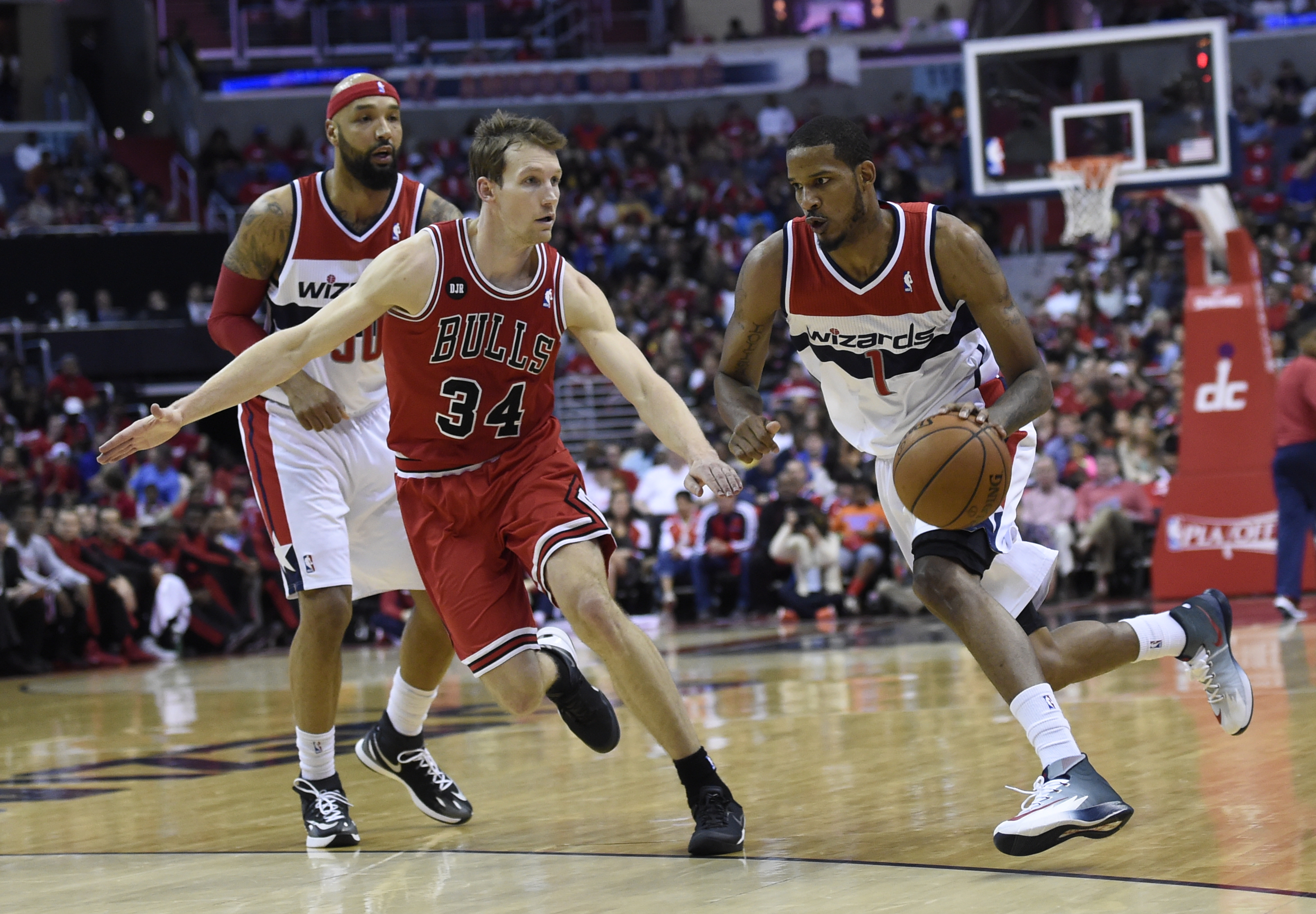
Trevor Ariza dominated in the playoffs despite low-blow karate chop from Mike Dunleavy.

Just in time for the start of training camp, here’s a look back at the Wizards run in the playoffs this year. For those with short memories, Washington beat the Bulls in round one, and lost to the Pacers in round two. It was a good couple weeks for a franchise that’s been among the league’s worst the past several years.

I’ve finally gotten around to crunching the data to produce the Player Production Average (PPA) numbers. PPA is an overall rating metric I developed that credits players for things they do that help a team win, and debits them for things that don’t. It’s a per-minute stat that’s pace-neutral, accounts for defense, and includes a “degree of difficulty” factor based on the level of competition a player faces while on the floor. In PPA, 100 = average, higher is better, and 45 = replacement level.

Like any stat extracted from a small sample size, there’s a grain of salt factor. For example, Bradley Beal led the team with 458 playoff minutes — the cut when I look at regular season numbers is usually 500 minutes. Only 21 players reached 500 or more playoff minutes this year. That said, here are the numbers:

PLAYER GMS MPG RS PPA PS PPA
Trevor Ariza 11 37.0 145 193
Marcin Gortat 11 34.7 154 148
Bradley Beal 11 41.6 96 139
John Wall 11 38.2 139 82
Trevor Booker 9 16.2 123 75
Nene Hilario 10 32.5 102 49
Drew Gooden 10 14.6 106 37
Martell Webster 11 17.7 77 35
Andre Miller 11 9.8 86 12
Al Harrington 7 8.4 24 -22
Garrett Temple 10 .9 24 -33
Otto Porter 3 2.0 15 -49
Kevin Seraphin 4 1.5 35 -274

RS PPA = regular season

PS PPA = post-season

The numbers reflect Ariza’s tremendous playoffs performance. A 193 in the regular season would be worthy of All-NBA selection in most years. Among playoff performers with at least 100 total minutes, it ranked third overall behind Lebron James (263) and Chris Paul (211).

Gortat’s production improved as the playoffs went on. His first round PPA was a shade below average, but his play against Indy in round two pulled his full playoffs rating into the vicinity of his regular season performance.

The team’s only other above-average playoffs producer was Beal, who was terrific in round one (152) and solid in round two. A promising post-season debut for a talented kid who will still be among the league’s youngest players when he starts his third season in a few weeks.

The post-season wasn’t so kind to Beal’s backcourt partner, John Wall. In the first round, Wall’s overall production wasn’t overwhelming, but he thoroughly outplayed Chicago’s guards. Indiana did a better job of forcing him out of comfortable plays, and Wall struggled.

Now-departed Trevor Booker was solid in the first round, but played little in the second round. Friend of the blog Ben Becker wondered if Washington might have won against the Pacers if they’d played Booker instead of Gooden and/or Harrington. And, that’s definitely possible. The games were close and hard-fought, and the Wizards got next to nothing from Gooden and less than nothing from Harrington. Booker was fifth on the team in per minute production during the post-season, but 10th in round two minutes.

Against the Pacers, the Wizards got good production from Gortat, and little else from the front-court. Using the trio of Nenê, Gooden and Harrington with so little court time for Booker may well have cost Washington a trip to the Eastern Conference Finals.

Similarity scores coming soon.

That Path to the Eastern Conference Finals

partingredsea08

In my last post, I alluded to a kind of parting of the seas for the Wizards in the Eastern Conference playoffs. The reasoning is pretty simple: the Wizards should be considered strong favorites over either the Pacers or the Hawks. That’s right, either.

If this was a “normal” NBA season, Washington would be a heavy underdog to the top seeded Pacers. But, if this was a “normal” season, the Wizards wouldn’t have been the fifth seed with 44 wins, Atlanta wouldn’t have been in the playoffs with a sub-.500 record, and Indiana wouldn’t have disintegrated over the last two months of the season (and wouldn’t have had to fight and claw to get to a seventh game against such a pedestrian opponent).

This is an abnormal season, though, and the weak Eastern Conference coupled with the stumble-bum Pacers at the top have given the Wizards their best chance of reaching the NBA’s final four since…1979.

That the Wizards would be favored vs. Atlanta is unsurprising. The Hawks weren’t much good during the regular season. They struggled after center Al Horford tore a pectoral muscle (again), and limped into the playoffs. The Pacers need a bit more explanation — which I provided nearly a month ago when I wondered whether Washington should tank for seventh so they could face Indiana in the first round.

If you want more detail, please click and read on that link. The upshot is this: since the All-Star break, the Pacers have been a very different team. They’ve actually had a negative scoring differential, which is something I don’t think I’ve ever seen for an extended stretch from a highly seeded team. Indeed, since the All-Star break, the Pacers have had the scoring differential of a 34-win team (over an 82-game schedule), just one game better than the eighth seed Hawks. Over that same time frame, Washington’s differential was that of a 52-win team.

Don’t go getting too excited about that differential: the Wizards played an incredibly easy schedule after the All-Star break. Still, it’s illustrative of the significant changes in the Eastern Conference. Since that All-Star break, the Wizards had the third best efficiency differential of the East’s playoff teams. The Pacers had the second worst.

So, what are the odds? Applying a combination of full season numbers, post All-Star break numbers, and playoff performance, I estimate Washington having the following chances of beating these possible Eastern Conference playoff opponents:

  1. Indiana — 64%
  2. Miami — 27%
  3. Toronto — 50%
  4. Chicago — 100%
  5. Washington — 0%
  6. Brooklyn — 67%
  7. Charlotte — eliminated
  8. Atlanta — 81%

The odds will fluctuate a bit after that seventh game, but the fundamental point remains: Washington is in a terrific position to reach the Eastern Conference Finals. Getting farther is a dicier proposition, especially if they end up facing Miami.

Round One Wrap-Up

The 4-1 first round win over the Chicago Bulls is done, but there are still a few points worth making. While there’s been some chatter about how flawed the Bulls are (including by me), Chicago actually looked pretty strong entering the post-season. It’s trademark defense was excellent down the stretch, and its offense was about average. The Eastern Conference team with the best efficiency differential after the All-Star break? The Bulls.

Washington’s first round victory wasn’t a case of getting a crappy opponent, it was a case of the Wizards outplaying a decent team. Give credit where it’s due: a big reason the Bulls looked so bad is that the Wizards were on their game.

Finally, here’s a look at the Player Production Averages (PPA) for the series. PPA is an overall rating metric I developed that credits players for things they do that help a team win, and debits them for things that don’t. It’s a per-minute stat that’s pace-neutral, accounts for defense, and includes a “degree of difficulty” factor based on the level of competition a player faces while on the floor. In PPA, 100 = average, higher is better, and 45 = replacement level. (Don’t pay much attention to the extreme scores at the bottom of the table — tiny sample sizes don’t mean much of anything.)

TEAM Player GMS MPG PPA
CHI Taj Gibson 5 30.8 210
WAS Trevor Ariza 5 39.0 193
WAS Bradley Beal 5 41.0 152
CHI Mike Dunleavy 5 32.6 139
WAS Trevor Booker 5 24.2 134
WAS John Wall 5 38.6 128
WAS Martell Webster 5 18.0 113
WAS Nene Hilario 4 35.8 107
CHI Joakim Noah 5 42.0 97
WAS Marcin Gortat 5 36.0 97
CHI Jimmy Butler 5 43.6 88
CHI Carlos Boozer 5 24.2 58
CHI Kirk Hinrich 5 33.4 22
WAS Andre Miller 5 10.4 10
CHI D.J. Augustin 5 28.2 5
WAS Kevin Seraphin 1 1.0 0
WAS Drew Gooden 4 9.0 -35
CHI Tony Snell 5 9.2 -47
CHI Nazr Mohammed 2 2.5 -189
WAS Al Harrington 3 2.3 -364
WAS Garrett Temple 4 0.3 -1889

Interesting that the most productive player in the series was Taj Gibson, who played just 30.8 minutes per game. Meanwhile, Chicago started Carlos Boozer and played him 24.2 minutes per game despite production that wasn’t much better than replacement level.

Also interesting to me is how the production numbers differ from popular perception. One “experts” poll named Nenê as Washington’s first round “MVP.” When it comes down to doing the things that cause teams to win, he rated sixth best for the Wizards — behind Ariza, Beal, Booker, Wall and Webster.

In total, eight players rated “above average” in this series. Six of those players wore Wizards uniforms. While Gibson was good throughout the series, the only other Bull above average was Dunleavy, and most of his production came in a single game.

Path Opening for Wizards to Make Deep Playoff Run

Ariza dominating

As enjoyable as the Wizards-Bulls series has been so far (for Wizards fans, at least), there’s a tangible feeling that Washington has drawn to an inside straight. (That’s a fancy poker way of saying they’ve gotten lucky.) Yes, I’m aware the Wizards have looked good in the playoffs — teams look good when they win.

I’m also aware that the “experts” at ESPN and TNT (and elsewhere) have declared this Washington as a near-perfect squad with “no weaknesses.” But, much (most?) of the commentary has been a veritable catalog of cognitive biases. Over the course of six months and 82 games, the Wizards were average. A perfectly average team playing against their schedule would be expected to win 43-44 games. They won 44. That’s not a team without weakness — it’s an average team.

In the playoffs, they’re beating the Bulls — a slightly better than average team overall this season, but also a team with a major flaw: one of the league’s worst offenses.

Meanwhile, the Indiana Pacers have continued their post-All-Star break swoon and are struggling to keep pace with the sub.500 Atlanta Hawks. The Wizards should be favored against either team in a second round matchup. Which would put Washington into the conference finals against (probably) the Miami Heat.

It’s the 2013-14 NBA Eastern Conference, where being meh is good enough because nearly everyone else is meh-er.

In many ways, the Wizards this season are a fascinating experiment in perception. On one hand, there’s a solidly average regular season and no top-end production. On the other hand, there’s a likely first-round win against the Bulls and a good chance they make a run to the Eastern Conference Finals.

Folks in the “they’re really not that good” camp can point to the historically weak conference and Indiana’s meltdown, which carved out the path. But…it’s not Washington’s fault their opponents suck. The only thing they can do is play their game and beat whoever’s put in front of them. Being average when others are bad might be a functional equivalent of being good.

For me, it’s clear that the Wizards are an average team that’s drawn a flawed opponent in the first round and has a very good chance of getting a flawed opponent in the second round as well. That said, being average this season and next is probably good enough to hang around in the playoffs for the next year or two before Washington’s older players decline and other teams rebuild sufficiently. Washington won’t be a realistic title contender (even if they make the Eastern Conference Finals), but it’ll be fun to see them playing in May.

In other words, have fun, but don’t go overboard revising conclusions drawn from six months and 82 games worth of data over a few weeks against a couple opponents. What would be cause for some revision? Beating the Heat and making it to the Finals.

At any rate, here are a couple looks at the Wizards-Bulls first round series through the first four games. First up, here’s Player Production Average. PPA is an overall evaluation stat I developed. It’s designed to credit players for things they do that help a team win and “debit” them for things that don’t — each in proper proportion. It’s a pace-adjusted, per minute stat that accounts for defense and includes a degree of difficulty factor based on the level of competition a player faces while on the floor. In PPA, 100 = average, higher is better and 45 = replacement level.)

Player TEAM G MPG PPA
Taj Gibson CHI 4 32.3 215
Trevor Ariza WAS 4 39.5 212
Mike Dunleavy CHI 4 32.3 168
Bradley Beal WAS 4 40.8 161
Martell Webster WAS 4 18.5 135
John Wall WAS 4 38.5 121
Trevor Booker WAS 4 24.5 99
Marcin Gortat WAS 4 36.8 86
Joakim Noah CHI 4 41.8 85
Carlos Boozer CHI 4 23.3 76
Nene Hilario WAS 3 34.7 74
Jimmy Butler CHI 4 43.8 70
Andre Miller WAS 4 10.8 63
D.J. Augustin CHI 4 29.5 43
Kirk Hinrich CHI 4 32.0 0
Kevin Seraphin WAS 1 1.0 0
Drew Gooden WAS 4 9.0 -33
Tony Snell CHI 4 10.3 -59
Nazr Mohammed CHI 2 2.5 -180
Al Harrington WAS 3 2.3 -346
Garrett Temple WAS 3 0.3 -1408

The top two producers have been Taj Gibson and Trevor Ariza. Mike Dunleavy’s high rating is largely a product of a single terrific game in a small sample size. Bradley Beal is having a good series. John Wall and Martell Webster have also been solid.

Folks have gotten excited about Nenê’s play, but the big man hasn’t really played all that well outside of game one.

Want to see why Chicago is struggling? Their only above average performers in these four games have been Gibson and Dunleavy. Noah, Boozer and Butler have been subpar. Augustin and Hinrich have been wretched — especially Hinrich who has given the Bulls 32.0 minutes per game of nothing.

Last, here’s a look at estimated wins added (call them eWins) for the series:

Player TEAM G MPG eWINS
Trevor Ariza WAS 4 39.5 0.68
Taj Gibson CHI 4 32.3 0.56
Bradley Beal WAS 4 40.8 0.53
Mike Dunleavy CHI 4 32.3 0.44
John Wall WAS 4 38.5 0.38
Joakim Noah CHI 4 41.8 0.29
Marcin Gortat WAS 4 36.8 0.26
Jimmy Butler CHI 4 43.8 0.25
Martell Webster WAS 4 18.5 0.20
Trevor Booker WAS 4 24.5 0.20
Nene Hilario WAS 3 34.7 0.16
Carlos Boozer CHI 4 23.3 0.14
D.J. Augustin CHI 4 29.5 0.10
Andre Miller WAS 4 10.8 0.05
Kirk Hinrich CHI 4 32.0 0.00
Kevin Seraphin WAS 1 1.0 0.00
Nazr Mohammed CHI 2 2.5 -0.02
Drew Gooden WAS 4 9.0 -0.02
Garrett Temple WAS 3 0.3 -0.03
Tony Snell CHI 4 10.3 -0.05
Al Harrington WAS 3 2.3 -0.05

This eWins approach uses total production to estimate each player’s individual share of team wins. It works reasonably well over the full season. For the series, it has the Wizards with a 2.4 to 1.7 eWins lead, which is reflective of a couple very close games (Washington’s overtime win in game two, and Chicago’s narrow game three victory.)

Wizards Slouching Toward the Playoffs

The numbers in the table below are this week’s Player Production Average (PPA) update. PPA is a metric I developed that credits players for things that contribute to winning and debits them for things that don’t — each in proper proportion. PPA is pace adjusted, accounts for defense and includes a degree of difficulty factor. In PPA, 100 = average, higher is better and 45 = replacement level. PPA is a per minute stat.

PLAYER GMS MPG LW PPA
Marcin Gortat 77 32.9 150 153
Trevor Ariza 73 35.7 151 143
John Wall 78 36.6 141 138
Trevor Booker 68 21.4 115 119
Drew Gooden 20 18.6 127 114
Nene Hilario 50 29.9 101 100
Andre Miller 24 14.4 104 91
Bradley Beal 69 34.7 89 89
Martell Webster 74 28.1 82 80
Jan Vesely 33 14.2 68 68
Kevin Seraphin 50 11.4 35 37
Chris Singleton 24 10.4 34 32
Garrett Temple 71 8.9 25 25
Glen Rice 11 9.9 20 20
Otto Porter 33 8.2 13 19
Al Harrington 30 14.9 13 8
Eric Maynor 23 9.3 8 8

Rough week for the Wizards, which is reflected in the individual numbers. On the positive side were Marcin Gorat, (who continues to have a good season), Trevor Booker (who many fans want removed from the rotation), and Otto Porter (who performed better, but still rates well below replacement level).

Even with a bad week, Trevor Ariza is having a career season. He gets a bit of a pass for the last few games — he’s been beset with the flu, and really shouldn’t have even been on the floor.

John Wall’s production fell for a third straight week. It’s been fashionable to celebrate Wall’s improvement and his ascendancy to All-Star status, but it’s worth noting that his 138 PPA this season is virtually identical to the 139 he posted last year.

Here’s a visualization of each player’s PPA through the season. Since this is basically a weekly rolling season average, the larger fluctuations at the beginning followed by a flatter line toward the end is to be expected. Note the fairly steady climb of Gortat’s PPA — he’s been playing better as the season has progressed. The production slip from Wall the past three weeks is also apparent.

Check out the steady production from Booker. Webster’s season-long decline is apparent in his graph.

Drew Gooden’s production has fallen steeply after a hot start. He may not be the godsend Wizards fans had hoped for. Andre Miller’s play has been up and down, but at least sorta trending up.

ppa trend

Wizards Weekly: Playoffs Clinched

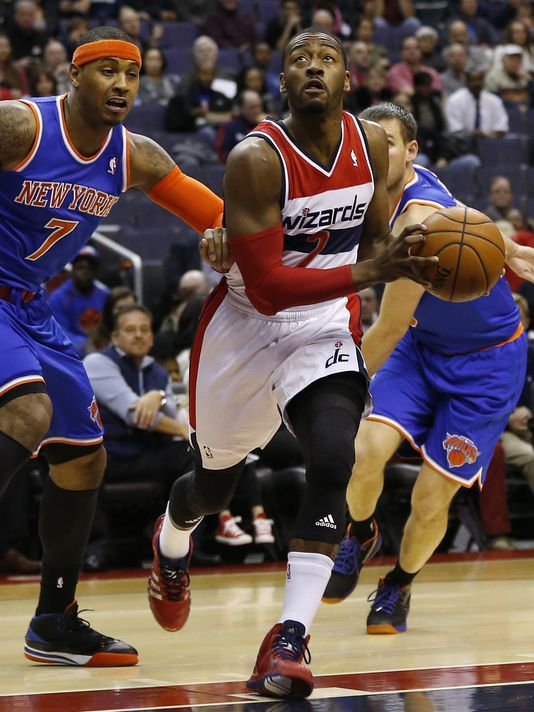
wall past carmelo

Since the Wizards cemented a spot in this year’s playoffs, I’m going to focus more on the stellar play of Trevor Ariza and Marcin Gortat, and sorta gloss over the things that bug me a bit in this week’s numbers.

Some positives:

  • Al Harrington had a good enough week that he no longer rates as the league’s least productive power forward. That honor belongs to Brandon Davies.
  • Marcin Gortat’s PPA rose to 150 — the highest its been since December 11.
  • I missed it last week, but the Wizards have no one with a negative PPA. The team’s least productive player is Eric Maynor, but he’s not in the NBA after being released by Philadelphia.
  • Otto Porter scored nine points in five minutes, and added 10 points to his PPA.

Below is this week’s Player Production Average (PPA) update. PPA is a metric I developed that credits players for things that contribute to winning and debits them for things that don’t — each in proper proportion. PPA is pace adjusted, accounts for defense and includes a degree of difficulty factor. In PPA, 100 = average, higher is better and 45 = replacement level. PPA is a per minute stat.

PLAYER GMS MPG LW PPA
Trevor Ariza 70 35.7 151 151
Marcin Gortat 74 32.7 145 150
John Wall 75 36.6 144 141
Drew Gooden 17 18.9 148 127
Trevor Booker 65 21.0 116 115
Andre Miller 21 14.8 81 104
Nene Hilario 49 30.1 101 101
Bradley Beal 66 34.5 90 89
Martell Webster 71 28.2 81 82
Jan Vesely 33 14.2 68 68
Kevin Seraphin 49 11.5 36 35
Chris Singleton 23 10.7 40 34
Garrett Temple 69 9.1 22 25
Glen Rice 11 9.9 20 20
Al Harrington 28 15.5 1 13
Otto Porter 32 8.2 3 13
Eric Maynor 23 9.3 8 8

Okay, I can’t help myself — now for the stuff that worries me:

  • Wall’s PPA is down to 141. That’s a good score, but his PPA last season was 139. And his offensive efficiency has slipped back below average.
  • Gooden’s PPA dropped sharply this week. His efficiency numbers are still insanely good — heck, all his numbers are, except for defense. There are way too many defensive breakdowns when he’s on the floor, and he continues to lose points in the defense portion of PPA.
  • Beal and Webster both rate solidly below average. This isn’t a surprise — Beal’s still a kid trying to figure out his spot in the league, and Webster is basically regressing to his mean this season. But, it does mean the Wizards aren’t getting a ton of production from their SG — and both rate as below average defenders.


Wizards in the Playoffs?! What Are the Odds?

randy_wittman_john_wall

With last night’s 118-92 thumping of the Boston Celtics, the Wizards clinched a playoff spot for the first since 2008. After a hearty “Woo hoo!” and a few moments of basking in the return to the best basketball tournament on the planet, I immediately started wondering — what are the Wizards chances of advancing?

The answer, of course, depends on the opponent. So, I broke out the odds estimator, and ran the numbers for the Eastern Conference teams that would be in the playoffs if the season ended today (April 3, 2014). I’ll update when the season ends.

SEED TEAM ODDS
1 MIA 19%
2 IND 21%
3 TOR 32%
4 CHI 42%
5 BRK 56%
6 WAS
7 CHA 66%
8 NYK 69%

The “odds” column shows what I estimate the likelihood that the Wizards will defeat that opponent in a seven-game series. So, Washington has a 19% chance of beating the Heat, 21% chance of toppling the Pacers, and so on down the list.

Their most likely first round opponent is either Toronto or Chicago. Between the two, the numbers suggest the Bulls are the more favorable match-up — the Wizards have a 42% chance of beating them in the first round, but only a 32% chance against the Raptors.

The Wizards do NOT want to slip to the seventh or eighth seed to face Miami or Indiana where their chances plummet.

What’s most likely to happen? Well, I ran my odds calculator on the remaining schedules for the Wizards, Raptors, Bulls, Nets and Hornets. Here’s a handy table showing their projected record in their remaining games, their projected final records, and their projected seeds:

  REMAINING GAMES FINAL RECORD PROJECTED SEED
  W L W L  
TOR 7 0 50 32 3
BRK 7 1 47 35 4
CHI 3 4 46 36 5
WAS 5 2 44 38 6
CHA 5 2 42 40 7

Chicago has the toughest remaining schedule, but everyone else gets a few games against Eastern Conference bottom feeders. Based on what’s left of the NBA season, it’s tough to see Washington climbing to fourth or fifth. They’d pretty much have to go 7-0 and hope Chicago and/or Brooklyn falter. And, the Wizards will need to close the season strong to avoid getting caught by Charlotte, which would mean a first round series against the Pacers.