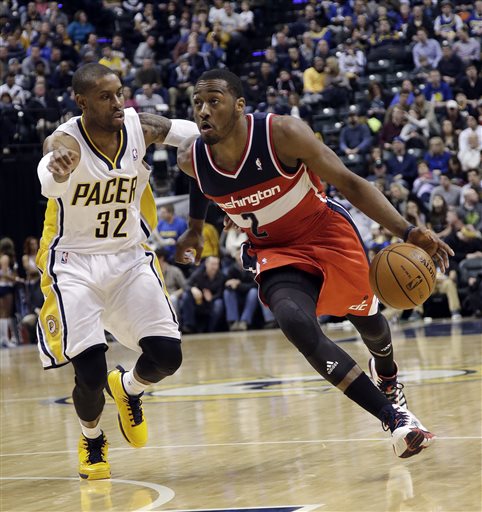
The Anointing of John Wall

Folks have been tripping over each other to anoint John Wall a Genuine SuperStar and Franchise Savior since…well…before he even signed a contract. The Wizards literally gave him red carpet treatment when he arrived in DC after being made the number one selection. Since then, he’s been proclaimed as a star, as one of the game’s elite, and was awarded a max contract basically as soon as the Wizards could offer it.

Jason Reid’s still premature piece last week heralding Wall’s arrival as a “…true NBA star” seems nearly an example of restraint in comparison.

This blog post should not be read as “hate” for Wall. He has improved significantly since his first two seasons, and he has become good. He continues to possess elite (true star) potential, but despite the array of assertions that he already is a star…he’s not. Yet.

Before I go any further, it’s probably worthwhile for me to articulate what I mean by “star.” For me, it’s not a synonym for “well known” or “popular.” They’re guys consistently do the things that cause their teams to win games. Through the years, there have always been “media” stars — guys whose reputations exceed their actual production. Usually, they have high per game scoring averages — think Dominique Wilkins, Allen Iverson and (in recent years) Carmelo Anthony (although Anthony’s production has moved somewhat closer to his rep this season).

At 23 years old, Wall is decidedly NOT in that category. He’s a very good player now, and he’s on the cusp of greatness — if he continues to improve his jumper and cut down on turnovers. He could be one of the game’s elite in the very near future. He’s just not quite there yet.

Here are a few illustrations through the prism of the metric I developed, Player Production Average (PPA). PPA credits players for things that contribute to winning and debits them for things that don’t — each in proper proportion. PPA is pace adjusted, accounts for defense and includes a degree of difficulty factor. In PPA, 100 = average, higher is better and 45 = replacement level. PPA is a per minute stat.

First, let’s look strictly at point guards. In most seasons, it takes a PPA of 225 or higher to be an MVP candidate. Players scoring above 200 are among the game’s truly elite players. Here are this season’s top 10 PGs (minimum 500 minutes):

  1. Chris Paul — 250
  2. Stephen Curry — 197
  3. Goran Dragic — 175
  4. Kyle Lowry — 170
  5. Russell Westbrook — 166
  6. Mike Conley — 163
  7. Ty Lawson — 158
  8. John Wall — 150
  9. Tony Parker — 149
  10. Damian Lillard — 146

If I redo the analysis looking at totals instead of per minute production (to reward durability), Wall moves to fifth behind Curry, Lowry, Paul and Dragic.

Based on my analysis of Wall’s game and what I know of his work ethic and personality, I’d take his future over the future of anyone on the list ahead of him except Paul. But he needs to become more productive to become a truly elite PG.

Comparing Wall to the rest of the league, it’s hard to support the claim that he’s a “true star” (elite player). He’s top 20 in total production, in part because of he plays lots of minutes. In per minute production, he ranks just outside the top 40.

As I discussed a few weeks back, Wall’s positive contributions are plentiful — not unlike some of the game’s best players. But, his negative plays (poor shot selection, missed shots, and turnovers) are also abundant. I estimate that his shooting from the floor has cost the team 59 points so far this season — just under a point per game. That doesn’t sound like much, but over the course of 60 games it works out to about two more wins. Just two more wins at this point would have the Wizards tied with Chicago for the fourth seed, and just a half game behind Toronto for third.

‘Nuff said.

To this week’s PPA update:

PLAYER GMS MPG LW PPA
Trevor Ariza 55 36.0 155 159
John Wall 60 36.9 147 150
Marcin Gortat 60 32.9 144 141
Trevor Booker 50 20.6 112 115
Nene Hilario 49 30.1 103 103
Bradley Beal 51 33.8 94 93
Martell Webster 57 28.9 89 88
Jan Vesely 33 14.2 69 69
Chris Singleton 18 12.0 53 54
Andre Miller 6 13.8 88 52
Kevin Seraphin 43 12.2 43 42
Garrett Temple 56 10.9 20 21
Glen Rice 11 9.9 21 21
Eric Maynor 23 9.3 8 8
Otto Porter 26 8.8 -6 2
Al Harrington 13 14.2 12 -9
Drew Gooden 2 7.0 -146

Ariza and Wall continue to lead the way for the Wizards. Ariza is having a career-best season in his contract year. I have to think the Wizards would like to re-sign him, and I suspect Ariza’s more modest career production may keep his price more manageable.

Martell Webster’s PPA declined by one point — down for an eighth consecutive update. It’s good the team is giving him some days off to rest his ailing back, which is the likely cause for his production dip.

The new and returning old guys (Andre Miller, Drew Gooden and Al Harrington) were all awful since the last update.

It was good to see Otto Porter make some plays in the loss to Memphis. He’s back out of negative PPA territory, unlike number one overall pick Anthony Bennett whose PPA is -3.

A couple more entries in Small Sample Size theater: the departed Wizards. Jan Vesely’s PPA in Washington: 69. In 59 minutes for Denver: 58. PG Eric Maynor in Washington: 8. In 68 minutes for Philly: 48. That 48 was right around Maynor’s career average before signing with the Wizards. I still have no idea why the Washington front office thought he’d be good. Thankfully, he can now do a job for which he’s perfectly suited — helping Philadelphia lose games.

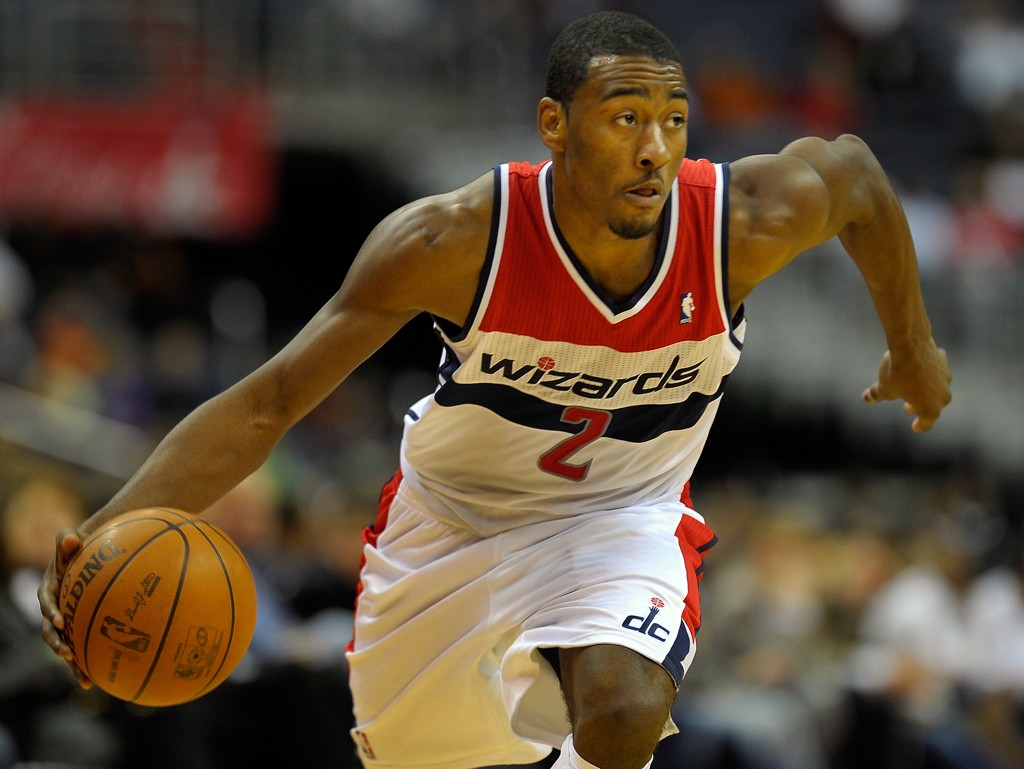
Andre Miller Is A Big Upgrade

wall dribbles

No time for anything in-depth today, but I wanted to get the numbers up. The Andre Miller trade is paying off already. In his first three games (and 44 minutes), Miller has been a bit more than four times as productive as Garrett Temple on a per minute basis.

John Wall, Trevor Ariza, Bradley Beal, and Marcin Gortat had good weeks. Trevor Booker did not. Martell Webster’s production declined for a seventh consecutive update.

The table below shows the just about weekly results of my metric: Player Production Average (PPA). PPA credits players for things that contribute to winning and debits them for things that don’t — each in proper proportion. PPA is pace adjusted, accounts for defense and includes a degree of difficulty factor. In PPA, 100 = average, higher is better and 45 = replacement level.

PLAYER GMS MPG LW PPA
Trevor Ariza 52 35.7 148 155
John Wall 57 36.8 140 147
Marcin Gortat 57 32.4 139 144
Trevor Booker 47 20.1 118 112
Nene Hilario 49 30.1 103 103
Bradley Beal 48 33.5 90 94
Martell Webster 55 28.8 91 89
Andre Miller 3 14.7 88
Jan Vesely 33 14.2 69 69
Chris Singleton 15 10.9 60 53
Kevin Seraphin 43 12.2 44 43
Glen Rice 11 9.9 21 21
Garrett Temple 54 11.2 20 20
Al Harrington 10 15.1 6 12
Eric Maynor 23 9.3 8 8
Otto Porter 24 8.9 -4 -6

Should the Wizards Fire Randy Wittman?

USP NBA: WASHINGTON WIZARDS AT DETROIT PISTONS S BKN USA MI

I was all set to write a piece arguing that it would be pointless to fire Randy Wittman. Yeah, he’s not a good coach, but in my view the team is performing about as I expected. The Wizards are neither good nor bad. They’re mediocre. Or, looked at another way, the Wizards are BOTH good and bad. Which is merely another way of saying the same thing: this is an average team.

They are what their talent says they are. I don’t believe that any coach could come in and transmogrify this roster into a…well…what exactly? a contender for the third seed? Blech.

What would “fix” the Wizards? Fewer two-point jumpers? More screen/roll with John Wall and Marcin Gortat? Better defined roles? A rotation that somehow includes developmental minutes for Otto Porter? A more solid defensive scheme? More consistent effort? Sure, any or all.

Some of that could be influenced by the coach, some not. My position has been that Wittman is a problem, not The Problem. And, “The Problem” is that the team doesn’t have enough talent, which is a result of a series of bad decisions by the front office. My thinking has been this: Don’t let Ernie Grunfeld off the hook. Make him live with the success or failure of the team he assembled — players AND coaches.

Except, let’s look at reality. Owner Ted Leonsis set the franchise goal for the season: Make the playoffs. In very large part because of a historically weak Eastern Conference, the Wizards will almost certainly accomplish that goal. While they’d be roughly the 11th best team in the West, they’re 5th or 6th best in the East. It would take a catastrophic collapse over their final 29 games to miss the postseason.

Assuming Leonsis is a man of his word, Grunfeld will be retained in the offseason. It’s difficult to envision a scenario in which Washington makes the playoffs and Leonsis doesn’t bring back Grunfeld and The Coach.

I use “The Coach” intentionally, because the question for Wizards fans is whether you want to root for a team that’s stuck with Grunfeld and Wittman or a team that’s stuck with Grunfeld and Someone Else. My feeling is that Someone Else — whether it’s an interim coach who’s replaced by a “permanent” hire after the season or whether it’s an interim coach who “succeeds” and keeps the job — will be a better long-term option for the Wizards than Wittman.

So, even though Wittman has been saddled with a roster that doesn’t include a single player that ranks among the league’s 40 most productive players (Trevor Ariza is the highest rated Wizards player at 44), count me among the fans who’d like to see a new coach. Now.

Moving on to the update…  The table below presents results from my Player Production Average (PPA) metric. PPA credits players for things that contribute to winning and debits them for things that don’t — each in proper proportion. PPA is pace adjusted, accounts for defense and includes a degree of difficulty factor. In PPA, 100 = average, higher is better and 45 = replacement level.

PLAYER GMS MPG LW PPA
Trevor Ariza 48 35.8 152 148
John Wall 53 37.1 149 140
Marcin Gortat 53 32.4 139 139
Trevor Booker 43 20.2 125 118
Nene Hilario 46 30.3 103 103
Martell Webster 51 29.1 94 91
Bradley Beal 44 33.2 86 90
Jan Vesely 32 14.7 72 69
Chris Singleton 14 10.6 60 60
Kevin Seraphin 40 11.8 32 44
Glen Rice 11 9.9 21 21
Garrett Temple 51 11.5 13 20
Eric Maynor 23 9.3 8 8
Al Harrington 7 18.6 6 6
Otto Porter 23 9.3 4 -4

When looking at these numbers, keep in mind that PPA scores in the 140-150 range (like Ariza and Wall) are nowhere near elite levels of production. A typical MVP-quality season would have a PPA of 230 or better. This season’s MVP is likely to be Kevin Durant with a PPA of 261 (so far). Last season, Lebr0n James posted the best PPA in my database with a 284.

Wall had a feel-good All-Star weekend winning the dunk contest and playing well in the game. But, if he played in the West, he wouldn’t have been part of the All-Star discussion. He continues to have All-World potential, but his actual production is good — not great.

Biggest improvers in this update were Kevin Seraphin and Garrett Temple. Seraphin is now at replacement level. Temple continues to be among the league’s weakest PGs, but is at least a little less bad than he’d been.

Wall’s performance slumped leading into the All-Star break. Perhaps he was distracted by the coming festivities? Nenê’s production continues to hover around league average. Martell Webster’s play declined for a sixth consecutive update.

Washington Wizards: Total Mediocrity

beal shoots

Ask a Wizards fan to describe the team, and odds are he’d say the starters are pretty good, but the bench is awful. And he’d probably take a shot at Randy Wittman’s coaching — something Wittman would deserve for no other reason than the passion he’s instilling for two-point jump shots (aka The Worst Shots in the Game; or The Shots the Defense Wants You to Take).

However, an analysis of starting lineups and benches around the league suggests that these assumptions may not be accurate. The analysis used my overall player rating metric, called Player Production Average (PPA), weighted by minutes played. I ran an overall minutes-weighted PPA for each team’s most commonly used starting five, and then for each team’s bench.

PPA credits players for things that contribute to winning and debits them for things that don’t — each in proper proportion. PPA is pace adjusted, accounts for defense and includes a degree of difficulty factor. In PPA, 100 = average, higher is better and 45 = replacement level.

The league’s average starting lineup produced a PPA of 129. Washington’s starters ranks 14th overall with a 127. The average bench produced a PPA of 67. Washington’s bench ranks 15th with a 69.

I’m as surprised as you are.

I suspect that a big reason the Wizards bench rates in the middle is because of Wittman’s short seven-and-a-half man rotation. Most nights, Wittman uses what amounts to a two-man bench of Martell Webster and either Nenê or Booker (whichever didn’t start). Nenê was counted as a starter, by the way. Garrett Temple plays only long enough for John Wall to catch his breath. The rest of the squad gets spot minutes when they can.

What does this show? This is a thoroughly mediocre team — starters AND bench.

Here’s a table showing minutes-weighted PPA scores for the starters and bench of each NBA team, sorted by Starter PPA:

TEAM STARTER PPA BENCH PPA Starter Rank Bench Rank
MIA 173 74 1 11
LAC 166 70 2 14
SAS 165 101 3 1
MIN 158 51 4 26
OKC 156 76 5 8
POR 156 52 6 25
GSW 153 40 7 30
ATL 148 76 8 9
IND 145 56 9 23
HOU 145 67 10 17
DAL 140 83 11 5
NOP 132 77 12 7
DEN 128 72 13 12
WAS 127 69 14 15
CLE 126 42 15 29
PHO 126 85 16 3
TOR 121 65 17 19
DET 120 51 18 27
NYK 119 71 19 13
SAC 118 63 20 20
MEM 118 85 21 4
CHI 116 75 22 10
CHA 116 55 23 24
LAL 114 69 24 16
UTA 109 58 25 22
PHI 107 43 26 28
ORL 106 59 27 21
BRK 100 88 28 2
BOS 93 67 29 18
MIL 70 79 30 6
         
AVG. 129 67    

A few observations:

  • Only Boston and Milwaukee have starting lineups that rate below the league average PPA (100). Incredibly, the Bucks bench rates as slightly more productive than the starters.
  • San Antonio has the league’s third best starting lineup AND the most productive bench.
  • Oklahoma City has the fifth best starting lineup, which is downright incredible because it includes 876 minutes of Kendrick Perkins (PPA: 24).
  • Minnesota is continuing its decades-long practice of not putting an adequate roster around a high-quality PF named Kevin. In years past, the “Kevin” was Garnett. The past few years, it’s been Love. The Timberwolves roll with the 4th best starters and the 5th worst bench.
  • Brooklyn is kind of a reverse image of Minnesota. The Nets’ starting lineup has been bad (minutes-weighted PPA of 100 — good for third worst), but they have the league’s 2nd most productive bench.

Moving on to the Wizards’ PPA update…no real surprises.

PLAYER GMS MPG LW PPA
Trevor Ariza 38 34.8 144 151
John Wall 43 37.0 147 143
Trevor Booker 34 21.2 137 136
Marcin Gortat 43 32.6 135 136
Nenê Hilario 36 29.6 102 104
Martell Webster 41 30.4 105 100
Bradley Beal 34 32.9 84 89
Jan Vesely 28 16.0 72 72
Chris Singleton 14 10.6 60 60
Glen Rice 11 9.9 18 21
Kevin Seraphin 31 9.9 20 17
Eric Maynor 22 9.5 13 13
Al Harrington 7 18.6 7 6
Otto Porter 21 9.8 3 4
Garrett Temple 41 11.5 6 3

Trevor Ariza had a good week while the rest of the team performed “about the same.” Webster’s production slipped for a fourth consecutive update — he’s now right at league average. If Washington is to break out of this rut of mediocrity, they need someone to significantly boost his production. The prime candidate would seem to be Bradley Beal, who had a terrific second half last season.

Wizards Manage Yet Another .500 Week

There’s a good chance I’ll be able to type these exact words in many of my Wizards entries the rest of the season: since my last update, the Wizards have a .500 record. That’s because this is a slightly below average team in a historically bad conference. And so, the team is likely to continue muddling through at around .500 — a bit worse when they play a tough patch of the schedule; a bit better in an easier stretch.

The team needs several things if it hopes to become a contender for anything more than squeaking into the playoffs:

  1. Better management.
  2. Better coaching.
  3. Better players.

Simple, right? It’s tough to envision a scenario where team owner Ted Leonsis replaces Ernie Grunfeld, however. The Wizards have had the league’s third worst winning percentage during Grunfeld’s tenure, yet somehow he’s remained in place. Why would Leonsis replace him now that the team is slouching towards mediocrity?

Before I get to this week’s update, I want to mention something I stumbled upon from a conversation with a fan of the team on the RealGM Wizards message board. This fan asserted that Washington’s starting lineup is “on par” with teams in the East other than Miami and Indiana. This is low bar stuff, of course, but…well…it’s not even true.

While the Wizards starters can be described as “solid,” they actually rank 4th in the East behind Miami, Indiana and Atlanta. The team’s starting five produces at a rate solidly below those three teams. Washington is “on par” with the next few teams in the East — their starters are in the same vicinity as those for Cleveland, Detroit and Toronto.

Overall, the Wizards rank 15th in the quality of its starting lineup, albeit with an aggregate production rating slightly below the league average. So, while many have correctly assessed the Wizards lack of depth as a major problem, the fact is that their starters have been mediocre as a group as well.

Here’s this week’s Player Production Average (PPA) update. PPA is a player rating stat I developed that credits players for things that contribute to winning and debits them for things that don’t — each in proper proportion. PPA is pace adjusted, accounts for defense and includes a degree of difficulty factor. In PPA, 100 = average, higher is better and 45 = replacement level.

PLAYER GMS MPG LW PPA
Trevor Ariza 30 34.3 146 144
John Wall 35 37.2 147 140
Trevor Booker 27 21.5 139 137
Marcin Gortat 35 32.2 130 132
Martell Webster 34 30.4 120 109
Nene Hilario 28 28.7 120 107
Bradley Beal 26 34.0 76 73
Jan Vesely 26 15.9 55 73
Chris Singleton 12 12.1 66 64
Glen Rice 11 9.9 21 18
Otto Porter 16 10.9 23 15
Eric Maynor 22 9.5 13 13
Kevin Seraphin 25 10.3 2 12
Al Harrington 7 18.6 6 7
Garrett Temple 33 10.8 -2 2

Trevor Ariza’s rating is basically flat from last week, but that belies his volatile week. The SF alternated awful games with highly productive ones, with little apparent reason for either performance level.

John Wall seems to have settled in at a solidly productive level, albeit one that’s well short of being worthy of the maximum contract extension he signed before the season.

Booker and Gortat continued performing as they had been in previous weeks, but both Nene and Martell Webster continued to see their production slide. With Nene, I know he’s struggling to play through an Achilles injury. The Wizards haven’t reported any physical problems for Webster, though I’m starting to wonder if there might be something there.

Vesely had a couple good games against Charlotte and New Orleans, and then a couple duds against Indiana and Houston.

Seraphin gave the Wizards a lift in their comeback against the Rockets, but was awful the rest of the week.

The team continues to have a gaping chasm at PG behind Wall. Maynor has been awful; Temple remains one of the league’s least productive players, even as he finally eased out negative PPA territory for the first time all season.

Should the Wizards Give Wittman A Sympathy Firing?

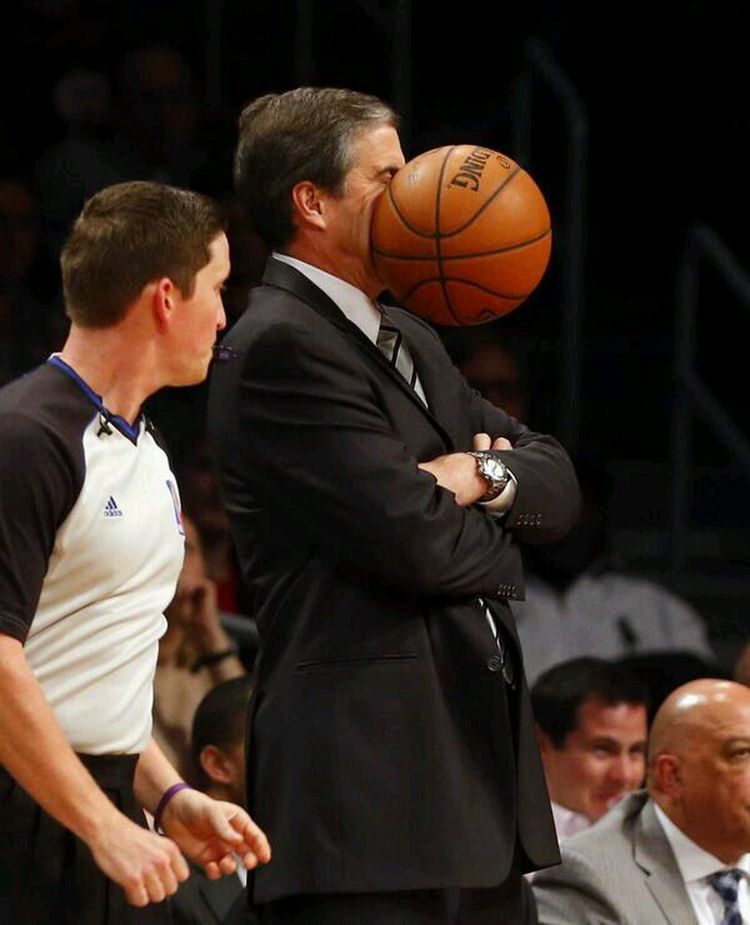
NBA-Coach-Randy-Wittman-Face-Smashed-By-Basketball

Here’s how weird things have gotten for me as I follow the Washington Wizards: I feel sympathy for a coach I never would have hired in the first place. Team president Ernie Grunfeld and owner Ted Leonsis awarded the full-time coaching job to Randy Wittman, who’d done a solid job as interim coach when they fired Flip Saunders. According to reports at the time, they neither considered nor interviewed other candidates for the position. Had it been my call…well, Wittman wouldn’t have been the choice.

Despite the howls of fans angered by a three-game losing streak, Wittman isn’t a bad coach. He isn’t a good one either — at least not by NBA standards. He’s standard issue NBA coaching material. Good at some things, not so good at others. On balance, probably on the “below” side of average, but close enough to the league standard that he’s not a drag on his team’s performance. When he gets fired by the Wizards, he could take a year off, go down to college and be great at that level. Sure, a guy like Phil Jackson, Pat Riley or Greg Popovich would win a few more games with the same roster, but a) those guys aren’t coming to Washington, and b) the Wizards wouldn’t be title contenders even with an elite coach.

I’m not saying it would be pointless to fire Wittman and replace him with Someone Else — maybe Mr. Else could get an extra win or two from this team over the remainder of the season. But no coach is going to transmogrify this group into a title contender for one simple reason: the roster is inadequate. They’re good enough to avoid missing the playoffs in the misbegotten East. They might even be good enough to win a playoff series if they’re reasonably healthy and they can avoid a first round matchup with Indiana or Miami. But there isn’t a coach on the planet who could get them further — not with this roster.

As you’ll see in the table below, Wittman has been given a team that’s effectively six deep. Bradley Beal could be a seventh, if he starts performing the way he did in the second half of last season. Wittman’s options are further diminished by minutes restrictions for Beal and (more importantly) Nene.

There are plenty of things I’d love to see the team do differently — starting with taking fewer two-point jump shots. (Umm, fellas — those shots are open for a reason.) Maybe better coaching could change some of those things. But, NBA reality is that everyone knows what everyone else is doing strategically. Coaches come up with stuff to surprise each other now and then, but most games are decided by overall talent and execution.

A coach’s most important job is getting lineups on the floor that maximize his team’s chances of winning. Those lineup decisions have largely been taken from Wittman by the team’s wafer-thin roster. Unless Nene’s Achilles gets better or someone on the Wizards bench radically improves, the coaching staff is stuck with few options to patch over the lack of depth. That this situation was entirely predictable (in fact, was predicted before the season) makes it no less frustrating.

Below is this week’s Player Production Average (PPA) update. PPA is a player rating stat I developed that credits players for things that contribute to winning and debits them for things that don’t — each in proper proportion. PPA is pace adjusted, accounts for defense and includes a degree of difficulty factor. In PPA, 100 = average, higher is better and 45 = replacement level.

PLAYER GMS MPG LW PPA
John Wall 31 37.2 149 147
Trevor Ariza 26 34.2 154 146
Trevor Booker 23 22.0 118 139
Marcin Gortat 31 32.5 130 130
Nene Hilario 24 29.4 132 120
Martell Webster 30 31.2 151 120
Bradley Beal 22 34.9 84 76
Chris Singleton 11 12.9 48 66
Jan Vesely 22 15.8 53 55
Otto Porter 12 12.2 -47 23
Glen Rice 11 9.9 21 21
Eric Maynor 22 9.5 18 13
Al Harrington 7 18.6 6 6
Kevin Seraphin 23 10.0 -15 2
Garrett Temple 29 10.8 -21 -2

Normally, I update weekly, but this one went a couple weeks — eight games total. The Wizards went 4-4 during that stretch, including their current three-game winning streak. The performance levels of John Wall, Trevor Ariza and Marcin Gortat appear to have largely stabilized.

Wall’s “grade” is interesting because it’s at once encouraging and disappointing. On the encouraging side, this is the longest sustained period of well-above average play of his career. So far, he’s the most productive guard in the East. But…his per minute production is still not close to “franchise cornerstone” level. And while he’s the East’s best PG, he still ranks behind nine Western Conference PGs in per minute production.

I have a similar reaction to Gortat’s score. He’s a solid producer, but…he ranks only about 20th among centers. The Wizards need more from him, especially on the boards and on defense.

Ariza is — by some strange coincidence — playing the best basketball of his career in a contract year.

Other positives: Trevor Booker becoming a solid producer upon entering the starting lineup (though his team defense continues to be a problem), Otto Porter improved from a HUGE negative to a net positive, and Kevin Seraphin finally got out of the negative PPA range.

A word on Seraphin — the big man currently rates as the NBA’s least productive center. He managed the same “feat” last season. There seems to be some kind of a message there, but I could be over-thinking things.

Oh yeah, Chris Singleton also showed signs of life with not atrocious play in a couple garbage time appearances.

On the negative side: Nene’s production is (unsurprisingly) down as he tries to play through that Achilles injury. Martell Webster’s play declined significantly this update, as well. And, of course, the Wizards continue to get absolutely nothing from their backup PGs.

With teams now able to sign free agents to 10-day contracts, I’m hoping the Wizards front office will start bringing in D-League PGs for tryouts until they find one they like. I’d also like to see them try some PF/C types in hopes of getting even replacement level play off the bench. They can make room by releasing one or more from the group of Temple, Seraphin, Harrington and Maynor. Yes, I know there’s no way they’d just cut Maynor because of the player option he holds for next season. It could be a correct move, however.

Even 7 Isn’t All That Lucky for Wizards

Short of trading additional future assets, getting lucky with a D-League pickup, or getting radical in-season improvement from one or more players currently on the roster, there just isn’t getting around the reality that this year’s Washington Wizards is solidly mediocre — at best.

I went into this week’s update on the team trying to conjure up a “modest proposal” type of post. Best I could come up with was the notion of shortening the game to 32 minutes so that teams would need to play only their top seven. And, Washington’s top seven is pretty good.

In this imaginary “top 7” league, so far this season, Washington would move up the standings a bit. According to my estimates, their top 7 would rank 4th in the East behind Miami, Atlanta and Indiana.

Overall, their top 7 rates 12th best, which sorta gives some perspective to how weak the East is so far this season. Washington’s seven best players rate as 4th best in the East, but would be only 9th best in the West.

Just to extend the silliness to its “logical” end — in this hypothetical, Washington would win a first round series against Brooklyn only to get bludgeoned in round two by Miami. The West would be a dogfight, but (if my PPA ratings held sway — and in this alternate reality, they do) San Antonio would emerge victorious. That would set up a repeat of last season’s Heat-Spurs final. Which the Heat would win.

Of course, the league isn’t going to shorten the game time anymore than it can guarantee Washington’s top seven can actually stay healthy. The bright side: a fully healthy Wizards team might be good enough to win a first round series if they can make the postseason. The downside: “fully healthy” seems like a fantasy.

To this week’s Player Production Average (PPA) update. PPA is a player rating stat I developed that credits players for things that contribute to winning and debits them for things that don’t — each in proper proportion. PPA is pace adjusted, accounts for defense and includes a degree of difficulty factor. In PPA, 100 = average, higher is better and 45 = replacement level.

PLAYER GMS MPG LW PPA
Trevor Ariza 18 36.1 172 154
Martell Webster 22 33.0 148 151
John Wall 23 37.7 168 149
Nene Hilario 16 32.6 134 132
Marcin Gortat 23 34.6 150 130
Trevor Booker 15 20.1 114 118
Bradley Beal 14 39.5 81 84
Jan Vesely 17 17.6 54 53
Chris Singleton 7 15.6 29 48
Glen Rice 11 9.9 4 21
Eric Maynor 20 10.0 16 18
Al Harrington 7 18.6 7 6
Kevin Seraphin 18 8.3 -32 -15
Garrett Temple 21 10.3 -23 -21
Otto Porter 4 12.0 -70 -47

No real surprises for a team that lost two of three since the last update (and barely won the third). Ariza, Wall and Gortat led the “decliners.” The “improvers” were of the awful to slightly less awful variety — Singleton getting to replacement level, Rice getting out of single digits, Seraphin becoming a bit less negative.

Sorta looping back to the “modest proposal” portion of this post, here’s another look at the Wizards this season — one that shows the hard demarcation between their top 7 and their bottom 8.

Wiztop7bottom8

Wizards Lack of Depth Continues to Hurt

Get used to repeats of that old Wizards pattern — keeping the score tight (even holding a lead in the fourth quarter) only to lose in the end. The problem isn’t that Washington lacks a mystical “ability to close,” it’s that their bench can’t hold the leads its starters provide, and its starters wear down at the end of competitive games.

This is not the fault of Randy Wittman and the coaching staff. Most of the failing bench players are producing at levels consistent with career norms. Eric Maynor, a fan whipping boy so far this season, is playing worse than usual, but not abnormally so. He’s been unproductive throughout his career — that’s he’s even less productive should surprise no one. The same is true of Kevin Seraphin, Jan Vesely, Chris Singleton and Garrett Temple. They’ve established themselves as unproductive. There’s little reason beyond hope to imagine them becoming productive.

With the “make the playoffs or else” mandate, Wittman has little option but to play his key players heavy minutes and pray they don’t get hurt. And that’s exactly what’s happening. John Wall and Bradley Beal lead the league in minutes per game at PG and SG. Among SFs, Trevor Ariza ranks eighth and Martell Webster sits 15th. Marcin Gortat is second in minutes per game among centers. The fragile Nene plays the 12th most minutes per game for a PF.

If this was the playoffs, there’d be little reason for concern. But there are 62 games remaining in the regular season, and they’ve already sustained injuries to Ariza, Webster, Nene and Beal. Another injury could put the playoffs out of reach. That would be a shame (as would limping into the playoffs) because at full strength, it’s core rotation players could at least put a scare in a post-season opponent. They’ll need to get (and stay) healthy to do that, however.

For a further demonstration of Wittman’s lack of options, peruse the table below, which shows the (approximately) weekly update of Player Production Average (PPA). PPA is a player rating stat I developed. It credits players for things that contribute to winning and debits them for things that don’t — each in proper proportion. PPA is pace adjusted, accounts for defense and includes a degree of difficulty factor. In PPA, 100 = average, higher is better and 45 = replacement level.

PLAYER GMS MPG LW PPA
Trevor Ariza 15 36.1 146 172
John Wall 20 37.8 169 168
Marcin Gortat 20 34.6 152 150
Martell Webster 19 32.5 156 148
Nene Hilario 16 32.6 133 134
Trevor Booker 12 16.5 96 114
Bradley Beal 13 40.2 81 81
Jan Vesely 14 18.1 75 54
Chris Singleton 6 17.5 51 29
Eric Maynor 19 10.3 35 16
Al Harrington 7 18.6 6 7
Glen Rice 9 8.0 -10 4
Garrett Temple 18 10.1 -14 -23
Kevin Seraphin 15 7.9 -27 -32
Otto Porter 2 10.5 -70

Ariza is playing a lot like he’s in a contract year, which is to say — superbly. His production is All-Star level, though it would astonish me if he actually received the honor. But, with Lebron more a PF these days, it’s arguable that Ariza has been the East’s second best SF so far this season (behind Paul George).

Recovered from injuries last season, Gortat is producing at a good level again. Like Ariza, his timing is superb — he’s in a contract year as well.

Wall seems to have settled in at All-Star level production. PPA currently has him rated as the top PG in the East, and fifth most productive overall behind Chris Paul, Stephen Curry, Ty Lawson and Mike Conley.

This week’s update shows Vesely’s production dropping off. Hopefully he can turn things around. Whether or not he does, the coaching staff would be wise to give more minutes to Booker, who continues to be an “about average” producer. That’s nothing to get excited about, but it makes him a solid reserve.

Finally, note that the Wizards have seven players who rate below replacement level so far this season. Collectively, they’ve played 823 minutes — nearly 17% of the team’s total. This is a direct result of the front office’s persistent failure to properly assess players, and their inability to address the team’s glaring need for depth. This misjudgment is costing the team wins now, and could cost them even more as the season wears on.

Wizards Must Try Not To Let Success Go To Their Heads

Seen on Twitter the past few days is the heady news that the Washington Wizards went .500 in November — tied for the franchise’s third best winning percentage for month in the past 30 years. Forgive me if I don’t join the parade. For a team like the San Antonio Spurs — a good team that competes for championships — the same record would be their ninth worst in the same time span.

A .500 record for a month is not cause for celebration. The Wizards have a good starting group, but an awful bench. The net result: precisely average. The team is improved, but that’s not the same thing as being good. In a weak East where several teams are tanking, even a meh team can make the playoffs.

All that said, let me reiterate — the Wizards are improved. John Wall is the best PG in the East, and currently ranks 7th overall at his position. The team is getting well-above average play from Martell Webster, Trevor Ariza, Marcin Gortat and Nene. The team’s depth makes any success feel tenuous, but they have a core of good players for this season.

One common thread of Wizards discussion I’d like to address before posting the weekly PPA update is this notion that PG Eric Maynor was at some point “good” and that he’s abruptly and inexplicably gotten worse in Washington.

The facts are that Maynor has been a sub-par player throughout his career. That people believed otherwise is testament to attributing to Maynor that which should have been attributed to his teammates. In other words, folks believed Maynor was causing (or contributing) teammates to be better when, in fact, those other players were producing on their own.

The reason I’m addressing this topic is that asserting that Maynor was at some point “good” or “serviceable” is to let the Wizards’ front office off the hook. In reality, signing Maynor was a terrible waste of resources, and evidence that Ernie Grunfeld and his team still haven’t figured out how to evaluate players. They thought they were getting a steal. Instead, they were getting a lemon. And what’s head-bangingly frustrating is that fairly rudimentary look at the numbers would have told them so.

With that out of the way, here’s the weekly Player Production Average update. PPA is a player rating stat I developed. It credits players for things that contribute to winning and debits them for things that don’t — each in proper proportion. PPA is pace adjusted, accounts for defense and includes a degree of difficulty factor. In PPA, 100 = average, higher is better and 45 = replacement level.

PLAYER GAMES MPG LW PPA
John Wall 17 37.6 158 169
Martell Webster 17 33.6 144 156
Marcin Gortat 17 34.4 139 152
Trevor Ariza 12 35.6 123 146
Nene 14 33.3 127 133
Trevor Booker 9 14.0 102 96
Bradley Beal 13 40.2 82 81
Jan Vesely 11 17.9 81 75
Chris Singleton 3 8.7 51
Eric Maynor 16 10.5 50 35
Al Harrington 7 18.6 7 6
Glen Rice Jr. 6 6.3 -5 -10
Garrett Temple 15 11.5 -18 -14
Kevin Seraphin 13 8.5 -39 -27

What jumps out? On the plus side, the team has a good group of starters. Wall appears to be doing what I predicted at the start of the season — making The Leap to becoming a top-shelf PG. Webster, Gortat, Ariza and Nene round out a quality lineup.

On the down side, there’s the rest of the team. Booker has dipped below average for the first time this season on scant playing time. So far this season, the team falls apart on defense when Booker is on the floor.

Vesely appears to be the beneficiary of lowered expectations from fans. He was so inept last season that anything positive gets exaggerated. He is better than last season in that his play hasn’t been a total train wreck. But, he remains well below average.

Some fans (and perhaps the Wizards as well) hoped that Singleton would provide some kind of significant contribution when he returned from a foot injury. Thus far…not so much. Very small sample size, however.

Maynor’s production has slipped below replacement level. Seriously, the Wizards would do better (or at least do no worse) giving his minutes to someone from the D-League. What’s scary: as bad as he’s been, Harrington, Rice, Temple and Seraphin have been worse.

The Wizards will need to either a) get some level of production from The Bench That Grunfeld Built, or b) bolster the bench with a trade or from the D-League. Without radical improvement from its reserves, this team seems perfectly constructed for a first-round playoff ouster — regardless of the opponent.

Wizards Reward For Best Week: Brutal Schedule

The Wizards just had their best week of the season, going 3-1 and seeing PG John Wall receive the NBA’s Player of the Week award. Their reward? Four games in five nights with travel between each of the games. Yikes!

The uptick in Wall’s production was as welcome as it was abrupt. His shooting had been atrocious, but became deadly, and he continued doing a first-rate job of finding teammates for open shots at the basket. His play was similar in quality to his transcendent March — when he performed like one of the game’s top five players.

In other good news for the team, Wall wasn’t the only player who improved. Martell Webster enjoyed his return to the starting lineup, and Marcin Gortat and Nene also seemed to settle into their roles. Bradley Beal boosted his production a bit as well, though the youngster still has a ways to go.

The upcoming week will be a challenge for the depth-starved Wizards. They have the makings for a solid top seven, but everything after that remains a major question mark.

Here’s the weekly Player Production Average (PPA) update. PPA is a player rating stat I put together that credits players for things they do that contribute to winning and debits them for things that hurt the cause (each in regression-analyzed proper proportion). PPA includes defense, is pace-adjusted, and incorporates a “degree of difficulty” factor based on the strength of the opposing lineup. In PPA, 100 = average, higher is better, and replacement level is 45.

PLAYER GAMES MPG LW PPA
John Wall 13 37.8 111 158
Martell Webster 13 31.4 110 144
Marcin Gortat 13 33.5 116 139
Nene Hilario 11 32.5 118 127
Trevor Ariza 8 35.1 123 123
Trevor Booker 8 12.6 110 102
Bradley Beal 13 40.2 71 82
Jan Vesely 7 17.3 95 81
Eric Maynor 12 10.4 66 50
Al Harrington 7 18.6 6 7
Glen Rice 5 6.8 -5 -5
Garrett Temple 11 9.2 -36 -18
Kevin Seraphin 10 8.7 -33 -39

As Captain Obvious said, “The bench remains a major weakness.” Jan Vesely’s effectiveness declined as his playing time increased. Trevor Booker’s individual numbers are good, but the defense is a catastrophic failure thus far when he’s on the floor. Al Harrington was awful before he sat with knee trouble. Kevin Seraphin has been even worse than last season — and last season he was the league’s least productive center.

Guard depth is scary as well. Eric Maynor is drawing ire for his crummy play, but what he’s doing is exactly what fans should have expected from him. His PPA this season: 50. His career PPA before this season: 49. His peak PPA for a season was 57. This is his normal level of play. What’s scary: Temple has been worse.

For now, I don’t envy the options head coach Randy Wittman has. The team desperately needs at least two someones from the bench to step up production — one big and one guard. Unfortunately, the roster assembled by Ernie Grunfeld isn’t jammed with “good bets” on a guy or two who might suddenly start playing better.

I’ve been suggesting since offseason that the team’s best option for depth may be to use SF Trevor Ariza at PF (as a stretch four), especially if injured rookie Otto Porter can give them productive minutes at SF. Ariza is likely to be more productive as an S4 than Harrington has been, and he may provide the opposition with challenging match-ups at that spot.

No matter how I look at the various lineup permutations, the team’s rotation is skimpy — at best. With reasonable health for its rotation, the Wizards should be a playoff team. Lose anyone from the top seven or eight, and the playoffs are dicier, even in the East. And, I don’t think can sustain an extended absence from Wall, Nene or Gortat, however.