Wizards Update: Still Cause for Concern

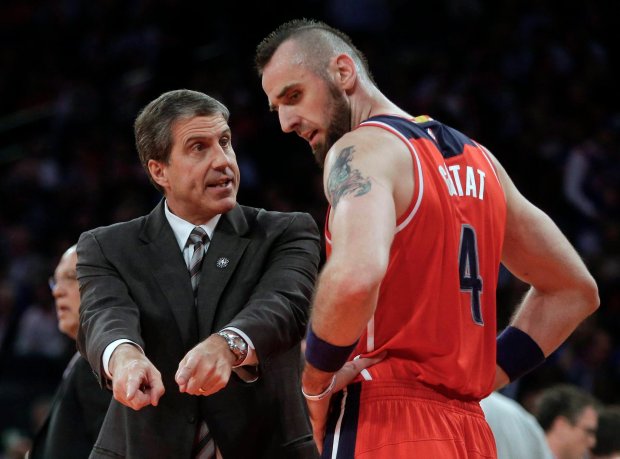
wittman & gortat

The Wizards are 7-2 to start the season, which ought to be cause for celebration. And, judging by media reports and fan reaction, that’s mostly what’s happening. So what’s wrong with me?

I’m unconvinced that the good record is particularly meaningful. This is not to suggest the Wizards need to apologize for the competition they’ve faced. They don’t make the schedule, and it’s not their fault that the East is possibly weaker than it was last season — when it was aggressively bad. All Washington can do is keep beating whoever’s on the calendar, which is what they’ve been doing so far.

But…I’m still concerned because of the way they’ve been winning. In sports, the best teams typically have the highest scoring differentials. The Wizards this season stand 11th in scoring differential at +2.22, which doesn’t sound bad except that their opponents have a collective scoring differential of -2.52. In other words, the Wizards are winning by less than the rest of the league against their opponents. At least so far.

There’s a strong sentiment that’s something like: Hey, the Wizards are winning games they should win, which is real progress for this franchise. To an extent, I agree. But, what often happens to an average team (and the numbers are suggesting the Wizards are pretty average) is that over time, they’ll lose games they “shouldn’t.” And there are a TON of games left on the schedule.

Some have pointed out that Washington has played so far without Bradley Beal, which is true but perhaps not as meaningful as some think. Beal was pretty average last season, and didn’t project to make a huge leap this year (at least not in my preseason analysis). Much of what I anticipated he’d provide has been produced by Garrett Temple and Rasual Butler thus far.

Perhaps the best reason to think Washington might be able to win 48-50 games this season is the good fortune of playing in a historically weak conference. Just six Eastern Conference teams have a positive scoring differential so far, and the sixth (Brooklyn) is us by one point total so far this season. All that said, in Basketball-Reference’s simple rating system (which combines scoring margin with strength of schedule), the Wizards currently sit 16th overall and 6th in the East. If they want to make some noise this season, they need to play better.

Below is the Player Production Average (PPA) update. PPA is an overall rating stat I developed that credits players for things they do that help a team win and debits them for things that hurt the cause. PPA is pace neutral, accounts for defense, and includes a “degree of difficulty” factor based on the level of competition a player faces while on the floor. In PPA, 100 = average, higher is better and replacement level is 45.

PLAYER GMS MPG LW PPA
Marcin Gortat 9 31.3 181 186
John Wall 9 35.6 185 180
Paul Pierce 9 27.4 140 138
Rasual Butler 5 19.2 60 131
Garrett Temple 9 31.1 121 112
Otto Porter 9 24.2 97 106
Nene Hilario 8 28.6 108 102
Kris Humphries 8 13.9 46 87
Andre Miller 9 12.9 72 69
Drew Gooden 6 19.5 42 40
Kevin Seraphin 8 14.5 38 13
DeJuan Blair 3 3.7 -41 -40
Glen Rice 5 8.6 -120 -118

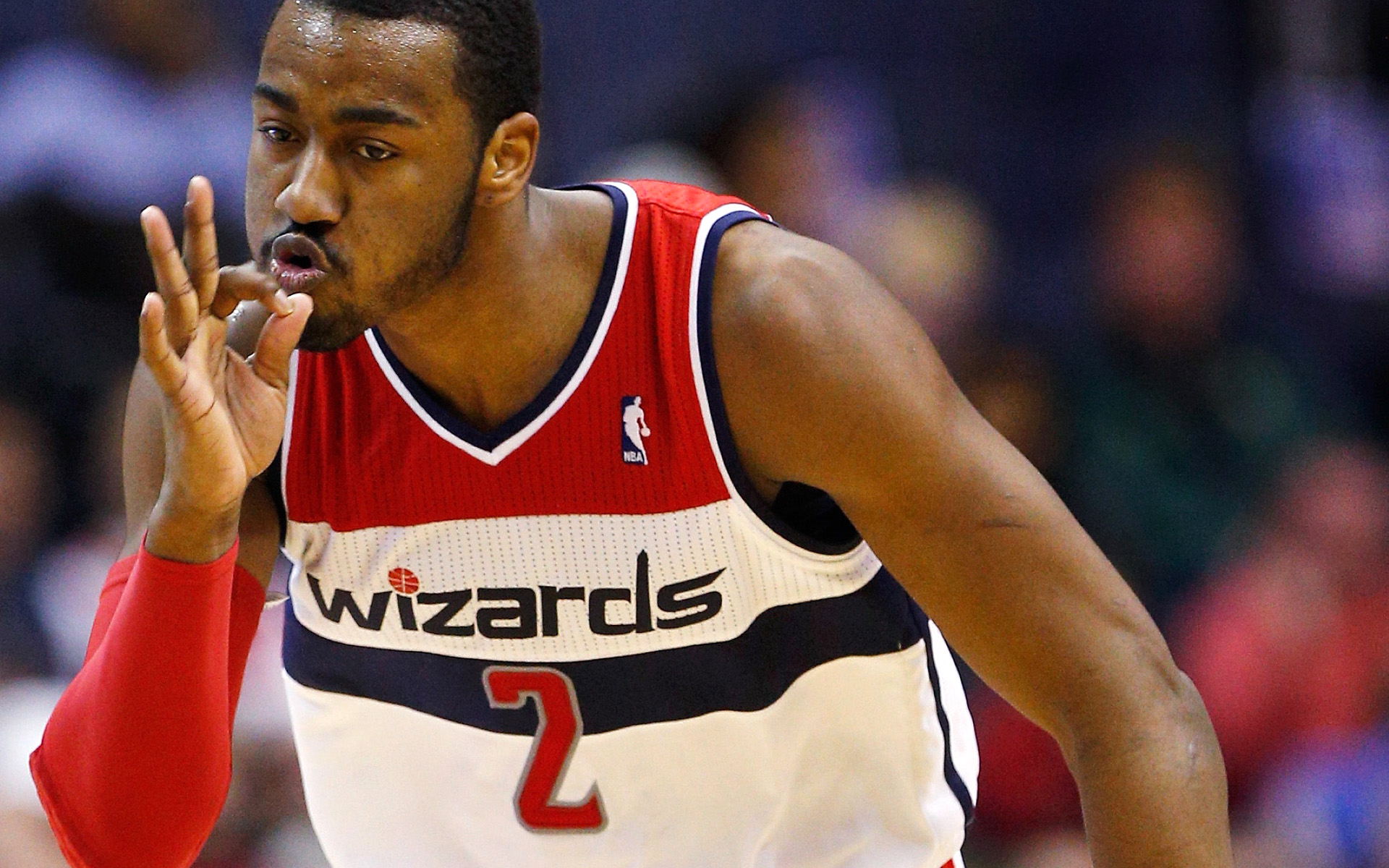
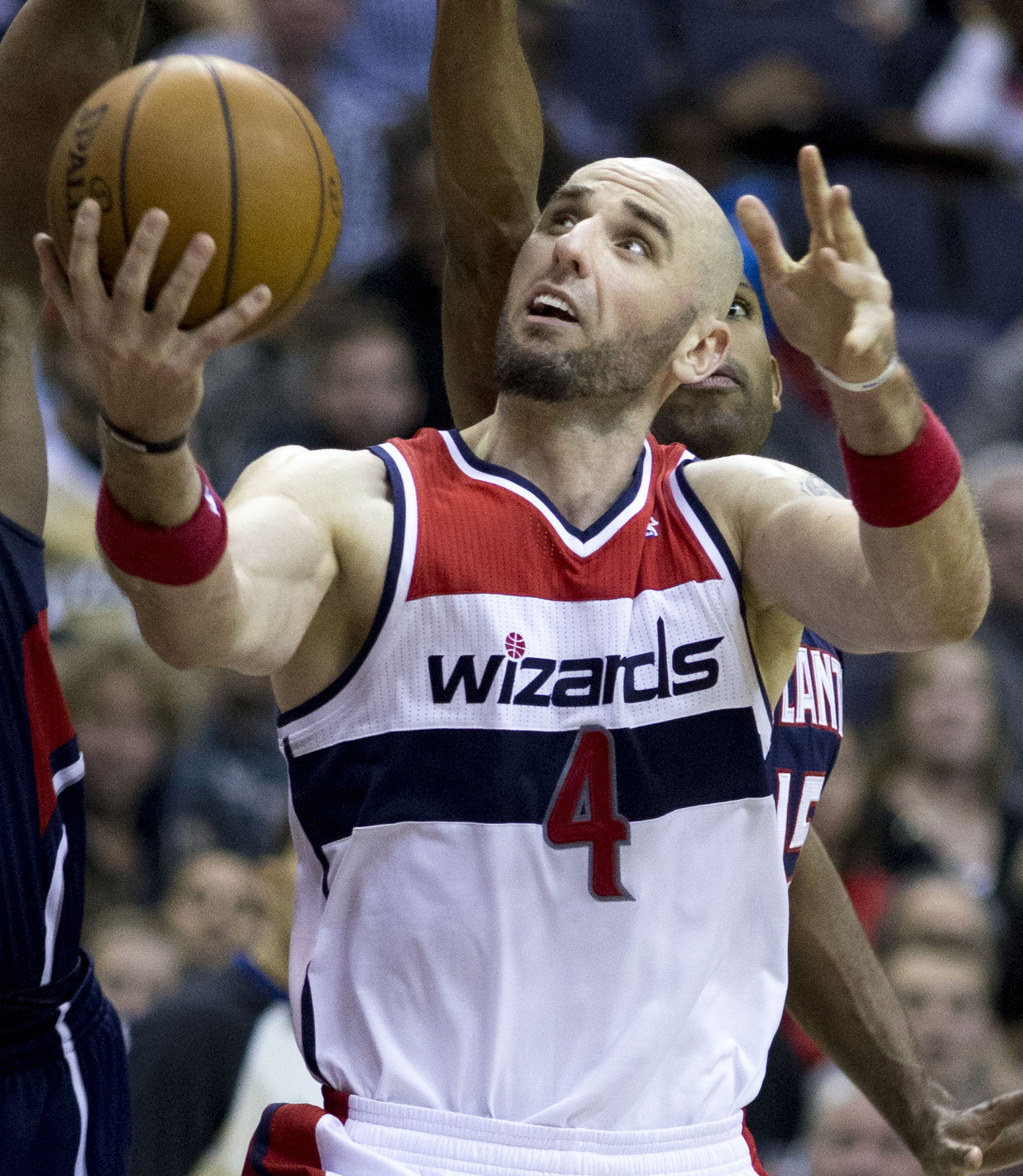
The numbers show Gortat and Wall playing outstanding basketball. Both are performing at an All-Star level. Wall could push his way into All-NBA consideration, if he continues. Gortat’s PPA is currently sixth among centers behind Tyson Chandler, Omer Asik, DeAndre Jordan, DeMarcus Cousins and Robin Lopez.

Biggest improvers this week were Butler and Humprhies. Largest drop was from Seraphin, whose field goal percentage dropped while his rebounding, turnovers and fouling remained poor.

Wizards Update: The Worries

wall the leap

The Washington Wizards are off to a 5-2 start, tied with Miami for first place in the NBA’s Southeast Division, and sitting on pretty good odds of getting to 7-2 before they face Dallas at Verizon Center. And yet…in classic Wizards’ follower fashion, I’m actually a little worried.

Yep, it’s good they’re winning. But, they should be winning given the quality of the opponents they’ve faced so far. No, this isn’t one of those “they would be X record if they’d faced teams A, B and C” critiques. I don’t believe a team (or its fans) should ever have to apologize for the schedule, which is something they don’t control.

What has me a little worried is how pedestrian the Wizards have looked so far this season. They’ve outscored their opponents by 1.57 points per game so far this season; the league has outscored their opponents by 1.99 points per game.

I’d be more willing to buy the injury excuse if they weren’t getting career-best play from Garrett Temple standing in for Bradley Beal and Martell Webster.

But, this is this “little worry” because we’re still in the annual performance of Small Sample Size Theater. A study by Kevin Pelton, then-writing for Basketball Prospectus, showed that team-level stats tend to stabilize around the 25th of the season. Other research has shown that per minute stats for individual players begin to have validity as quick as 150 minutes. More is better, though.

Still, the early indications are that, despite the good record early on, the Wizards are an average team again this season. They’ve been good defensively, but a bit below average on offense. The hope is that getting Beal and Webster will help bolster the team offensively when they can return from injury.

Here’s the first Player Production Average (PPA) update of 2014-15. PPA is an overall rating stat I developed that credits players for things they do that help a team win and debits them for things that hurt the cause. PPA is pace neutral, accounts for defense, and includes a “degree of difficulty” factor based on the level of competition a player faces while on the floor. In PPA, 100 = average, higher is better and replacement level is 45.

PLAYER GMS MPG PPA
John Wall 7 35.7 185
Marcin Gortat 7 32.7 181
Paul Pierce 7 28.0 140
Garrett Temple 7 33.7 121
Nene Hilario 6 29.2 108
Otto Porter 7 24.7 97
Andre Miller 7 12.9 72
Rasual Butler 3 14.3 60
Kris Humphries 6 9.8 46
Drew Gooden 6 19.5 42
Kevin Seraphin 6 13.8 38
DeJuan Blair 3 3.7 -41
Glen Rice 5 8.6 -120

Wall and Gortat should jump out immediately (they are at the top of the chart). Both guys have produced at an All-NBA level in the first seven games. This could be The Leap from Wall that fans have been waiting for. If he keeps it up. Gortat has actually performed at a 180ish PPA for a full season (2011-12).

Pierce has been everything Washington could have hoped he’d be. Over the summer, I went hunting through the stats to find players who’d be most likely to replace what Trevor Ariza had provided. The top name on the list: Paul Pierce. His offense could be more efficient, but he’s producing at about the level Ariza did last season — and his defense has been outstanding.

Nenê appears to have picked up more or less where he did last season, and that’s not such a great thing for the Wizards. He’s still a good defender, but his offensive efficiency seems to be departed.

It’s good to see Porter hovering around average. He’s been an asset off the bench, and seems to be figuring out the NBA game. Porter hasn’t been helped much by his oldster bench mates Miller and Gooden, who have been awful defensively since arriving in Washington.

And check out Porter look-alike Garrett Temple, who has so far played at the level of an almost-average NBA starter. Major kudos to Temple for all the work he’s done on his jumper. It shows in his form — especially in the way he sets his feet for takeoff, freezes the follow-through, and plants the landing.

I know folks are going to wonder about Kevin Seraphin, who rates below replacement level yet again. Seraphin is shooting 63% from the floor, and has had a couple nice games. His offensive efficiency is above average. And yet…he continues to be plagued by the same problems he’s had since his rookie year. Specifically, his rebounding is sub-par, he’s turnover prone, and he fouls too much.

Also worth noting are Kris Humprhies and DeJuan Blair, who were acquired in the offseason to provide frontcourt depth. So far, they’ve been behind Seraphin on the depth chart, which is astonishing. Humphries at least has some excuse — he missed three weeks of preseason with a hand injury. Blair has apparently been healthy, but can’t get on the floor despite dreadful play from Seraphin.

At some point, I gotta believe they’ll end the Seraphin experiment and give playing time to Humphries and/or Blair. Based on what they’ve done on the court so far this season, it’s fair to say that neither has made a case for playing ahead of Seraphin. At least not yet.

Projection: Wizards Will Win 45 and Return to the Playoffs

Improvement from the Washington Wizards youngsters, and an infusion of frontcourt depth will be offset by missed time due to injuries and declines from the team’s older players to keep the team in the middle of the NBA pack for another year. However, the team could be a dangerous playoffs matchup if they’re able to enter the postseason healthy.

Below, I’m offering up projections done a couple different ways. The first is built on the similarity scores I’ve posted after the past week. This approach finds players in NBA history with similar production at a similar age, and then looks at what they did in subsequent seasons. Those findings are then applied to the Wizards roster and combined with a playing time estimate for each player.

For this estimate (and the other one, which I’ll get to later in this post), I’ve used my overall metric Player Production Average (PPA), which is calibrated to explain individual player contributions to winning and losing. PPA is pace neutral, accounts for defense, and includes a “degree of difficulty” factor based on the level of competition a player faces while on the court. In PPA, 100 = average, higher is better, and 45 = replacement level.

Statistical Doppelganger Projection

POS PLAYER MIN LAST SEASON PPA PROJECTED PPA PROJECTED kWins
PG John Wall 2812 139 156 9.0
C Marcin Gortat 2464 154 132 6.7
SG Bradley Beal 2325 96 112 6.1
SF Paul Pierce 1800 139 108 4.0
SF Otto Porter 1800 15 85 3.2
PF Kris Humprhies 1608 132 133 4.4
F/C DeJuan Blair 1450 97 97 2.9
PF Nenê 1430 102 90 2.7
PG Andre Miller 1165 86 65 1.6
G/F Glen Rice Jr. 1029 20 78 1.2
F/C Drew Gooden 1002 106 100 2.1
G/F Martell Webster 1000 77 74 1.5
POS TEAM 19885 107 110 45.4

MIN = projected TOTAL minutes for the upcoming season

Projected kWins = how many wins that player will contribute based on his projected PPA and projected total minutes.

Over the past few seasons, the Wizards’ front office has converted the team from being one of the league’s youngest to being one of the league’s oldest. Gortat, Nenê, Pierce, Gooden and Miller all figure to play prominent roles this season, and all are past 30. Well past 30 for Pierce and Miller.

Projections for Porter and Rice were difficult because they played so little last season. For both, I elected to throw out their rookie numbers and rely instead on projections based on the rookie seasons of the players they were most like from college. Using the rookie numbers would lower Porter’s projected PPA to 66 and Rice’s to 30. That would drop Washington’s projected win total 43.8.

Note that I didn’t include Kevin Seraphin, Garrett Temple or Rasual Butler in the above table. They’ll get some minutes along the way, but — barring several catastrophic injuries — none should see enough court time to have a major effect on the team’s fortunes. For those interested, this is what I project for the end-of-the-bench trio:

  • Garrett Temple: 33
  • Kevin Seraphin: 49
  • Rasual Butler: 55

I can hear the cockeyed optimists already: “Why do you just assume the old guys will get worse? What if they maintain for a year?” Quick answer (and one I’ve given before): athletes past 30 tend to two things — get hurt and get worse.

But, let’s say the “Ancients” are able to do this season what they did last year. In that event, Washington’s projected win total would climb to 48.5. Which would be hella fun.

On the other hand, there are scenarios where there are more injuries than expected, younger players don’t make anticipated improvements and/or older players decline more steeply. That gives a potential “bottom” of 40.7 wins.

Simple Rating System Projection

POS PLAYER MIN LAST SEASON PPA SRS PROJECTED PPA PROJECTED kWins
PG John Wall 2812 139 143 8.3
C Marcin Gortat 2464 154 144 7.3
SG Bradley Beal 2325 96 111 5.3
SF Paul Pierce 1800 139 117 4.3
SF Otto Porter 1800 15 63 2.3
PF Kris Humphries 1608 132 133 4.4
F/C DeJuan Blair 1450 97 135 4.0
PF Nene Hilario 1430 102 102 3.0
PG Andre Miller 1165 86 108 2.6
G/F Glen Rice 1029 20 82 1.7
F/C Drew Gooden 1002 106 118 2.4
G/F Martell Webster 1000 77 102 2.1
G/F Rasual Butler 0 63 81 0.0
C Kevin Seraphin 0 35 53 0.0
G Garrett Temple 0 24 54 0.0
POS TEAM 19885 107 117 47.9

The guys over at Basketball-Reference have up Simple Rating System projected stats for everyone who played in the NBA last season. Go here for an explanation. They don’t estimate minutes, which I can understand because it’s frigging hard to do.

The SRS approach is more optimistic than the one I used — at least at the bottom line. SRS generally predicts less of a decline for older players, but also not as much improvement from the younger ones. The SRS approach would suggest the Wizards will win 48 games this season — with a low end prediction of 43 and a high of 52.

Here’s a table comparing results from the two approaches:

POS PLAYER DOPP PPA SRS PPA DOPP kWINS SRS kWINS
PG John Wall 156 143 9.0 8.3
C Marcin Gortat 132 144 6.7 7.3
SG Bradley Beal 112 111 6.1 5.3
SF Paul Pierce 108 117 4.0 4.3
SF Otto Porter 85 63 3.2 2.3
PF Kris Humprhies 133 133 4.4 4.4
F/C DeJuan Blair 97 135 2.9 4.0
PF Nenê 90 102 2.7 3.0
PG Andre Miller 65 108 1.6 2.6
G/F Glen Rice Jr. 78 82 1.2 1.7
F/C Drew Gooden 100 118 2.1 2.4
G/F Martell Webster 74 102 1.5 2.1
G/F Rasual Butler 55 81 0.0 0.0
C Kevin Seraphin 49 53 0.0 0.0
G Garrett Temple 33 54 0.0 0.0

DOPP PPA = projected PPA using the Statistical Doppelganger approach

SRS PPA = projected PPA using the Simple Rating System numbers published by Basketball-Reference

DOPP kWINS = projected individual wins contributed using the Statistical Doppelganger approach

SRS kWINS = projected individual wins contributed using the Simple Rating System numbers published by Basketball-Reference

Final Word

In the end, I’m using my own projection system. Last year, I projected the Wizards would win 43 — they won 44, albeit not exactly in ways that I expected. I’ve refined my projection system (I hope), although I’m hoping the team outperforms my prediction by a wide margin.

While still lacking an elite producer, the Wizards could be a tough out in the playoffs when rotations shorten and there’s more rest between games (especially in the first round). If they can get there healthy, of course.

I’m projecting the Wizards will win between 41 and 48 games this season. Final projection: 45 wins and the fifth seed in the Eastern Conference playoffs.

Wizards Doppelgangers: The Enigmas

otto porter

In case you missed them, I’ve done two installments using my Statistical Doppelganger Machine to look at the player seasons most similar to Wizards (similar production at similar age):

Here’s a look at low-minute Wizards for whom finding comps was challenging because of their scant playing time: Otto Porter, Glen Rice Jr., and Garrett Temple.

Let’s start with the guy likely to play the biggest role for the team this season: Porter.

PLAYER POS SEASON AGE TEAM SIM SCORE PPA SEASON PPA PEAK
Otto Porter SF 2013-14 20 WAS 100 15 15
Lance Stephenson SG 2011-12 21 IND 87 14 116
Cory Joseph SF 2011-12 20 SAS 86 18 94
Jumaine Jones SF 2003-04 24 BOS 86 24 98
Quincy Pondexter SF 2010-11 22 NOH 86 38 67
Shawne Williams SF 2006-07 20 IND 85 39 53
Kareem Rush SG 2002-03 22 LAL 85 3 53
Brandon Bass PF 2005-06 20 NOK 85 37 116
Kevin Martin SG 2004-05 21 SAC 84 32 162
Kedrick Brown SF 2002-03 21 BOS 84 44 97
Gerald Henderson SG 2009-10 22 CHA 84 36 99

Wizards fans know Porter had what amounts to a lost rookie season. He missed training camp with a hip injury, barely played, and was terrible when he did play. When I post my projections Wednesday, I’ll go through a couple different ways I dealt with predicting his performance, but the exercise today is NBA similars.

The list of similars was something of a pleasant surprise. It’s basically a list of players who had a disastrously bad season and then (for the most part) went on to become contributors. That said, “contributors” is a broad term. As a group, Porter’s similars tended to peak young (average age 23.4) and low (average peak PPA: 88). But, they all improved the following season — generally by a bunch.

And, the list includes Kevin Martin, who’s been a good player for nearly a decade, and Lance Stephenson who became an above average performer this season — and is likely to continue improving.

PLAYER POS SEASON AGE TEAM SIM SCORE PPA SEASON PPA PEAK
Glen Rice Jr. SG 2013-14 23 WAS 100 20 20
Scott Padgett PF 1999-00 23 UTA 90 20 96
Will Barton G/F 2012-13 22 POR 87 28 60
Quincy Douby SF 2006-07 22 SAC 86 34 34
Orlando Johnson SG 2012-13 23 IND 85 60 60
Reggie Jackson G 2011-12 21 OKC 84 32 101
Bostjan Nachbar SF 2003-04 23 HOU 84 24 84
Ronnie Price G 2006-07 23 SAC 84 40 54
Thabo Sefolosha SG 2006-07 22 CHI 84 31 129
Nolan Smith G 2011-12 23 POR 84 10 10
Kevin Brooks SF 1992-93 23 DEN 84 18 34

While Porter’s comps were somewhat comforting, it’s difficult to say the same about Rice’s. Like Porter’s list, Rice’s similars tended to peak early (average age: 24.0), but even lower (average peak PPA: 62). But, Will Barton and Reggie Jackson are both still works in progress. And, a few more had a productive season or two in which they helped their team, and one (Sefolosha) became a decent role-playing starter.

All that said, Rice played just 109 total minutes last season. The players who performed like him (similar age, similar production) isn’t a list all-time greats, but that shouldn’t be expected from a second round pick. There’s little reason to think Rice will be unable to work himself into being a contributor.

PLAYER POS SEASON AGE TEAM SIM SCORE PPA SEASON PPA PEAK
Garrett Temple G 2013-14 27 WAS 100 24 60
Rick Carlisle G 1985-86 26 BOS 89 28 28
Pace Mannion SF 1987-88 27 MIL 88 30 61
Pace Mannion SF 1983-84 23 GSW 88 32 61
David Wingate SG 1994-95 31 CHH 88 32 89
Dudley Bradley SG 1985-86 28 WSB 86 60 102
Jason Hart PG 2005-06 27 SAC 86 13 119
Ronnie Price PG 2012-13 29 POR 86 14 54
Randy Brown PG 1995-96 27 CHI 86 50 86
Royal Ivey PG 2006-07 25 ATL 86 38 38
Reece Gaines PG 2003-04 23 ORL 85 11 20

Temple may have been the most difficult player to project because so many of the guys who produced like he did last season didn’t have a follow-up year. In other words, the league took a collective look at players like Temple, and decided to sign Someone Else.

Players like Temple peaked low (average peak PPA: 65) and fairly young (25.5). Two of the 10 most similar got significantly worse the following season, four got better, and four stayed about the same. The list certainly doesn’t offer much hope for improvement.

Later today: Bump and Bruise.

A Quick Look At Something (Hopefully) Devoid of Meaning

otto porter

The Wizards exhibition season has ended and they’re hopefully in the training rooms and rehabilitation gizmos trying to get healthy for their regular season opener against the Heat next Wednesday.

What does the preseason mean? Roland Beech, then proprietor of 82games.com (and now working for the Dallas Mavericks) ran some correlations a few years back. His findings suggest that preseason provides some indication of a team’s regular season fortunes, but that the previous season’s winning percentage remains a better barometer.

Beech’s numbers showed the preseason matters most to teams who stunk the previous year. The strongest correlations between preseason record and regular season record were between teams that won 30 or fewer games the previous year. Second strongest were for teams winning 40 to 49 games (hello, Wizards).

The Wizards, of course, are going to be on the “preseason doesn’t matter” side of this discussion considering they were 11th in the Eastern Conference in preseason efficiency differential and 29th in offensive efficiency. The league scored 101.8 points per 100 possessions in the preseason; the Wizards scored 95.0.

On the bright side, Washington boasted the league’s 8th best defensive rating.

Below are the preseason estimated Player Production Averages (PPA) for Wizards who played at least 50 minutes. PPA is an overall rating metric I developed that credits players for things they do that help a team win, and debits them for things that don’t. It’s a per-minute stat that’s pace-neutral, (normally) accounts for defense, and (normally) includes a “degree of difficulty” factor based on the level of competition a player faces while on the floor. In PPA, 100 = average, higher is better, and (normally) 45 = replacement level.

I use “normally” in a few spots because the data necessary to calculate a player’s defensive contributions and/or the degree of difficulty factor aren’t available in the preseason. Plus, I don’t know if there can be such a thing as “replacement level” in the preseason.

PLAYER GMS MPG ePPA
james,damion 5 12.6 188
silas,xavier 3 17.7 145
porter,otto 7 26.6 110
miller,andre 6 18.3 96
temple,garrett 7 19.7 91
hilario,nene 5 19.4 90
wall,john 6 25.8 82
gortat,marcin 7 27.4 71
pierce,paul 5 19.6 51
seraphin,kevin 7 21.9 52
rice,glen 4 22.3 46
butler,rasual 5 15.6 32
blair,dejuan 7 21.3 -3
beal,bradley 3 20.7 -38

Do NOT use these numbers to make bold predictions or sweeping pronouncements. These represent a tiny sample size — a sample in which many players are basically going through the motions at least some of the time — and are presented just as a general barometer for how players performed in the preseason.

Looking back at last year’s preseason numbers and see that Bradley Beal had an outstanding preseason, but wasn’t as good in the regular season. Meanwhile, Trevor Ariza and John Wall were bad in exhibition games, but good in real ones. Some guys were about the same in both — Jan Vesely, Al Harrington, Eric Maynor, Kevin Seraphin and Garrett Temple.

This year…most of the team’s rotation players were unproductive. Wall had an ePPA below 20 most of the preseason until he had a good performance against the Knicks. Seraphin may yet have that breakout season so many are hoping for, but ended his preseason in the same general territory where he’s spent most of his young career.

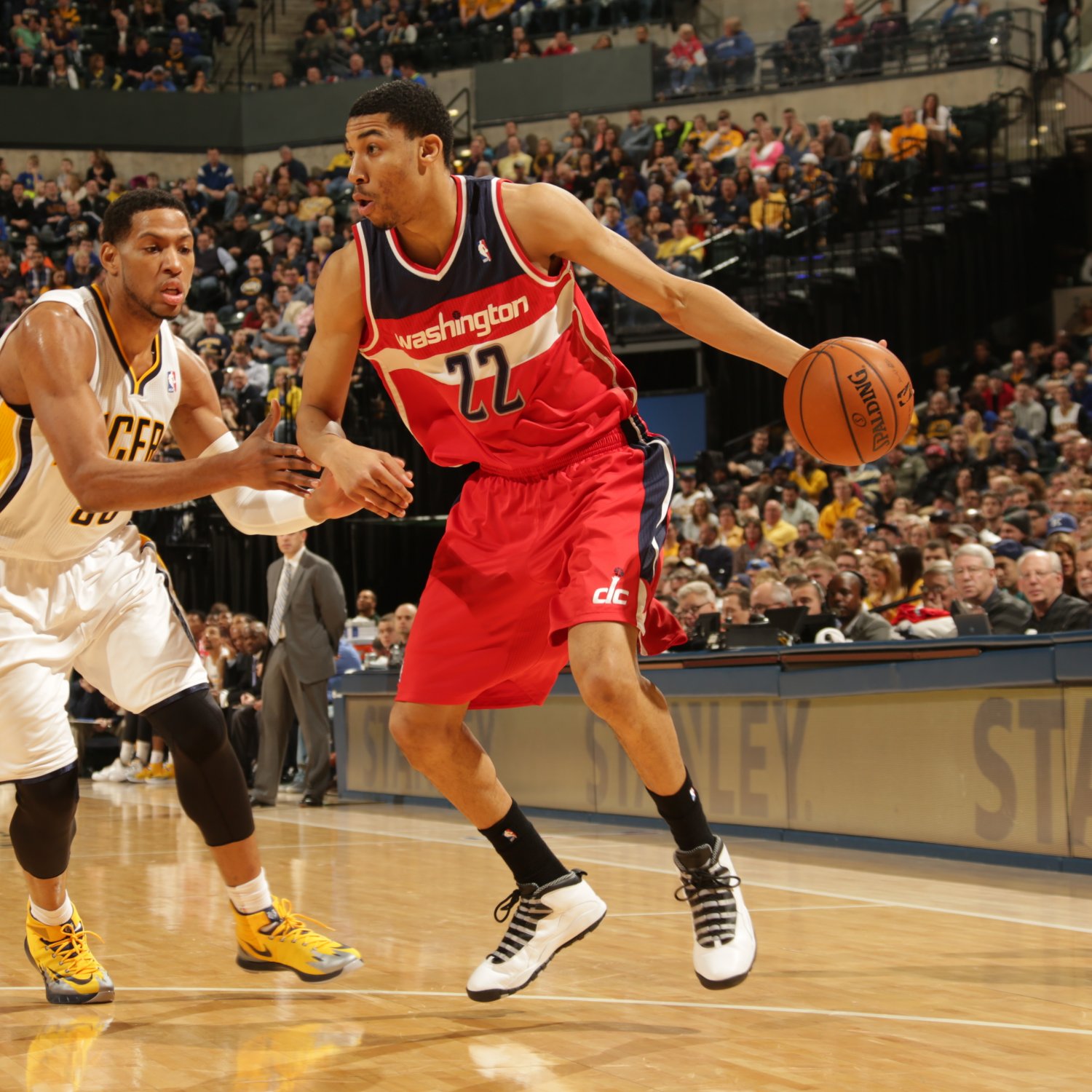
The team’s bright spot in the preseason was Otto Porter. He was a little above average — encouraging progress from a second year player who was mostly overwhelmed as a rookie.

Now…real games.

Wizards Slouching Toward the Playoffs

The numbers in the table below are this week’s Player Production Average (PPA) update. PPA is a metric I developed that credits players for things that contribute to winning and debits them for things that don’t — each in proper proportion. PPA is pace adjusted, accounts for defense and includes a degree of difficulty factor. In PPA, 100 = average, higher is better and 45 = replacement level. PPA is a per minute stat.

PLAYER GMS MPG LW PPA
Marcin Gortat 77 32.9 150 153
Trevor Ariza 73 35.7 151 143
John Wall 78 36.6 141 138
Trevor Booker 68 21.4 115 119
Drew Gooden 20 18.6 127 114
Nene Hilario 50 29.9 101 100
Andre Miller 24 14.4 104 91
Bradley Beal 69 34.7 89 89
Martell Webster 74 28.1 82 80
Jan Vesely 33 14.2 68 68
Kevin Seraphin 50 11.4 35 37
Chris Singleton 24 10.4 34 32
Garrett Temple 71 8.9 25 25
Glen Rice 11 9.9 20 20
Otto Porter 33 8.2 13 19
Al Harrington 30 14.9 13 8
Eric Maynor 23 9.3 8 8

Rough week for the Wizards, which is reflected in the individual numbers. On the positive side were Marcin Gorat, (who continues to have a good season), Trevor Booker (who many fans want removed from the rotation), and Otto Porter (who performed better, but still rates well below replacement level).

Even with a bad week, Trevor Ariza is having a career season. He gets a bit of a pass for the last few games — he’s been beset with the flu, and really shouldn’t have even been on the floor.

John Wall’s production fell for a third straight week. It’s been fashionable to celebrate Wall’s improvement and his ascendancy to All-Star status, but it’s worth noting that his 138 PPA this season is virtually identical to the 139 he posted last year.

Here’s a visualization of each player’s PPA through the season. Since this is basically a weekly rolling season average, the larger fluctuations at the beginning followed by a flatter line toward the end is to be expected. Note the fairly steady climb of Gortat’s PPA — he’s been playing better as the season has progressed. The production slip from Wall the past three weeks is also apparent.

Check out the steady production from Booker. Webster’s season-long decline is apparent in his graph.

Drew Gooden’s production has fallen steeply after a hot start. He may not be the godsend Wizards fans had hoped for. Andre Miller’s play has been up and down, but at least sorta trending up.

ppa trend

Wizards Weekly: Playoffs Clinched

wall past carmelo

Since the Wizards cemented a spot in this year’s playoffs, I’m going to focus more on the stellar play of Trevor Ariza and Marcin Gortat, and sorta gloss over the things that bug me a bit in this week’s numbers.

Some positives:

  • Al Harrington had a good enough week that he no longer rates as the league’s least productive power forward. That honor belongs to Brandon Davies.
  • Marcin Gortat’s PPA rose to 150 — the highest its been since December 11.
  • I missed it last week, but the Wizards have no one with a negative PPA. The team’s least productive player is Eric Maynor, but he’s not in the NBA after being released by Philadelphia.
  • Otto Porter scored nine points in five minutes, and added 10 points to his PPA.

Below is this week’s Player Production Average (PPA) update. PPA is a metric I developed that credits players for things that contribute to winning and debits them for things that don’t — each in proper proportion. PPA is pace adjusted, accounts for defense and includes a degree of difficulty factor. In PPA, 100 = average, higher is better and 45 = replacement level. PPA is a per minute stat.

PLAYER GMS MPG LW PPA
Trevor Ariza 70 35.7 151 151
Marcin Gortat 74 32.7 145 150
John Wall 75 36.6 144 141
Drew Gooden 17 18.9 148 127
Trevor Booker 65 21.0 116 115
Andre Miller 21 14.8 81 104
Nene Hilario 49 30.1 101 101
Bradley Beal 66 34.5 90 89
Martell Webster 71 28.2 81 82
Jan Vesely 33 14.2 68 68
Kevin Seraphin 49 11.5 36 35
Chris Singleton 23 10.7 40 34
Garrett Temple 69 9.1 22 25
Glen Rice 11 9.9 20 20
Al Harrington 28 15.5 1 13
Otto Porter 32 8.2 3 13
Eric Maynor 23 9.3 8 8

Okay, I can’t help myself — now for the stuff that worries me:

  • Wall’s PPA is down to 141. That’s a good score, but his PPA last season was 139. And his offensive efficiency has slipped back below average.
  • Gooden’s PPA dropped sharply this week. His efficiency numbers are still insanely good — heck, all his numbers are, except for defense. There are way too many defensive breakdowns when he’s on the floor, and he continues to lose points in the defense portion of PPA.
  • Beal and Webster both rate solidly below average. This isn’t a surprise — Beal’s still a kid trying to figure out his spot in the league, and Webster is basically regressing to his mean this season. But, it does mean the Wizards aren’t getting a ton of production from their SG — and both rate as below average defenders.


The Briefest of Wizards Updates

In keeping with established Wizards traditions, Al Harrington is currently the NBA's least productive PF.
In keeping with established Wizards traditions, Al Harrington is currently the NBA’s least productive PF.

Don’t have a ton of time for fancy prose — not with friend of the blog Ben Becker inviting himself to be a guest blogger next week and filling my inbox with questions.

So…here’s this week’s Player Production Average (PPA) update. PPA is a metric I developed that credits players for things that contribute to winning and debits them for things that don’t — each in proper proportion. PPA is pace adjusted, accounts for defense and includes a degree of difficulty factor. In PPA, 100 = average, higher is better and 45 = replacement level. PPA is a per minute stat.

PLAYER GMS MPG LW PPA
Trevor Ariza 66 36.0 154 151
Drew Gooden 13 17.5 152 148
Marcin Gortat 70 32.9 147 145
John Wall 71 36.8 146 144
Trevor Booker 61 21.1 116 116
Nene Hilario 49 30.1 103 101
Bradley Beal 62 34.4 88 90
Andre Miller 17 14.3 75 81
Martell Webster 67 28.4 84 81
Jan Vesely 33 14.2 69 68
Chris Singleton 22 11.0 40 40
Kevin Seraphin 47 11.8 40 36
Garrett Temple 66 9.4 23 22
Glen Rice 11 9.9 21 20
Eric Maynor 23 9.3 8 8
Otto Porter 31 8.3 3 3
Al Harrington 24 15.0 -2 1

Unsurprisingly given the team’s record during their recent series against the Western Conference, the production of their top players was down a little across the board. Nothing major — just…the kind of thing to be expected when they face some tougher competition than they get in the East.

I don’t know how much Martell Webster’s back is bothering him, but his production is way down this season. Last season, he posted a career-best PPA of 114. This season, he’s back down at his career level. This is cause for concern.

Also, I’ve heard/seen folks in a variety of places refer to the Wizards as a “young team.” But….not so. They’re right at the league average in age, but their rotation at this point is older. I’ll probably look at this in greater detail next week, but consider this:

  • The team’s plan was “build through the draft,” but only three of their rotation players (Wall, Beal and Booker) were selected by the Wizards.
  • Those same three players are the team’s only rotation players younger than league average.
  • Once Nenê returns they’ll have more rotation guys age 30 or older (four) than they do under age 26 (three).

The team does have young players on the roster, but they’ve been decidedly unproductive this season — for much of their careers for most of them.

In keeping with Wizards tradition, Al Harrington currently rates as the NBA’s least productive PF (minimum 300 minutes). Last season, that title was held by Jan Vesely.

Wizards Update: The NCAA Tournament Edition

gooden celebrates

With the sporting world mostly focused on The High Holy Weekend of NCAA basketball, last night I took in the Wizards game. I enjoy college hoop…to a point…but, truth is that I’d rather watch a regular season NBA game than an NCAA tourney game.

Yes, I’m serious.

The tournament is fun with its single elimination format, but the level of play just isn’t there. Think about it like this: let’s say you want to hear a musical performance tonight. And let’s say you have a choice between say Beyonce (or fill the name of your favorite singer/band) or the best kid at your local college. Which one would you choose (assuming both are free)?

That said, I still love the NCAA tournament because of all the randomness. I estimated Duke as a roughly 75% favorite against Mercer, yet the Blue Devils are going home and Coach K was on the bench with that “holy crap I’m gonna get clobbered in the press for this” look on his face.

But, I’m way off topic.

The Wizards are en route to their first playoff berth in a few years, and their best season since they had guys like Antawn Jamison, Caron Butler and Brendan Haywood. All season, I’ve been bothered by the significant quality difference between the NBA’s conferences. Washington is a solid playoff team in the East, but would be on the outside looking in if they were in the West.

Here’s a quick look at that difference:

OPPONENT WINS LOSSES W% W82
vs. EAST 562 457 .553 45.3
vs. WEST 455 564 .448 36.7

Pretty straightforward. When teams play against an Eastern Conference opponent, they win 55% of the time. When they play against a Western Conference opponent, they win about 45% of the time. That W82 is wins per 82 games. A perfectly average team playing against Eastern Conference opponents could expect to win 45 games over an 82-game season. That same team would win roughly 37 against Western Conference opponents.

Only four teams this season have a better winning percentage against Western Conference opponents than they do against the East — the Clippers, Miami, Brooklyn and Cleveland.

The Wizards have the league’s fifth highest East vs. West differential. Against the East, their winning percentage is .610. Against the West, it’s .370. The teams with bigger differentials: Boston, New Orleans, Detroit and Portland. Against opponents in the East, Washington plays like a 50-win team. Against the West: 30. That’s significant. In other words, Washington is fortunate to be in the East this year.

By the way, I’m not saying the Wizards need to apologize for their schedule. All they can do is play who’s on the calendar for that day, and they don’t have control over opponent incompetence or organizational tanking decisions. Even if the league seeded the playoffs without regard to conference affiliation, Washington would make the post-season (as the 15 seed, but still).

Here’s this week’s Player Production Average (PPA) update. PPA is a metric I developed that credits players for things that contribute to winning and debits them for things that don’t — each in proper proportion. PPA is pace adjusted, accounts for defense and includes a degree of difficulty factor. In PPA, 100 = average, higher is better and 45 = replacement level. PPA is a per minute stat.

PLAYER GMS MPG LW PPA
Trevor Ariza 63 36.0 159 154
Drew Gooden 10 17.1 149 152
Marcin Gortat 67 32.9 149 147
John Wall 68 36.8 144 146
Trevor Booker 58 21.2 114 116
Nene Hilario 49 30.1 103 103
Bradley Beal 59 34.3 94 88
Martell Webster 64 28.6 90 84
Andre Miller 14 13.9 96 75
Jan Vesely 33 14.2 69 69
Chris Singleton 22 11.0 45 40
Kevin Seraphin 45 12.2 42 40
Garrett Temple 63 9.9 21 23
Glen Rice 11 9.9 21 21
Eric Maynor 23 9.3 8 8
Otto Porter 30 8.6 3 3
Al Harrington 21 14.7 -6 -2

Drew Gooden has been an excellent scrap heap pickup for the Wizards. He’s played just 171 minutes so far, but those minutes have been at a borderline All-Star level. Very bad things have been happening defensively when he’s in the game, which bears watching. Bad defense has been a rap on him throughout his career.

The Wizards saw production dips this week from Bradley Beal, Martell Webster and Andre Miller. Al Harrington continues to get minutes, and continues to play very badly. I’d hope that the Harrington experiment ends when Nenê returns.

If the big man comes back healthy and ready to play, head coach Randy Wittman will have a nine-man rotation of Wall and Miller at PG, Beal and Webster at SG, Ariza and Webster at SF, Nenê, Gooden and Booker at PF, and Gortat, Nenê and Gooden at C. That still probably won’t be enough to win a first round series, but it should be good enough to at least make things competitive and fun to watch.

Upon Further Review: Grunfeld Still Not Good At His Job

grunfeld

I’m willing to admit when I’m wrong. Especially when there’s evidence to offer correction. Last week, Mike Wise sought to convince readers not just that Washington Wizards president would receive a contract extension after the season, but that he deserves one.

I didn’t find Wise’s argument convincing, but your mileage may vary. Today, Scott Cacciola, writing for the New York Times (where Wise wrote for 10 years), has a piece that echoes much of what Wise wrote. My first thoughts were along the same lines as my response to Wise. But, this is two articles in two weeks, and the Wizards are better this season, and Ted Leonsis seems pretty happy with Grunfeld, and Leonsis is a smart guy who’s made a few bucketfuls of money…

So, maybe I’m just being hard-headed. Maybe Grunfeld has been doing a just spiffy job and I’ve…missed it. Perhaps I’ve permitted bias to creep into my thinking and I’ve been unfair in my analysis of the Wizards and of Grunfeld’s work. So, using Cacciola’s article as a launch point, I’m going to take as objective a look as I can at the claims he makes in support of Grunfeld.

First up:

After so much futility, after so much losing and after so much false hope, the Wizards have finally reinvented themselves as a relevant team — thriving, even, with an energetic nucleus that features Beal and John Wall, 23, a first-time All-Star whose ability to run the court is virtually unmatched in the N.B.A.

The Wizards were 33-31 after Wednesday’s loss to the Charlotte Bobcats, in solid position for a playoff berth.

The first difficulty in analyzing this passage is the use of glittery words that don’t have real meaning. “Relevant team” means what? There’s little doubt the Wizards will make the playoffs this season, but does anyone think they have a shot against either the Heat or the Pacers? Does anyone believe the Wizards would currently be sitting sixth in the West? They’re reasonably fun to watch, and it’ll be great to see them back in the postseason. But, relevant? Depends on what folks want it to mean, I guess.

Cacciola identifies the “energetic nucleus” as being Bradley Beal and John Wall, which is something Wise did as well. To me, “nucleus” would suggest players who are currently the primary causes for the team winning. Wall fits that description, even if his production still falls well short of league elite status.

But Beal? Maybe next year he’ll reach “nucleus” status. Perhaps the year after. This season, he’s fourth in total production (using the Player Production Average metric I developed), but the clear “nucleus” of the team this season is comprised of Wall, Trevor Ariza and Marcin Gortat.

Perhaps Cacciola means that Beal and Wall will be the nucleus in the future, but that’s not what he wrote. The word “thriving” indicates something ongoing — something happening in the here and now.

Cacciola writes:

Patience is not a word frequently used in professional sports. Fans are impatient. Owners are impatient. Yet the quest to win now, and win by any means necessary, often turns out to be an ill-conceived approach, one that strips the team of long-term stability.

This is kind of a logic trap because it asserts a problem and a conclusion without offering supporting evidence. People are impatient. Impatience is bad because it strips the team of long-term stability. Cacciola offers up the Knicks as an example, but there are some problems. First, an anecdote isn’t evidence. Second, even if he’d cited two or three examples, the plural of “anecdote” isn’t “evidence.” And third, he hasn’t shown that the Knicks’ problem is impatience. I’d argue it’s been incompetence.

Cacciola seems to share Leonsis’s belief in The Continuity Theorem.  The logic of the Theorem is this: hire a team (management, coaches, players), keep them together, give them time, and…voila…winner. The foundation of the Continuity Theorem is that continuity causes success. I think it’s wrong, though. Or, at least that it’s stated the wrong way around. That is to say: continuity doesn’t cause success, but rather success causes continuity.

Let’s try a thought experiment. Imagine assembling a team of say Eric Maynor, Nick Young, Chris Singleton, Jan Vesely, Kevin Seraphin, Garrett Temple, Jordan Crawford, Cartier Martin, Trevor Booker, and Jason Collins. Let’s say that squad is coached by Randy Wittman. How long should we keep this group together to produce a winner? How long until it makes the playoffs? Wins a series? Reaches the Finals?

The reason good teams have continuity is that they’re good. When a team has good players, it doesn’t want to make major personnel changes except for age, injury and expense. When a team has bad players, there must be turnover because the way to improve is to replace bad players with good ones. Now, if you have young players you believe in — AND they work hard — those players can transform themselves into good players. That’s the hope with Beal, Wall and Otto Porter. But, they don’t get better because they’ve been kept together, they get better because they work hard and smart and they mature.

So, back to the Wizards and Grunfeld and this notion of the team being patient so as not to strip itself of “long-term stability.” Grunfeld has been in his position since the 2003-04 season. During that span, the Wizards have the league’s third worst winning percentage. They’re 13 games behind Sacramento for fourth worst. Washington’s best team (so far) in the Grunfeld era: 45-37 — tied for 123rd “best.”

It’s been 17 seasons since the Spurs had a season that bad.

I think it’s fair to say that Wizards fans have been patient.

More from Cacciola:

Grunfeld, 58, declined to discuss his tenure with the Knicks, preferring instead to talk about the Wizards, whom he joined in 2003. The Wizards made four straight playoff appearances starting in 2004-5, but then came the lean seasons — 19 wins in 2008-9, for example — as the team coped with injuries, off-the-court problems and an ownership change. Still, Grunfeld survived when many others would have been fired.

All fair points. The Wizards have had injuries (especially the ones that effectively ended the career of Gilbert Arenas), off-court “issues” and a change in ownership. The off-court issues were at least in part of management’s making. They picked guys known to lack maturity (Nick Young, Javale McGee, Andray Blatche, Jordan Crawford, Javaris Crittenton, Arenas), and then contributed to a lax atmosphere that a former assistant coach described as “Romper Room.”

As for the ownership “change,” I’m not convinced it’s a major factor in Grunfeld’s execution of his responsibilities. Former owner Abe Pollin gave Grunfeld a “win now” instruction. He didn’t instruct Grunfeld to trade the fifth pick in the draft for Mike Miller and Randy Foye, and then let both walk as free agents. Pollin didn’t tell Grunfeld which players to draft or which free agents to pursue. He told Grunfeld to win. It was up to Grunfeld to figure out how to do it. What happened? Over a season and a half, they went 36-96 before saying “uncle” and trading away high-priced veterans.

But hey, stability is good, right?

Writes Cacciola:

Ted Leonsis, who became the majority owner in June 2010, told Grunfeld to rebuild the team through the draft, a goal that Leonsis knew would take time to achieve. Time is not an especially valued commodity in professional sports, but Leonsis was committed to using some.

“From Day 1, he said, ‘This is what we’re going to do, and it’s going to be painful at first,’ ” Grunfeld recalled. “ ‘But we’ll see the results as we move forward.’ And I think we’re starting to see it now. It’s still a process. We still have things we want to accomplish. But we feel like we have a very solid core.”

The process, as Grunfeld described it, started with Wall, a high-energy point guard who was the top overall pick in the 2010 draft. While Wall would be the team’s centerpiece, Grunfeld said he knew he needed to surround him with perimeter scorers who could space the floor.

With that in mind, Grunfeld went through free agency to sign Martell Webster, a dependable 3-point shooter. Grunfeld also acquired center Nene in a three-way trade that sent Nick Young to the Los Angeles Clippers and JaVale McGee to the Denver Nuggets. Four months later, the Wizards drafted Beal.

This is a curious mix of building on the unsupported Continuity Theorem, and selective omission of relevant information. Notice that there’s a key date missing — an entire year, in fact. That year: 2011, also known as a time when Washington was building through the draft and Grunfeld chose Jan Vesely, Chris Singleton and Shelvin Mack.

As many have written countless times, after careful evaluation, analysis and thought, Grunfeld picked Vesely ahead of Kawhi Leonard and Kenneth Faried, chose Singleton over Faried; and then plucked Mack before Chandler Parsons and Isaiah Thomas. That’s not retroactive 20/20 hindsight stuff — there was an array of fans using publicly available information who said the Wizards were making mistakes at the time.

What’s happened? Last season, Vesely was the league’s least productive PF. This season he’s better than that, but still not much above replacement level. And he’s in Denver, dealt there as part of the deal to bring in a 37-year old backup PG. Last season, Singleton was one of the NBA’s five least productive PFs. This year, he’s right at replacement level. Mack wasn’t anything outstanding, but a) was the most productive player the Wizards selected in 2011; and b) was showing some signs that he could become an acceptable (and cheap) backup PG. So, of course the Wizards cut him twice to keep less productive players.

A previous draft analysis I did using PER suggested that Grunfeld was roughly average as a drafter. I’m planning a more extensive analysis later this year using PPA (which does a better job than PER of determining who wins and who loses in the NBA) — if I can find the time between responding to “All Hail Grunfeld!” articles.

More from Cacciola:

Today, the only players who remain from the team’s 23-win season in 2010-11 are Wall, Trevor Booker and Kevin Seraphin, who are all young and productive and understand their roles.

This one is a puzzler. Wall and Booker can both be described as “young and productive,” but “productive” doesn’t work with Seraphin. Last season, Seraphin was the league’s least productive center. This year, he’s not quite as bad, but he’s still below replacement level. His strength is supposed to be scoring, but he’s had exactly one season with even average efficiency. He’s sort of a poor man’s Eddy Curry — the ball goes in the basket at a decent rate when he manages to shoot, but he’s a terrible passer and a turnover machine. He can be doubled with impunity because he’s more than twice as likely to turn it over than to assist a teammate. And he rebounds like a small forward.

Cacciola finishes up with this:

Grunfeld said he would continue to take a measured approach. He cited the slow upward arc of the Oklahoma City Thunder, who struggled to make much noise in Kevin Durant’s first few seasons in the league.

Durant developed, and the Thunder picked up important pieces to supplement his skills. There was never any panic, only patience.

“It doesn’t happen overnight,” Grunfeld said.

If I was in Grunfeld’s position, I don’t think I’d invite comparisons to what Oklahoma City has done, but…

Wall was the obvious pick at number one in 2010 just as Durant was the obvious pick at two (since Portland had already selected Greg Oden). Neither pick is indicative of basketball acumen — nearly anyone would have made the same choices.

But, I’m puzzled by this assertion about the Thunder’s “…slow upward arc.” Here’s a quick comparison of the first four seasons of Durant and Wall (and their teams):

SEASON DURANT PPA OKC WINS WALL PPA WAS WINS
1 88 20 93 23
2 146 23 110 23*
3 201 50 139 29
4 172 55 144 42**
Avg. 154 37 119 29

* — That was the year of the NBA’s labor dispute, which shortened the season. The Wizards won 20 games that season, but I’ve extrapolated to an 82-game season.

** — So far this season the Wizards have 33 wins. Their current winning percentage multiplied by 82 games comes to 42. Their scoring differential is that of a 42-43 win team.

What I see in the table is that Wall was a tad better than Durant as a rookie, but that Durant improved much faster. Perhaps not coincidentally, Oklahoma City’s wins went up faster well. The first two seasons were similarly terrible for both teams, but then the Thunder jumped to 50 wins in Durant’s third season while the Wizards managed just 29 in Wall’s.

Of course, Wall was injured for a significant chunk of his third season, but with him they were a game under .500. I won’t argue if folks prefer to claim 40-42 wins for that third season. The basic point still stands — namely, that OKC’s arc wasn’t “slow.” It was horizontal for two seasons and then turned sharply up. From Durant’s second season to his third, they more than doubled their win total. The Wizards’ arc has been slow, however.

Since the Wizards were attempting to emulate the Thunder’s approach (building through the draft), it’s worth comparing what the teams did with their picks. In the three drafts following Durant’s, OKC added Russell Westbrook and Serge Ibaka in 2008, and James Harden in 2009. Their 2010 draft was a bust — they traded multiple first rounders and got essentially nothing in return.

In the years following the selection of Wall, Seraphin and Booker, Grunfeld picked Vesely and Singleton in 2011, Beal in 2012, and Porter in 2013. Washington’s 2011 draft class will never be what the 2008 draft was for OKC. Beal’s first two seasons are a flatter version of Harden’s. The Wizards youngster had a rookie PPA of 92 and he’s currently at 94 in year two. Harden’s rookie season of 73 grew into a 101 (league average is 100) in his second year and jumped to 142 in his third. It’s way premature to make a call on Porter. The early returns don’t look favorable.

That’s seven first round picks for the Wizards since 2010. Wall is good. Booker is solid. Beal will probably be well above average. Let’s give Porter an incomplete. What I see is a clear reason why the team has shifted from building through the draft to making trades for established veterans: the failed 2011 draft. It seems odd to tout the team’s young “core” while ignoring that they’ve been forced to trade for starters and construct a geriatric bench because they’ve drafted so badly.

And, Cacciola omitted another piece of relevant information when assessing Grunfeld’s performance: the egregious free agent signing of Eric Maynor, who was given the full biannual exception and a player option on a second season despite four seasons of sub-par play in the NBA. Maynor, of course, was so bad in Washington that he had to be traded (along with Vesely AND a future second round pick) for the 37-year old Andre Miller.

So, after careful reivew, I remain unpersuaded that Grunfeld has done a good job running the Washington Wizards. Maybe next week someone from the New York Post can try to convince me.