Upon Further Review: Grunfeld Still Not Good At His Job

grunfeld

I’m willing to admit when I’m wrong. Especially when there’s evidence to offer correction. Last week, Mike Wise sought to convince readers not just that Washington Wizards president would receive a contract extension after the season, but that he deserves one.

I didn’t find Wise’s argument convincing, but your mileage may vary. Today, Scott Cacciola, writing for the New York Times (where Wise wrote for 10 years), has a piece that echoes much of what Wise wrote. My first thoughts were along the same lines as my response to Wise. But, this is two articles in two weeks, and the Wizards are better this season, and Ted Leonsis seems pretty happy with Grunfeld, and Leonsis is a smart guy who’s made a few bucketfuls of money…

So, maybe I’m just being hard-headed. Maybe Grunfeld has been doing a just spiffy job and I’ve…missed it. Perhaps I’ve permitted bias to creep into my thinking and I’ve been unfair in my analysis of the Wizards and of Grunfeld’s work. So, using Cacciola’s article as a launch point, I’m going to take as objective a look as I can at the claims he makes in support of Grunfeld.

First up:

After so much futility, after so much losing and after so much false hope, the Wizards have finally reinvented themselves as a relevant team — thriving, even, with an energetic nucleus that features Beal and John Wall, 23, a first-time All-Star whose ability to run the court is virtually unmatched in the N.B.A.

The Wizards were 33-31 after Wednesday’s loss to the Charlotte Bobcats, in solid position for a playoff berth.

The first difficulty in analyzing this passage is the use of glittery words that don’t have real meaning. “Relevant team” means what? There’s little doubt the Wizards will make the playoffs this season, but does anyone think they have a shot against either the Heat or the Pacers? Does anyone believe the Wizards would currently be sitting sixth in the West? They’re reasonably fun to watch, and it’ll be great to see them back in the postseason. But, relevant? Depends on what folks want it to mean, I guess.

Cacciola identifies the “energetic nucleus” as being Bradley Beal and John Wall, which is something Wise did as well. To me, “nucleus” would suggest players who are currently the primary causes for the team winning. Wall fits that description, even if his production still falls well short of league elite status.

But Beal? Maybe next year he’ll reach “nucleus” status. Perhaps the year after. This season, he’s fourth in total production (using the Player Production Average metric I developed), but the clear “nucleus” of the team this season is comprised of Wall, Trevor Ariza and Marcin Gortat.

Perhaps Cacciola means that Beal and Wall will be the nucleus in the future, but that’s not what he wrote. The word “thriving” indicates something ongoing — something happening in the here and now.

Cacciola writes:

Patience is not a word frequently used in professional sports. Fans are impatient. Owners are impatient. Yet the quest to win now, and win by any means necessary, often turns out to be an ill-conceived approach, one that strips the team of long-term stability.

This is kind of a logic trap because it asserts a problem and a conclusion without offering supporting evidence. People are impatient. Impatience is bad because it strips the team of long-term stability. Cacciola offers up the Knicks as an example, but there are some problems. First, an anecdote isn’t evidence. Second, even if he’d cited two or three examples, the plural of “anecdote” isn’t “evidence.” And third, he hasn’t shown that the Knicks’ problem is impatience. I’d argue it’s been incompetence.

Cacciola seems to share Leonsis’s belief in The Continuity Theorem.  The logic of the Theorem is this: hire a team (management, coaches, players), keep them together, give them time, and…voila…winner. The foundation of the Continuity Theorem is that continuity causes success. I think it’s wrong, though. Or, at least that it’s stated the wrong way around. That is to say: continuity doesn’t cause success, but rather success causes continuity.

Let’s try a thought experiment. Imagine assembling a team of say Eric Maynor, Nick Young, Chris Singleton, Jan Vesely, Kevin Seraphin, Garrett Temple, Jordan Crawford, Cartier Martin, Trevor Booker, and Jason Collins. Let’s say that squad is coached by Randy Wittman. How long should we keep this group together to produce a winner? How long until it makes the playoffs? Wins a series? Reaches the Finals?

The reason good teams have continuity is that they’re good. When a team has good players, it doesn’t want to make major personnel changes except for age, injury and expense. When a team has bad players, there must be turnover because the way to improve is to replace bad players with good ones. Now, if you have young players you believe in — AND they work hard — those players can transform themselves into good players. That’s the hope with Beal, Wall and Otto Porter. But, they don’t get better because they’ve been kept together, they get better because they work hard and smart and they mature.

So, back to the Wizards and Grunfeld and this notion of the team being patient so as not to strip itself of “long-term stability.” Grunfeld has been in his position since the 2003-04 season. During that span, the Wizards have the league’s third worst winning percentage. They’re 13 games behind Sacramento for fourth worst. Washington’s best team (so far) in the Grunfeld era: 45-37 — tied for 123rd “best.”

It’s been 17 seasons since the Spurs had a season that bad.

I think it’s fair to say that Wizards fans have been patient.

More from Cacciola:

Grunfeld, 58, declined to discuss his tenure with the Knicks, preferring instead to talk about the Wizards, whom he joined in 2003. The Wizards made four straight playoff appearances starting in 2004-5, but then came the lean seasons — 19 wins in 2008-9, for example — as the team coped with injuries, off-the-court problems and an ownership change. Still, Grunfeld survived when many others would have been fired.

All fair points. The Wizards have had injuries (especially the ones that effectively ended the career of Gilbert Arenas), off-court “issues” and a change in ownership. The off-court issues were at least in part of management’s making. They picked guys known to lack maturity (Nick Young, Javale McGee, Andray Blatche, Jordan Crawford, Javaris Crittenton, Arenas), and then contributed to a lax atmosphere that a former assistant coach described as “Romper Room.”

As for the ownership “change,” I’m not convinced it’s a major factor in Grunfeld’s execution of his responsibilities. Former owner Abe Pollin gave Grunfeld a “win now” instruction. He didn’t instruct Grunfeld to trade the fifth pick in the draft for Mike Miller and Randy Foye, and then let both walk as free agents. Pollin didn’t tell Grunfeld which players to draft or which free agents to pursue. He told Grunfeld to win. It was up to Grunfeld to figure out how to do it. What happened? Over a season and a half, they went 36-96 before saying “uncle” and trading away high-priced veterans.

But hey, stability is good, right?

Writes Cacciola:

Ted Leonsis, who became the majority owner in June 2010, told Grunfeld to rebuild the team through the draft, a goal that Leonsis knew would take time to achieve. Time is not an especially valued commodity in professional sports, but Leonsis was committed to using some.

“From Day 1, he said, ‘This is what we’re going to do, and it’s going to be painful at first,’ ” Grunfeld recalled. “ ‘But we’ll see the results as we move forward.’ And I think we’re starting to see it now. It’s still a process. We still have things we want to accomplish. But we feel like we have a very solid core.”

The process, as Grunfeld described it, started with Wall, a high-energy point guard who was the top overall pick in the 2010 draft. While Wall would be the team’s centerpiece, Grunfeld said he knew he needed to surround him with perimeter scorers who could space the floor.

With that in mind, Grunfeld went through free agency to sign Martell Webster, a dependable 3-point shooter. Grunfeld also acquired center Nene in a three-way trade that sent Nick Young to the Los Angeles Clippers and JaVale McGee to the Denver Nuggets. Four months later, the Wizards drafted Beal.

This is a curious mix of building on the unsupported Continuity Theorem, and selective omission of relevant information. Notice that there’s a key date missing — an entire year, in fact. That year: 2011, also known as a time when Washington was building through the draft and Grunfeld chose Jan Vesely, Chris Singleton and Shelvin Mack.

As many have written countless times, after careful evaluation, analysis and thought, Grunfeld picked Vesely ahead of Kawhi Leonard and Kenneth Faried, chose Singleton over Faried; and then plucked Mack before Chandler Parsons and Isaiah Thomas. That’s not retroactive 20/20 hindsight stuff — there was an array of fans using publicly available information who said the Wizards were making mistakes at the time.

What’s happened? Last season, Vesely was the league’s least productive PF. This season he’s better than that, but still not much above replacement level. And he’s in Denver, dealt there as part of the deal to bring in a 37-year old backup PG. Last season, Singleton was one of the NBA’s five least productive PFs. This year, he’s right at replacement level. Mack wasn’t anything outstanding, but a) was the most productive player the Wizards selected in 2011; and b) was showing some signs that he could become an acceptable (and cheap) backup PG. So, of course the Wizards cut him twice to keep less productive players.

A previous draft analysis I did using PER suggested that Grunfeld was roughly average as a drafter. I’m planning a more extensive analysis later this year using PPA (which does a better job than PER of determining who wins and who loses in the NBA) — if I can find the time between responding to “All Hail Grunfeld!” articles.

More from Cacciola:

Today, the only players who remain from the team’s 23-win season in 2010-11 are Wall, Trevor Booker and Kevin Seraphin, who are all young and productive and understand their roles.

This one is a puzzler. Wall and Booker can both be described as “young and productive,” but “productive” doesn’t work with Seraphin. Last season, Seraphin was the league’s least productive center. This year, he’s not quite as bad, but he’s still below replacement level. His strength is supposed to be scoring, but he’s had exactly one season with even average efficiency. He’s sort of a poor man’s Eddy Curry — the ball goes in the basket at a decent rate when he manages to shoot, but he’s a terrible passer and a turnover machine. He can be doubled with impunity because he’s more than twice as likely to turn it over than to assist a teammate. And he rebounds like a small forward.

Cacciola finishes up with this:

Grunfeld said he would continue to take a measured approach. He cited the slow upward arc of the Oklahoma City Thunder, who struggled to make much noise in Kevin Durant’s first few seasons in the league.

Durant developed, and the Thunder picked up important pieces to supplement his skills. There was never any panic, only patience.

“It doesn’t happen overnight,” Grunfeld said.

If I was in Grunfeld’s position, I don’t think I’d invite comparisons to what Oklahoma City has done, but…

Wall was the obvious pick at number one in 2010 just as Durant was the obvious pick at two (since Portland had already selected Greg Oden). Neither pick is indicative of basketball acumen — nearly anyone would have made the same choices.

But, I’m puzzled by this assertion about the Thunder’s “…slow upward arc.” Here’s a quick comparison of the first four seasons of Durant and Wall (and their teams):

SEASON DURANT PPA OKC WINS WALL PPA WAS WINS
1 88 20 93 23
2 146 23 110 23*
3 201 50 139 29
4 172 55 144 42**
Avg. 154 37 119 29

* — That was the year of the NBA’s labor dispute, which shortened the season. The Wizards won 20 games that season, but I’ve extrapolated to an 82-game season.

** — So far this season the Wizards have 33 wins. Their current winning percentage multiplied by 82 games comes to 42. Their scoring differential is that of a 42-43 win team.

What I see in the table is that Wall was a tad better than Durant as a rookie, but that Durant improved much faster. Perhaps not coincidentally, Oklahoma City’s wins went up faster well. The first two seasons were similarly terrible for both teams, but then the Thunder jumped to 50 wins in Durant’s third season while the Wizards managed just 29 in Wall’s.

Of course, Wall was injured for a significant chunk of his third season, but with him they were a game under .500. I won’t argue if folks prefer to claim 40-42 wins for that third season. The basic point still stands — namely, that OKC’s arc wasn’t “slow.” It was horizontal for two seasons and then turned sharply up. From Durant’s second season to his third, they more than doubled their win total. The Wizards’ arc has been slow, however.

Since the Wizards were attempting to emulate the Thunder’s approach (building through the draft), it’s worth comparing what the teams did with their picks. In the three drafts following Durant’s, OKC added Russell Westbrook and Serge Ibaka in 2008, and James Harden in 2009. Their 2010 draft was a bust — they traded multiple first rounders and got essentially nothing in return.

In the years following the selection of Wall, Seraphin and Booker, Grunfeld picked Vesely and Singleton in 2011, Beal in 2012, and Porter in 2013. Washington’s 2011 draft class will never be what the 2008 draft was for OKC. Beal’s first two seasons are a flatter version of Harden’s. The Wizards youngster had a rookie PPA of 92 and he’s currently at 94 in year two. Harden’s rookie season of 73 grew into a 101 (league average is 100) in his second year and jumped to 142 in his third. It’s way premature to make a call on Porter. The early returns don’t look favorable.

That’s seven first round picks for the Wizards since 2010. Wall is good. Booker is solid. Beal will probably be well above average. Let’s give Porter an incomplete. What I see is a clear reason why the team has shifted from building through the draft to making trades for established veterans: the failed 2011 draft. It seems odd to tout the team’s young “core” while ignoring that they’ve been forced to trade for starters and construct a geriatric bench because they’ve drafted so badly.

And, Cacciola omitted another piece of relevant information when assessing Grunfeld’s performance: the egregious free agent signing of Eric Maynor, who was given the full biannual exception and a player option on a second season despite four seasons of sub-par play in the NBA. Maynor, of course, was so bad in Washington that he had to be traded (along with Vesely AND a future second round pick) for the 37-year old Andre Miller.

So, after careful reivew, I remain unpersuaded that Grunfeld has done a good job running the Washington Wizards. Maybe next week someone from the New York Post can try to convince me.

Update on Wizards Odds Without Nenê

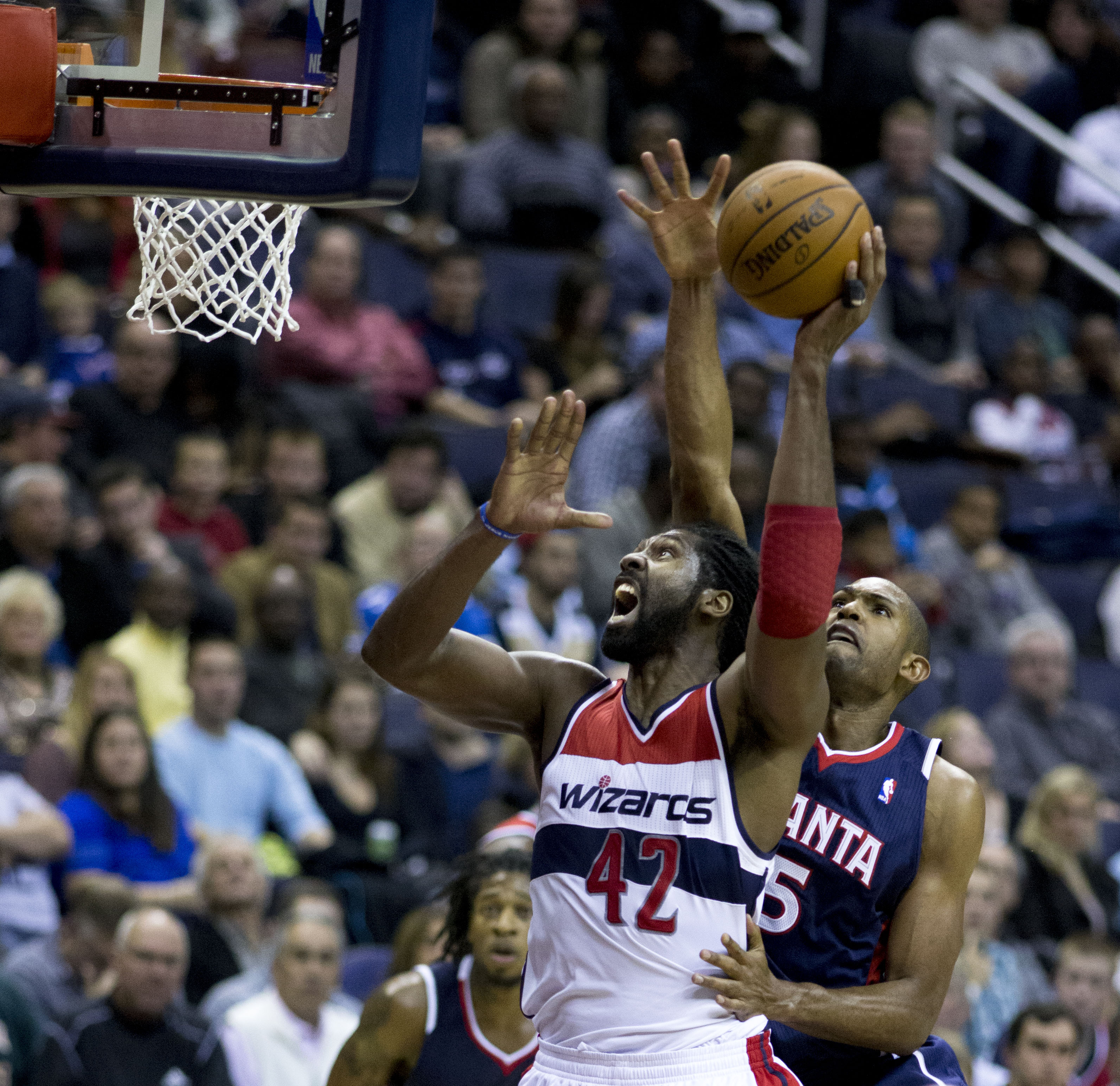
Nene Hilario

Last week, I posted an estimate of the Wizards’ possible record in their remaining games, assuming Nenê misses the rest of the regular season. With a few more games in the books, Washington has survived the big man’s absence by playing better on offense and worse on defense — which was exactly what should have been anticipated based on how the season had gone prior to his injury.

The gap between how the Wizards performed with Nenê on the floor vs. when he’s been off has closed considerably. When I first posted these estimates, the numbers suggested Nenê’s absence could reduce the Wizards chances of winning by approximately 6%. In other words, if the Wizards had a 50% chance of winning with Nenê, their chances would be cut to roughly 44% with him on the sidelines.

Fast-forward four games (including games against Philadelphia and Utah — the Little Sisters of the Poor of the NBA), and the with/without Nenê differential is down to about 3.6%. There’s some game-to-game variation because of home court advantage, but the updated odds suggest that it would be reasonable to expect the Wizards to finish with 43-47 wins, even if Nenê misses the rest of the regular season.

As you’ll see in the tables below, there’s still uncertainty. The “no Nenê” estimate projects that 12 of the remaining 21 games are essentially coin flips — Wizards’ odds of winning falling between 45% and 55%. Using their full season numbers indicates 10 coin flip games. Still, 43-47 wins appears to be a realistic projection from this point in the season.

DATE PLACE OPP Nenê OFF FLOOR FULL SEASON AVERAGES
03/08/14 A MIL 57% 61%
03/10/14 A MIA 33% 36%
03/12/14 H CHA 56% 59%
03/14/14 A ORL 51% 55%
03/15/14 H BRK 55% 59%
03/18/14 A SAC 46% 50%
03/20/14 A POR 34% 38%
03/21/14 A LAL 52% 55%
03/23/14 A DEN 47% 50%
03/26/14 H PHX 48% 51%
03/28/14 H IND 40% 43%
03/29/14 H ATL 54% 57%
03/31/14 A CHA 46% 49%
04/02/14 H BOS 59% 63%
04/04/14 A NYK 48% 51%
04/05/14 H CHI 51% 54%
04/09/14 H CHA 56% 59%
04/11/14 A ORL 51% 55%
04/12/14 H MIL 66% 70%
04/14/14 H MIA 42% 45%
04/16/14 A BOS 50% 53%

And, projected records with and without Nenê.

REMAINING GAMES FINAL RECORD
SPLIT W L W L
Season 15 6 47 35
w/o Nenê 11 10 43 39

Wizards Trade for Backcourt Upgrade

NBA: Playoffs-Denver Nuggets at Golden State Warriors

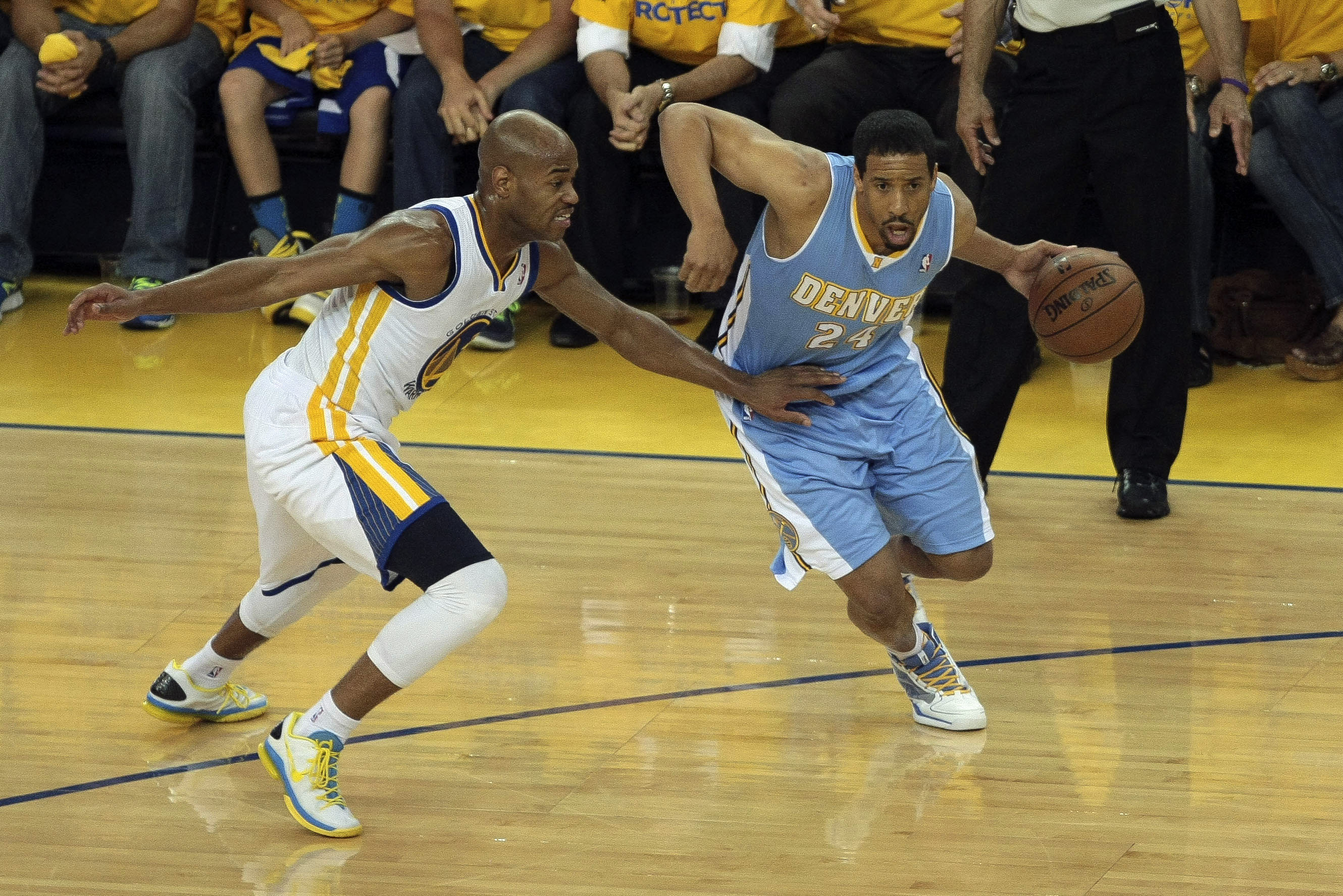
The Wizards made a deal at the trade deadline, swapping Eric Maynor, Jan Vesely and a second round pick in 2015 in a three-team trade that landed 37-year old Nuggets PG Andre Miller. The trade provides Washington with a much-needed reserve guard, and costs the team little in the long-term.

For their stated goal of making the playoffs, this is a good trade. Miller has declined some in his NBA dotage, but is still productive in his 15th season. Regular readers are likely familiar with my Player Production Average metric (PPA), which credits players for things that contribute to wins, debits them for things that don’t — each in proper proportion. PPA is pace-neutral, accounts for defense and includes a “degree of difficulty” factor. In PPA, 100 = average and higher is better.

Miller’s PPA this season: 94. Last season it was a 96. The previous season: 84. This is a significant dropoff from the 140-range PPAs he posted in his early 30s, but it’s still more than adequate for a third guard. For comparison, Temple’s PPA this season: 20. Maynor’s: 8.

Acquiring Miller doesn’t affect Washington’s cap situation going forward. Vesely’s contract is up at the end of the season. Maynor had another year at $2.1 million, but only $2 million of Miller’s salary for next season is guaranteed. If the Wizards decide to bring him back, it would be the equivalent of signing a free agent PG for $2.525 million. The money they owed Maynor is a sunk cost they would have had to pay regardless.

And yet, I’m ambivalent about the trade. First, I don’t like giving up that second round pick. Some object based on the likelihood of it being a high second rounder. I really don’t care where it falls. In my analysis, second round picks are grossly undervalued by many teams, including the Wizards. They’re opportunities to take chances on guys with ability, but with a “wart” or two. They’re opportunities to obtain inexpensive talent to fill roles — or perhaps more. If it was me, I’d want lots of second round picks to have more shots at finding the next Gilbert Arenas or Carlos Boozer or Chase Budinger or Isaiah Thomas or Marc Gasol or Marcin Gortat or Nikola Pekovic or DeJuan Blair or DeAndre Jordan or Ersan Ilyasvoa or Amir Johnson or etc., etc., etc.

Remember, second rounders typically sign non-guaranteed contracts — if they get a contract at all. They can be sent to the D-League, seasoned overseas, or simply straight out released if they don’t work. Low-risk investment with the possibility of a significant reward. Even if only half your second rounders turn into rotation players, they’re still providing valuable production at bargain price. But I digress.

The second reason I’m ambivalent is that it highlights a long series of mistakes and mismanagement by Ernie Grunfeld and the Wizards front office. It’s nice they could acquire Miller, but they shipped out Maynor — the free agent prize, who just six months ago was supposed to be their upgrade at backup PG. Now they’re paying a second round pick to dump him. Vesely, of course, was the sixth overall pick in the draft (chosen ahead of Kawhi Leonard and Kenneth Faried), who has totaled almost as many turnovers plus fouls as he did rebounds or points.

Over the past few seasons, the Wizards have managed to turn near-max cap space, future 1st and 2nd round picks, a 6th overall pick, and a BAE into Gortat, Ariza and Miller. All of whom have expiring contracts.

And third, I look back with some frustration on the ones that got away. In particular, I think of Shelvin Mack — a guy the Wizards cut twice to keep less productive players — who’s having a solid year in Atlanta.

But, Miller does improve the team’s bench. He should give Randy Wittman lineup options at the end of games, and his success sharing the backcourt with Ty Lawson in Denver bodes well for a partnership with Wall in DC. He’s an experience, efficient pro, who will help the Wizards make the playoffs, even if they still figure to be a first-round out. In that sense, the trade is fine. But it’s a shame the deal was even necessary.

Why Ernie Grunfeld Hasn’t Been Fired

grunfeld & leonsis

Easter Island. Stonehenge. The continued employment of Ernie Grunfeld. These are a few of the mysteries that have baffled researchers through the years.

That Grunfeld has been able to remain at the Wizards helm despite the team compiling the league’s third worst winning percentage during his tenure — well, that’s been a real puzzler. But, you won’t need to trouble your thoughts any longer: I have solved the riddle. Through careful application of logic, reason, Basketball Reference and Microsoft Excel, I have compiled definitive proof showing why team owner Ted Leonsis has kept Grunfeld on the job.

The reason is shocking in its simplicity, and it shows how misguided and unreasonable you Leonsis/Grunfeld detractors have been.

Shame on you.

The problem has been application of the wrong measuring stick. Critics have been comparing Grunfeld to the rest of the NBA, which is silly when you think about it. (And, I’m sure if we all give it some thought, we might come up with a reason (just one) why it’s silly.)

The proper comparison for a guy taking over the Washington Wizards is…(wait for it)…other Wizards GMs. I’ll pause a moment for you to slap yourself in the forehead and say, “Oh my gosh, I’ve been SO stupid.”

Since 1973-74, the Washington Wizards/Bullets have had five GMs (top executives): Bob Ferry, John Nash, Wes Unseld, Michael Jordan and Grunfeld. Take a look at the table below, and you’ll see that the Grunfeld-built Wizards have compiled a .395 winning percentage — third best for a Wizards/Bullets in the past 31 years.

TOP EXECUTIVE YEARS W% LEAGUE RANK TEAMS
Ernie Grunfeld 03-04 to present 0.395 28 30
Michael Jordan 00-01 to 02-03 0.378 24 29
Wes Unseld 96-97 to 99-00 0.449 19 29
John Nash 90-91 to 95-96 0.327 25 29
Bob Ferry 73-74 to 89-90 0.523 8 27

And this season’s team is above average for a Washington team — hovering near the lofty heights of a .500 record.

Ernie Grunfeld — one of the three best Wizards/Bullets general managers in the past three decades. You don’t just go out and fire a top three GM.

We all owe Grunfeld and Leonsis a BIG apology.

Washington Wizards: Total Mediocrity

beal shoots

Ask a Wizards fan to describe the team, and odds are he’d say the starters are pretty good, but the bench is awful. And he’d probably take a shot at Randy Wittman’s coaching — something Wittman would deserve for no other reason than the passion he’s instilling for two-point jump shots (aka The Worst Shots in the Game; or The Shots the Defense Wants You to Take).

However, an analysis of starting lineups and benches around the league suggests that these assumptions may not be accurate. The analysis used my overall player rating metric, called Player Production Average (PPA), weighted by minutes played. I ran an overall minutes-weighted PPA for each team’s most commonly used starting five, and then for each team’s bench.

PPA credits players for things that contribute to winning and debits them for things that don’t — each in proper proportion. PPA is pace adjusted, accounts for defense and includes a degree of difficulty factor. In PPA, 100 = average, higher is better and 45 = replacement level.

The league’s average starting lineup produced a PPA of 129. Washington’s starters ranks 14th overall with a 127. The average bench produced a PPA of 67. Washington’s bench ranks 15th with a 69.

I’m as surprised as you are.

I suspect that a big reason the Wizards bench rates in the middle is because of Wittman’s short seven-and-a-half man rotation. Most nights, Wittman uses what amounts to a two-man bench of Martell Webster and either Nenê or Booker (whichever didn’t start). Nenê was counted as a starter, by the way. Garrett Temple plays only long enough for John Wall to catch his breath. The rest of the squad gets spot minutes when they can.

What does this show? This is a thoroughly mediocre team — starters AND bench.

Here’s a table showing minutes-weighted PPA scores for the starters and bench of each NBA team, sorted by Starter PPA:

TEAM STARTER PPA BENCH PPA Starter Rank Bench Rank
MIA 173 74 1 11
LAC 166 70 2 14
SAS 165 101 3 1
MIN 158 51 4 26
OKC 156 76 5 8
POR 156 52 6 25
GSW 153 40 7 30
ATL 148 76 8 9
IND 145 56 9 23
HOU 145 67 10 17
DAL 140 83 11 5
NOP 132 77 12 7
DEN 128 72 13 12
WAS 127 69 14 15
CLE 126 42 15 29
PHO 126 85 16 3
TOR 121 65 17 19
DET 120 51 18 27
NYK 119 71 19 13
SAC 118 63 20 20
MEM 118 85 21 4
CHI 116 75 22 10
CHA 116 55 23 24
LAL 114 69 24 16
UTA 109 58 25 22
PHI 107 43 26 28
ORL 106 59 27 21
BRK 100 88 28 2
BOS 93 67 29 18
MIL 70 79 30 6
         
AVG. 129 67    

A few observations:

  • Only Boston and Milwaukee have starting lineups that rate below the league average PPA (100). Incredibly, the Bucks bench rates as slightly more productive than the starters.
  • San Antonio has the league’s third best starting lineup AND the most productive bench.
  • Oklahoma City has the fifth best starting lineup, which is downright incredible because it includes 876 minutes of Kendrick Perkins (PPA: 24).
  • Minnesota is continuing its decades-long practice of not putting an adequate roster around a high-quality PF named Kevin. In years past, the “Kevin” was Garnett. The past few years, it’s been Love. The Timberwolves roll with the 4th best starters and the 5th worst bench.
  • Brooklyn is kind of a reverse image of Minnesota. The Nets’ starting lineup has been bad (minutes-weighted PPA of 100 — good for third worst), but they have the league’s 2nd most productive bench.

Moving on to the Wizards’ PPA update…no real surprises.

PLAYER GMS MPG LW PPA
Trevor Ariza 38 34.8 144 151
John Wall 43 37.0 147 143
Trevor Booker 34 21.2 137 136
Marcin Gortat 43 32.6 135 136
Nenê Hilario 36 29.6 102 104
Martell Webster 41 30.4 105 100
Bradley Beal 34 32.9 84 89
Jan Vesely 28 16.0 72 72
Chris Singleton 14 10.6 60 60
Glen Rice 11 9.9 18 21
Kevin Seraphin 31 9.9 20 17
Eric Maynor 22 9.5 13 13
Al Harrington 7 18.6 7 6
Otto Porter 21 9.8 3 4
Garrett Temple 41 11.5 6 3

Trevor Ariza had a good week while the rest of the team performed “about the same.” Webster’s production slipped for a fourth consecutive update — he’s now right at league average. If Washington is to break out of this rut of mediocrity, they need someone to significantly boost his production. The prime candidate would seem to be Bradley Beal, who had a terrific second half last season.

All-Stars and a Wizards Update

Before I get to the weekly Wizards update, I want to take a quick look at All-Stars through the prism of Player Production Average (PPA) — an overall rating system I developed. PPA credits players for things that contribute to winning and debits them for things that don’t — each in proper proportion. PPA is pace adjusted, accounts for defense and includes a degree of difficulty factor. In PPA, 100 = average, higher is better and 45 = replacement level.

As usual, fan voting doesn’t correlate well with my metric or with what causes teams to win. I’m not one to complain much about that reality — the fan vote is a popularity contest, not a referendum on who’s best. The top vote-getter typically appears on about a quarter of all ballots cast. I first noted this phenomenon with Michael Jordan, who regularly collected the most All-Star votes. Going by All-Star voting, roughly 75% of NBA fans each year thought Jordan (wildly popular and widely considered the best player in the game — if not all time) didn’t deserve to be an All-Star.

Anyway, I’ll present the list in two ways: the first using PPA, which is a per minute metric; the second using total production (which could weed out guys who missed time due to injury).

Per MINUTE EAST WEST
G Kyle Lowry Chris Paul
G Dwyane Wade Stephen Curry
F Lebron James Kevin Durant
F Paul George Kevin Love
F Andre Drummond Anthony Davis
G John Wall Mike Conley
G Lance Stephenson Goran Dragic
F Brook Lopez Dirk Nowitzki
F Al Horford DeMarcus Cousins
F Joakim Noah Tim Duncan
G Kyle Korver Ty Lawson
F Carmelo Anthony LaMarcus Aldridge

The quality imbalance between the conferences is evident in these lists. Carmelo Anthony takes the East’s final frontcourt slot while ranking just 21st among all frontcourt players league-wide. The Wizards only All-Star, John Wall, rates as the East’s third most productive guard per minute, but ranks just 16th in the league (minimum 500 total minutes).

Here’s the “totals” list:

TOTAL PRODUCTION EAST WEST
G Kyle Lowry Chris Paul
G John Wall Stephen Curry
F Lebron James Kevin Durant
F Paul George Kevin Love
F Andre Drummond LaMarcus Aldridge
G Kemba Walker Damian Lillard
G Aaron Afflalo Wesley Matthews
F Carmelo Anthony Blake Griffin
F Joakim Noah DeAndre Jordan
F Paul Millsap Anthony Davis
G Lance Stephenson James Harden
F Chris Bosh Dirk Nowitzki

Probably the biggest surprise for me was Kemba Walker. He hasn’t impressed me much, but he’s an above average producer on a per minute basis and he plays a lot of minutes. Notice Brook Lopez and Al Horford dropping off the list in the East — their total production is down because of injury. DeAndre Jordan is another mild surprise. It’s easy to focus on his limitations, which are abundant. However, Jordan rebounds, blocks shots, and limits his offensive repertoire to things he can do well: dunks, layups, put-backs and setting screens.

Moving on from All-Stars, let’s talk Wizards. (See what I did there?)

PLAYER GMS MPG LW PPA
John Wall 40 36.9 140 147
Trevor Ariza 35 34.6 144 144
Trevor Booker 31 21.4 137 137
Marcin Gortat 40 32.1 132 135
Martell Webster 39 30.4 109 105
Nenê Hilario 33 29.3 107 102
Bradley Beal 31 33.1 73 84
Jan Vesely 28 16.0 73 72
Chris Singleton 14 10.6 64 60
Kevin Seraphin 28 10.1 12 20
Glen Rice 11 9.9 18 18
Eric Maynor 22 9.5 13 13
Al Harrington 7 18.6 7 7
Garrett Temple 38 11.2 2 6
Otto Porter 19 9.7 15 3

It’s largely status quo, which is normal at this point in the season. Players have established their performance levels for the most part so I don’t expect to see major changes week to week. Any large changes are going to show up in lower minute players for whom a one-week sample size can still be significant.

Improvers this week include Wall, Beal, and Seraphin — the big Frenchman upped his production for a fourth consecutive update. Temple also did a little better, but still has been less productive this season than even Maynor.

On the downside were Webster, Nenê, and Porter. Nenê is interesting and worth further analysis. The team continues to be better when he’s on the floor even as his personal production slides.

Now for the shameless plug: check out the FREE first chapter of my mystery novel set for publication later this month. 

Should the Wizards Give Wittman A Sympathy Firing?

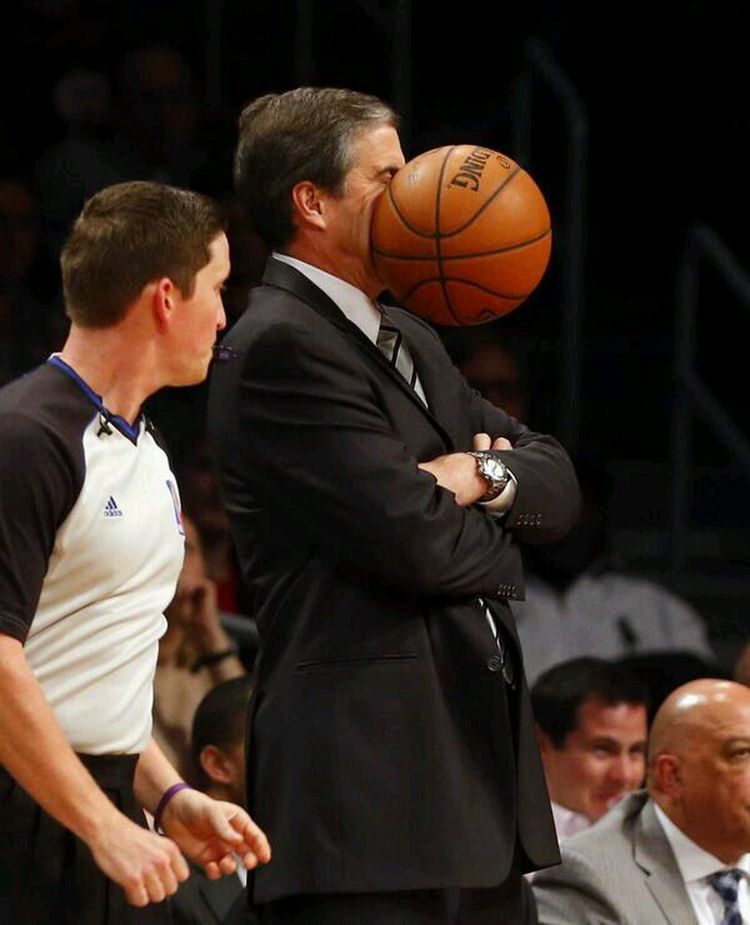
NBA-Coach-Randy-Wittman-Face-Smashed-By-Basketball

Here’s how weird things have gotten for me as I follow the Washington Wizards: I feel sympathy for a coach I never would have hired in the first place. Team president Ernie Grunfeld and owner Ted Leonsis awarded the full-time coaching job to Randy Wittman, who’d done a solid job as interim coach when they fired Flip Saunders. According to reports at the time, they neither considered nor interviewed other candidates for the position. Had it been my call…well, Wittman wouldn’t have been the choice.

Despite the howls of fans angered by a three-game losing streak, Wittman isn’t a bad coach. He isn’t a good one either — at least not by NBA standards. He’s standard issue NBA coaching material. Good at some things, not so good at others. On balance, probably on the “below” side of average, but close enough to the league standard that he’s not a drag on his team’s performance. When he gets fired by the Wizards, he could take a year off, go down to college and be great at that level. Sure, a guy like Phil Jackson, Pat Riley or Greg Popovich would win a few more games with the same roster, but a) those guys aren’t coming to Washington, and b) the Wizards wouldn’t be title contenders even with an elite coach.

I’m not saying it would be pointless to fire Wittman and replace him with Someone Else — maybe Mr. Else could get an extra win or two from this team over the remainder of the season. But no coach is going to transmogrify this group into a title contender for one simple reason: the roster is inadequate. They’re good enough to avoid missing the playoffs in the misbegotten East. They might even be good enough to win a playoff series if they’re reasonably healthy and they can avoid a first round matchup with Indiana or Miami. But there isn’t a coach on the planet who could get them further — not with this roster.

As you’ll see in the table below, Wittman has been given a team that’s effectively six deep. Bradley Beal could be a seventh, if he starts performing the way he did in the second half of last season. Wittman’s options are further diminished by minutes restrictions for Beal and (more importantly) Nene.

There are plenty of things I’d love to see the team do differently — starting with taking fewer two-point jump shots. (Umm, fellas — those shots are open for a reason.) Maybe better coaching could change some of those things. But, NBA reality is that everyone knows what everyone else is doing strategically. Coaches come up with stuff to surprise each other now and then, but most games are decided by overall talent and execution.

A coach’s most important job is getting lineups on the floor that maximize his team’s chances of winning. Those lineup decisions have largely been taken from Wittman by the team’s wafer-thin roster. Unless Nene’s Achilles gets better or someone on the Wizards bench radically improves, the coaching staff is stuck with few options to patch over the lack of depth. That this situation was entirely predictable (in fact, was predicted before the season) makes it no less frustrating.

Below is this week’s Player Production Average (PPA) update. PPA is a player rating stat I developed that credits players for things that contribute to winning and debits them for things that don’t — each in proper proportion. PPA is pace adjusted, accounts for defense and includes a degree of difficulty factor. In PPA, 100 = average, higher is better and 45 = replacement level.

PLAYER GMS MPG LW PPA
John Wall 31 37.2 149 147
Trevor Ariza 26 34.2 154 146
Trevor Booker 23 22.0 118 139
Marcin Gortat 31 32.5 130 130
Nene Hilario 24 29.4 132 120
Martell Webster 30 31.2 151 120
Bradley Beal 22 34.9 84 76
Chris Singleton 11 12.9 48 66
Jan Vesely 22 15.8 53 55
Otto Porter 12 12.2 -47 23
Glen Rice 11 9.9 21 21
Eric Maynor 22 9.5 18 13
Al Harrington 7 18.6 6 6
Kevin Seraphin 23 10.0 -15 2
Garrett Temple 29 10.8 -21 -2

Normally, I update weekly, but this one went a couple weeks — eight games total. The Wizards went 4-4 during that stretch, including their current three-game winning streak. The performance levels of John Wall, Trevor Ariza and Marcin Gortat appear to have largely stabilized.

Wall’s “grade” is interesting because it’s at once encouraging and disappointing. On the encouraging side, this is the longest sustained period of well-above average play of his career. So far, he’s the most productive guard in the East. But…his per minute production is still not close to “franchise cornerstone” level. And while he’s the East’s best PG, he still ranks behind nine Western Conference PGs in per minute production.

I have a similar reaction to Gortat’s score. He’s a solid producer, but…he ranks only about 20th among centers. The Wizards need more from him, especially on the boards and on defense.

Ariza is — by some strange coincidence — playing the best basketball of his career in a contract year.

Other positives: Trevor Booker becoming a solid producer upon entering the starting lineup (though his team defense continues to be a problem), Otto Porter improved from a HUGE negative to a net positive, and Kevin Seraphin finally got out of the negative PPA range.

A word on Seraphin — the big man currently rates as the NBA’s least productive center. He managed the same “feat” last season. There seems to be some kind of a message there, but I could be over-thinking things.

Oh yeah, Chris Singleton also showed signs of life with not atrocious play in a couple garbage time appearances.

On the negative side: Nene’s production is (unsurprisingly) down as he tries to play through that Achilles injury. Martell Webster’s play declined significantly this update, as well. And, of course, the Wizards continue to get absolutely nothing from their backup PGs.

With teams now able to sign free agents to 10-day contracts, I’m hoping the Wizards front office will start bringing in D-League PGs for tryouts until they find one they like. I’d also like to see them try some PF/C types in hopes of getting even replacement level play off the bench. They can make room by releasing one or more from the group of Temple, Seraphin, Harrington and Maynor. Yes, I know there’s no way they’d just cut Maynor because of the player option he holds for next season. It could be a correct move, however.

Even 7 Isn’t All That Lucky for Wizards

Short of trading additional future assets, getting lucky with a D-League pickup, or getting radical in-season improvement from one or more players currently on the roster, there just isn’t getting around the reality that this year’s Washington Wizards is solidly mediocre — at best.

I went into this week’s update on the team trying to conjure up a “modest proposal” type of post. Best I could come up with was the notion of shortening the game to 32 minutes so that teams would need to play only their top seven. And, Washington’s top seven is pretty good.

In this imaginary “top 7” league, so far this season, Washington would move up the standings a bit. According to my estimates, their top 7 would rank 4th in the East behind Miami, Atlanta and Indiana.

Overall, their top 7 rates 12th best, which sorta gives some perspective to how weak the East is so far this season. Washington’s seven best players rate as 4th best in the East, but would be only 9th best in the West.

Just to extend the silliness to its “logical” end — in this hypothetical, Washington would win a first round series against Brooklyn only to get bludgeoned in round two by Miami. The West would be a dogfight, but (if my PPA ratings held sway — and in this alternate reality, they do) San Antonio would emerge victorious. That would set up a repeat of last season’s Heat-Spurs final. Which the Heat would win.

Of course, the league isn’t going to shorten the game time anymore than it can guarantee Washington’s top seven can actually stay healthy. The bright side: a fully healthy Wizards team might be good enough to win a first round series if they can make the postseason. The downside: “fully healthy” seems like a fantasy.

To this week’s Player Production Average (PPA) update. PPA is a player rating stat I developed that credits players for things that contribute to winning and debits them for things that don’t — each in proper proportion. PPA is pace adjusted, accounts for defense and includes a degree of difficulty factor. In PPA, 100 = average, higher is better and 45 = replacement level.

PLAYER GMS MPG LW PPA
Trevor Ariza 18 36.1 172 154
Martell Webster 22 33.0 148 151
John Wall 23 37.7 168 149
Nene Hilario 16 32.6 134 132
Marcin Gortat 23 34.6 150 130
Trevor Booker 15 20.1 114 118
Bradley Beal 14 39.5 81 84
Jan Vesely 17 17.6 54 53
Chris Singleton 7 15.6 29 48
Glen Rice 11 9.9 4 21
Eric Maynor 20 10.0 16 18
Al Harrington 7 18.6 7 6
Kevin Seraphin 18 8.3 -32 -15
Garrett Temple 21 10.3 -23 -21
Otto Porter 4 12.0 -70 -47

No real surprises for a team that lost two of three since the last update (and barely won the third). Ariza, Wall and Gortat led the “decliners.” The “improvers” were of the awful to slightly less awful variety — Singleton getting to replacement level, Rice getting out of single digits, Seraphin becoming a bit less negative.

Sorta looping back to the “modest proposal” portion of this post, here’s another look at the Wizards this season — one that shows the hard demarcation between their top 7 and their bottom 8.

Wiztop7bottom8

Wizards Lack of Depth Continues to Hurt

Get used to repeats of that old Wizards pattern — keeping the score tight (even holding a lead in the fourth quarter) only to lose in the end. The problem isn’t that Washington lacks a mystical “ability to close,” it’s that their bench can’t hold the leads its starters provide, and its starters wear down at the end of competitive games.

This is not the fault of Randy Wittman and the coaching staff. Most of the failing bench players are producing at levels consistent with career norms. Eric Maynor, a fan whipping boy so far this season, is playing worse than usual, but not abnormally so. He’s been unproductive throughout his career — that’s he’s even less productive should surprise no one. The same is true of Kevin Seraphin, Jan Vesely, Chris Singleton and Garrett Temple. They’ve established themselves as unproductive. There’s little reason beyond hope to imagine them becoming productive.

With the “make the playoffs or else” mandate, Wittman has little option but to play his key players heavy minutes and pray they don’t get hurt. And that’s exactly what’s happening. John Wall and Bradley Beal lead the league in minutes per game at PG and SG. Among SFs, Trevor Ariza ranks eighth and Martell Webster sits 15th. Marcin Gortat is second in minutes per game among centers. The fragile Nene plays the 12th most minutes per game for a PF.

If this was the playoffs, there’d be little reason for concern. But there are 62 games remaining in the regular season, and they’ve already sustained injuries to Ariza, Webster, Nene and Beal. Another injury could put the playoffs out of reach. That would be a shame (as would limping into the playoffs) because at full strength, it’s core rotation players could at least put a scare in a post-season opponent. They’ll need to get (and stay) healthy to do that, however.

For a further demonstration of Wittman’s lack of options, peruse the table below, which shows the (approximately) weekly update of Player Production Average (PPA). PPA is a player rating stat I developed. It credits players for things that contribute to winning and debits them for things that don’t — each in proper proportion. PPA is pace adjusted, accounts for defense and includes a degree of difficulty factor. In PPA, 100 = average, higher is better and 45 = replacement level.

PLAYER GMS MPG LW PPA
Trevor Ariza 15 36.1 146 172
John Wall 20 37.8 169 168
Marcin Gortat 20 34.6 152 150
Martell Webster 19 32.5 156 148
Nene Hilario 16 32.6 133 134
Trevor Booker 12 16.5 96 114
Bradley Beal 13 40.2 81 81
Jan Vesely 14 18.1 75 54
Chris Singleton 6 17.5 51 29
Eric Maynor 19 10.3 35 16
Al Harrington 7 18.6 6 7
Glen Rice 9 8.0 -10 4
Garrett Temple 18 10.1 -14 -23
Kevin Seraphin 15 7.9 -27 -32
Otto Porter 2 10.5 -70

Ariza is playing a lot like he’s in a contract year, which is to say — superbly. His production is All-Star level, though it would astonish me if he actually received the honor. But, with Lebron more a PF these days, it’s arguable that Ariza has been the East’s second best SF so far this season (behind Paul George).

Recovered from injuries last season, Gortat is producing at a good level again. Like Ariza, his timing is superb — he’s in a contract year as well.

Wall seems to have settled in at All-Star level production. PPA currently has him rated as the top PG in the East, and fifth most productive overall behind Chris Paul, Stephen Curry, Ty Lawson and Mike Conley.

This week’s update shows Vesely’s production dropping off. Hopefully he can turn things around. Whether or not he does, the coaching staff would be wise to give more minutes to Booker, who continues to be an “about average” producer. That’s nothing to get excited about, but it makes him a solid reserve.

Finally, note that the Wizards have seven players who rate below replacement level so far this season. Collectively, they’ve played 823 minutes — nearly 17% of the team’s total. This is a direct result of the front office’s persistent failure to properly assess players, and their inability to address the team’s glaring need for depth. This misjudgment is costing the team wins now, and could cost them even more as the season wears on.

Inside Wall’s Three-Game Binge

It’s hard to overstate how much fun it’s been watching John Wall erupt these past three games. Wall, whose shooting woes have been well documented, abruptly became a gunner — knocking down an array of shots from everywhere on the floor. The shooting display, paired with skilled passing and overwhelming athleticism left opponents flummoxed, teammates impressed, and fans buzzing with what might be…if he can keep it up.

How abrupt was the change in Wall’s performance level? Regular readers are familiar with my overall rating stat, Player Production Average (PPA). It’s a summary measure I developed that credits players for things they do that help a team win and debits them for things that don’t — each in proper proportion, of course. PPA is pace-adjusted, accounts for defense, and includes a degree of difficulty factor. In PPA, average = 100, higher is better, and replacement level is 45.

Through the first 11 games this season, Wall’s PPA was a pedestrian 106. His non-scoring numbers were good, but his shooting was terrible. Here are his PPA scores for each of the past three games:

  • at Toronto — 280
  • New York — 178
  • LA Lakers — 293

Over the past three games combined, his PPA was 249. To put this in perspective, last season Lebron James was the league’s most productive player with a PPA of 284. Second place was Chris Paul with a 244. In other words, if Wall maintains this level of play, he’ll be producing like an MVP.

His onslaught this past week earned him the league’s Player of the Week honor, and evoked his sensational March from last season. For that month, Wall had a PPA of 201 — a score that would rank him in the top five players in the league most seasons.

The most important question is whether he can maintain this level of performance, and it’s at this point that enthusiasm should be tempered. A little. Wall’s numbers are up across the board, but the surge in his overall impact is because of his stellar shooting.

Consider his shot selection (data courtesy nbawowy.com):

SPLIT At-Rim Mid-Range Long 2pt 3pt
1st 11 gms 28% 16% 32% 24%
Last 3 32% 16% 42% 11%
March 28% 28% 36% 8%

This table shows where Wall’s field goal attempts have been coming from. He’s been getting to the rim a little more often the past three games than he did early in the season (and last March), but the bulk of his shots are still jumpers. For my taste, he’s still shooting too many low-yield shots from mid-range and long two-point range. Indeed, 58% of his FGA are from what stat goobers not-so-affectionately call “sh*t” shots.

SPLIT TOTAL FGA At-RIM FGM AT-RIM FGA AT-RIM FG% MID-RANGE FGM MID-RANGE FGA MID-RANGE FG% LONG 2pt FGM LONG 2pt FGA LONG 2pt% 3FGM 3FGA 3pt%
1st 11 gms 170 27 47 0.574 6 28 0.214 16 55 0.291 12 40 0.300
Last 3 57 16 18 0.889 5 9 0.556 11 24 0.458 3 6 0.500
March 275 45 78 0.577 34 76 0.447 44 99 0.444 10 22 0.455

A few things jump out at me. First, his incredible percentage (.889) on at-rim attempts. Wall’s been finishing well at the hoop, and he’s been drawing a ton of fouls. He’s obviously not going to keep shooting near 90% on at-rim attempts, but they’re still his most efficient shot (when he can get it), and his forays to the basket have other excellent results such as drawing fouls (Wall’s a superb free throw shooter) and opening up teammates for shots.

The mid-range shooting percentage isn’t sustainable, but he doesn’t shoot much from there so it doesn’t matter much. His long two-point attempts are a bigger issue because he’s shot from that range frequently throughout his career. His percentage from that range the past week has been acceptable (.458), although it’s still not a very productive shot for him.

Pts Per Shot At-Rim Mid-Range Long 2pt 3pt
1st 11 gms 1.15 0.43 0.58 0.90
Last 3 1.78 1.11 0.92 1.50
March 1.15 0.89 0.89 1.36

Like the rest of the league, Wall is most productive when he gets to the rim or he shoot three-pointers. Obviously it’s not realistic to expect all of his shots to come from those two areas — sometimes he has to take what’s available. But, the principle doesn’t change.

In some ways, the numbers should be downright scary to the rest of the league. Even with 42% of his shots being low-efficiency long twos over the past three games, Wall scored 99 points on just 57 field goal attempts. If opponents start overreacting to Wall’s decent shooting on jumpers, it should pave the way for attacking the hoop. Which will make Wall even more efficient and even more dangerous.