Wizards Doppelgangers: The Enigmas

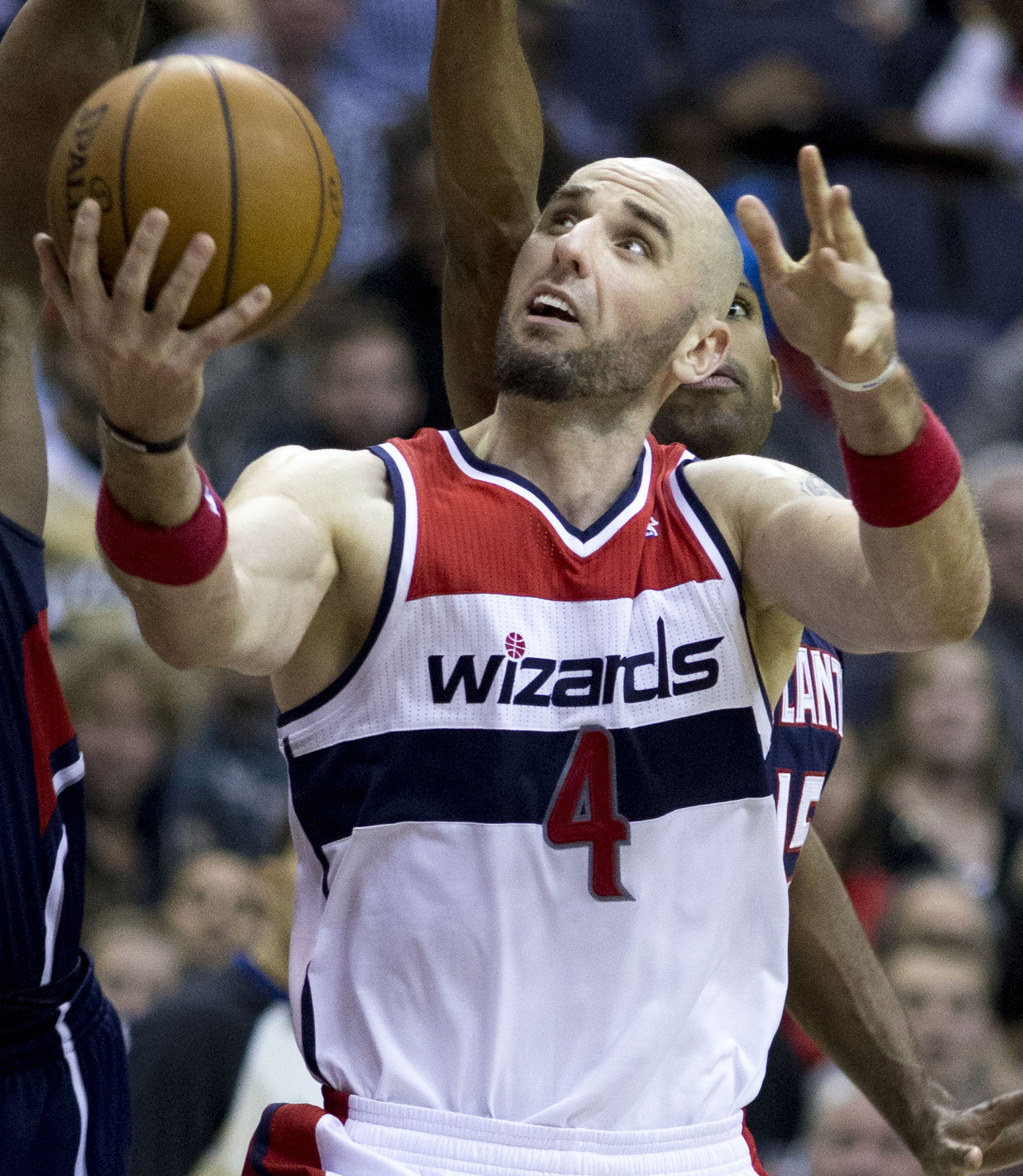
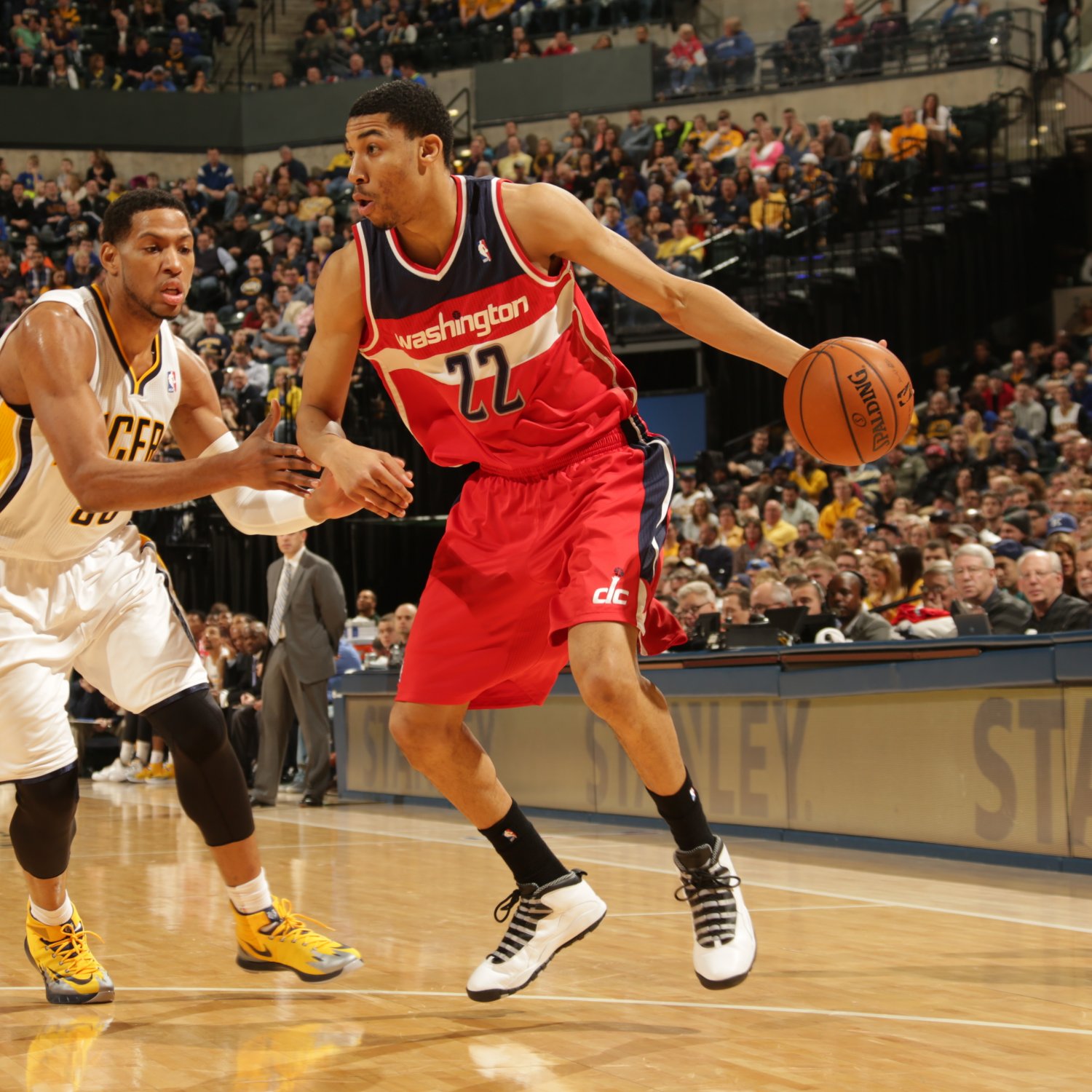
otto porter

In case you missed them, I’ve done two installments using my Statistical Doppelganger Machine to look at the player seasons most similar to Wizards (similar production at similar age):

Here’s a look at low-minute Wizards for whom finding comps was challenging because of their scant playing time: Otto Porter, Glen Rice Jr., and Garrett Temple.

Let’s start with the guy likely to play the biggest role for the team this season: Porter.

PLAYER POS SEASON AGE TEAM SIM SCORE PPA SEASON PPA PEAK
Otto Porter SF 2013-14 20 WAS 100 15 15
Lance Stephenson SG 2011-12 21 IND 87 14 116
Cory Joseph SF 2011-12 20 SAS 86 18 94
Jumaine Jones SF 2003-04 24 BOS 86 24 98
Quincy Pondexter SF 2010-11 22 NOH 86 38 67
Shawne Williams SF 2006-07 20 IND 85 39 53
Kareem Rush SG 2002-03 22 LAL 85 3 53
Brandon Bass PF 2005-06 20 NOK 85 37 116
Kevin Martin SG 2004-05 21 SAC 84 32 162
Kedrick Brown SF 2002-03 21 BOS 84 44 97
Gerald Henderson SG 2009-10 22 CHA 84 36 99

Wizards fans know Porter had what amounts to a lost rookie season. He missed training camp with a hip injury, barely played, and was terrible when he did play. When I post my projections Wednesday, I’ll go through a couple different ways I dealt with predicting his performance, but the exercise today is NBA similars.

The list of similars was something of a pleasant surprise. It’s basically a list of players who had a disastrously bad season and then (for the most part) went on to become contributors. That said, “contributors” is a broad term. As a group, Porter’s similars tended to peak young (average age 23.4) and low (average peak PPA: 88). But, they all improved the following season — generally by a bunch.

And, the list includes Kevin Martin, who’s been a good player for nearly a decade, and Lance Stephenson who became an above average performer this season — and is likely to continue improving.

PLAYER POS SEASON AGE TEAM SIM SCORE PPA SEASON PPA PEAK
Glen Rice Jr. SG 2013-14 23 WAS 100 20 20
Scott Padgett PF 1999-00 23 UTA 90 20 96
Will Barton G/F 2012-13 22 POR 87 28 60
Quincy Douby SF 2006-07 22 SAC 86 34 34
Orlando Johnson SG 2012-13 23 IND 85 60 60
Reggie Jackson G 2011-12 21 OKC 84 32 101
Bostjan Nachbar SF 2003-04 23 HOU 84 24 84
Ronnie Price G 2006-07 23 SAC 84 40 54
Thabo Sefolosha SG 2006-07 22 CHI 84 31 129
Nolan Smith G 2011-12 23 POR 84 10 10
Kevin Brooks SF 1992-93 23 DEN 84 18 34

While Porter’s comps were somewhat comforting, it’s difficult to say the same about Rice’s. Like Porter’s list, Rice’s similars tended to peak early (average age: 24.0), but even lower (average peak PPA: 62). But, Will Barton and Reggie Jackson are both still works in progress. And, a few more had a productive season or two in which they helped their team, and one (Sefolosha) became a decent role-playing starter.

All that said, Rice played just 109 total minutes last season. The players who performed like him (similar age, similar production) isn’t a list all-time greats, but that shouldn’t be expected from a second round pick. There’s little reason to think Rice will be unable to work himself into being a contributor.

PLAYER POS SEASON AGE TEAM SIM SCORE PPA SEASON PPA PEAK
Garrett Temple G 2013-14 27 WAS 100 24 60
Rick Carlisle G 1985-86 26 BOS 89 28 28
Pace Mannion SF 1987-88 27 MIL 88 30 61
Pace Mannion SF 1983-84 23 GSW 88 32 61
David Wingate SG 1994-95 31 CHH 88 32 89
Dudley Bradley SG 1985-86 28 WSB 86 60 102
Jason Hart PG 2005-06 27 SAC 86 13 119
Ronnie Price PG 2012-13 29 POR 86 14 54
Randy Brown PG 1995-96 27 CHI 86 50 86
Royal Ivey PG 2006-07 25 ATL 86 38 38
Reece Gaines PG 2003-04 23 ORL 85 11 20

Temple may have been the most difficult player to project because so many of the guys who produced like he did last season didn’t have a follow-up year. In other words, the league took a collective look at players like Temple, and decided to sign Someone Else.

Players like Temple peaked low (average peak PPA: 65) and fairly young (25.5). Two of the 10 most similar got significantly worse the following season, four got better, and four stayed about the same. The list certainly doesn’t offer much hope for improvement.

Later today: Bump and Bruise.

Wizards Slouching Toward the Playoffs

The numbers in the table below are this week’s Player Production Average (PPA) update. PPA is a metric I developed that credits players for things that contribute to winning and debits them for things that don’t — each in proper proportion. PPA is pace adjusted, accounts for defense and includes a degree of difficulty factor. In PPA, 100 = average, higher is better and 45 = replacement level. PPA is a per minute stat.

PLAYER GMS MPG LW PPA
Marcin Gortat 77 32.9 150 153
Trevor Ariza 73 35.7 151 143
John Wall 78 36.6 141 138
Trevor Booker 68 21.4 115 119
Drew Gooden 20 18.6 127 114
Nene Hilario 50 29.9 101 100
Andre Miller 24 14.4 104 91
Bradley Beal 69 34.7 89 89
Martell Webster 74 28.1 82 80
Jan Vesely 33 14.2 68 68
Kevin Seraphin 50 11.4 35 37
Chris Singleton 24 10.4 34 32
Garrett Temple 71 8.9 25 25
Glen Rice 11 9.9 20 20
Otto Porter 33 8.2 13 19
Al Harrington 30 14.9 13 8
Eric Maynor 23 9.3 8 8

Rough week for the Wizards, which is reflected in the individual numbers. On the positive side were Marcin Gorat, (who continues to have a good season), Trevor Booker (who many fans want removed from the rotation), and Otto Porter (who performed better, but still rates well below replacement level).

Even with a bad week, Trevor Ariza is having a career season. He gets a bit of a pass for the last few games — he’s been beset with the flu, and really shouldn’t have even been on the floor.

John Wall’s production fell for a third straight week. It’s been fashionable to celebrate Wall’s improvement and his ascendancy to All-Star status, but it’s worth noting that his 138 PPA this season is virtually identical to the 139 he posted last year.

Here’s a visualization of each player’s PPA through the season. Since this is basically a weekly rolling season average, the larger fluctuations at the beginning followed by a flatter line toward the end is to be expected. Note the fairly steady climb of Gortat’s PPA — he’s been playing better as the season has progressed. The production slip from Wall the past three weeks is also apparent.

Check out the steady production from Booker. Webster’s season-long decline is apparent in his graph.

Drew Gooden’s production has fallen steeply after a hot start. He may not be the godsend Wizards fans had hoped for. Andre Miller’s play has been up and down, but at least sorta trending up.

ppa trend

The Briefest of Wizards Updates

In keeping with established Wizards traditions, Al Harrington is currently the NBA's least productive PF.
In keeping with established Wizards traditions, Al Harrington is currently the NBA’s least productive PF.

Don’t have a ton of time for fancy prose — not with friend of the blog Ben Becker inviting himself to be a guest blogger next week and filling my inbox with questions.

So…here’s this week’s Player Production Average (PPA) update. PPA is a metric I developed that credits players for things that contribute to winning and debits them for things that don’t — each in proper proportion. PPA is pace adjusted, accounts for defense and includes a degree of difficulty factor. In PPA, 100 = average, higher is better and 45 = replacement level. PPA is a per minute stat.

PLAYER GMS MPG LW PPA
Trevor Ariza 66 36.0 154 151
Drew Gooden 13 17.5 152 148
Marcin Gortat 70 32.9 147 145
John Wall 71 36.8 146 144
Trevor Booker 61 21.1 116 116
Nene Hilario 49 30.1 103 101
Bradley Beal 62 34.4 88 90
Andre Miller 17 14.3 75 81
Martell Webster 67 28.4 84 81
Jan Vesely 33 14.2 69 68
Chris Singleton 22 11.0 40 40
Kevin Seraphin 47 11.8 40 36
Garrett Temple 66 9.4 23 22
Glen Rice 11 9.9 21 20
Eric Maynor 23 9.3 8 8
Otto Porter 31 8.3 3 3
Al Harrington 24 15.0 -2 1

Unsurprisingly given the team’s record during their recent series against the Western Conference, the production of their top players was down a little across the board. Nothing major — just…the kind of thing to be expected when they face some tougher competition than they get in the East.

I don’t know how much Martell Webster’s back is bothering him, but his production is way down this season. Last season, he posted a career-best PPA of 114. This season, he’s back down at his career level. This is cause for concern.

Also, I’ve heard/seen folks in a variety of places refer to the Wizards as a “young team.” But….not so. They’re right at the league average in age, but their rotation at this point is older. I’ll probably look at this in greater detail next week, but consider this:

  • The team’s plan was “build through the draft,” but only three of their rotation players (Wall, Beal and Booker) were selected by the Wizards.
  • Those same three players are the team’s only rotation players younger than league average.
  • Once Nenê returns they’ll have more rotation guys age 30 or older (four) than they do under age 26 (three).

The team does have young players on the roster, but they’ve been decidedly unproductive this season — for much of their careers for most of them.

In keeping with Wizards tradition, Al Harrington currently rates as the NBA’s least productive PF (minimum 300 minutes). Last season, that title was held by Jan Vesely.

The Anointing of John Wall

Folks have been tripping over each other to anoint John Wall a Genuine SuperStar and Franchise Savior since…well…before he even signed a contract. The Wizards literally gave him red carpet treatment when he arrived in DC after being made the number one selection. Since then, he’s been proclaimed as a star, as one of the game’s elite, and was awarded a max contract basically as soon as the Wizards could offer it.

Jason Reid’s still premature piece last week heralding Wall’s arrival as a “…true NBA star” seems nearly an example of restraint in comparison.

This blog post should not be read as “hate” for Wall. He has improved significantly since his first two seasons, and he has become good. He continues to possess elite (true star) potential, but despite the array of assertions that he already is a star…he’s not. Yet.

Before I go any further, it’s probably worthwhile for me to articulate what I mean by “star.” For me, it’s not a synonym for “well known” or “popular.” They’re guys consistently do the things that cause their teams to win games. Through the years, there have always been “media” stars — guys whose reputations exceed their actual production. Usually, they have high per game scoring averages — think Dominique Wilkins, Allen Iverson and (in recent years) Carmelo Anthony (although Anthony’s production has moved somewhat closer to his rep this season).

At 23 years old, Wall is decidedly NOT in that category. He’s a very good player now, and he’s on the cusp of greatness — if he continues to improve his jumper and cut down on turnovers. He could be one of the game’s elite in the very near future. He’s just not quite there yet.

Here are a few illustrations through the prism of the metric I developed, Player Production Average (PPA). PPA credits players for things that contribute to winning and debits them for things that don’t — each in proper proportion. PPA is pace adjusted, accounts for defense and includes a degree of difficulty factor. In PPA, 100 = average, higher is better and 45 = replacement level. PPA is a per minute stat.

First, let’s look strictly at point guards. In most seasons, it takes a PPA of 225 or higher to be an MVP candidate. Players scoring above 200 are among the game’s truly elite players. Here are this season’s top 10 PGs (minimum 500 minutes):

  1. Chris Paul — 250
  2. Stephen Curry — 197
  3. Goran Dragic — 175
  4. Kyle Lowry — 170
  5. Russell Westbrook — 166
  6. Mike Conley — 163
  7. Ty Lawson — 158
  8. John Wall — 150
  9. Tony Parker — 149
  10. Damian Lillard — 146

If I redo the analysis looking at totals instead of per minute production (to reward durability), Wall moves to fifth behind Curry, Lowry, Paul and Dragic.

Based on my analysis of Wall’s game and what I know of his work ethic and personality, I’d take his future over the future of anyone on the list ahead of him except Paul. But he needs to become more productive to become a truly elite PG.

Comparing Wall to the rest of the league, it’s hard to support the claim that he’s a “true star” (elite player). He’s top 20 in total production, in part because of he plays lots of minutes. In per minute production, he ranks just outside the top 40.

As I discussed a few weeks back, Wall’s positive contributions are plentiful — not unlike some of the game’s best players. But, his negative plays (poor shot selection, missed shots, and turnovers) are also abundant. I estimate that his shooting from the floor has cost the team 59 points so far this season — just under a point per game. That doesn’t sound like much, but over the course of 60 games it works out to about two more wins. Just two more wins at this point would have the Wizards tied with Chicago for the fourth seed, and just a half game behind Toronto for third.

‘Nuff said.

To this week’s PPA update:

PLAYER GMS MPG LW PPA
Trevor Ariza 55 36.0 155 159
John Wall 60 36.9 147 150
Marcin Gortat 60 32.9 144 141
Trevor Booker 50 20.6 112 115
Nene Hilario 49 30.1 103 103
Bradley Beal 51 33.8 94 93
Martell Webster 57 28.9 89 88
Jan Vesely 33 14.2 69 69
Chris Singleton 18 12.0 53 54
Andre Miller 6 13.8 88 52
Kevin Seraphin 43 12.2 43 42
Garrett Temple 56 10.9 20 21
Glen Rice 11 9.9 21 21
Eric Maynor 23 9.3 8 8
Otto Porter 26 8.8 -6 2
Al Harrington 13 14.2 12 -9
Drew Gooden 2 7.0 -146

Ariza and Wall continue to lead the way for the Wizards. Ariza is having a career-best season in his contract year. I have to think the Wizards would like to re-sign him, and I suspect Ariza’s more modest career production may keep his price more manageable.

Martell Webster’s PPA declined by one point — down for an eighth consecutive update. It’s good the team is giving him some days off to rest his ailing back, which is the likely cause for his production dip.

The new and returning old guys (Andre Miller, Drew Gooden and Al Harrington) were all awful since the last update.

It was good to see Otto Porter make some plays in the loss to Memphis. He’s back out of negative PPA territory, unlike number one overall pick Anthony Bennett whose PPA is -3.

A couple more entries in Small Sample Size theater: the departed Wizards. Jan Vesely’s PPA in Washington: 69. In 59 minutes for Denver: 58. PG Eric Maynor in Washington: 8. In 68 minutes for Philly: 48. That 48 was right around Maynor’s career average before signing with the Wizards. I still have no idea why the Washington front office thought he’d be good. Thankfully, he can now do a job for which he’s perfectly suited — helping Philadelphia lose games.

Andre Miller Is A Big Upgrade

wall dribbles

No time for anything in-depth today, but I wanted to get the numbers up. The Andre Miller trade is paying off already. In his first three games (and 44 minutes), Miller has been a bit more than four times as productive as Garrett Temple on a per minute basis.

John Wall, Trevor Ariza, Bradley Beal, and Marcin Gortat had good weeks. Trevor Booker did not. Martell Webster’s production declined for a seventh consecutive update.

The table below shows the just about weekly results of my metric: Player Production Average (PPA). PPA credits players for things that contribute to winning and debits them for things that don’t — each in proper proportion. PPA is pace adjusted, accounts for defense and includes a degree of difficulty factor. In PPA, 100 = average, higher is better and 45 = replacement level.

PLAYER GMS MPG LW PPA
Trevor Ariza 52 35.7 148 155
John Wall 57 36.8 140 147
Marcin Gortat 57 32.4 139 144
Trevor Booker 47 20.1 118 112
Nene Hilario 49 30.1 103 103
Bradley Beal 48 33.5 90 94
Martell Webster 55 28.8 91 89
Andre Miller 3 14.7 88
Jan Vesely 33 14.2 69 69
Chris Singleton 15 10.9 60 53
Kevin Seraphin 43 12.2 44 43
Glen Rice 11 9.9 21 21
Garrett Temple 54 11.2 20 20
Al Harrington 10 15.1 6 12
Eric Maynor 23 9.3 8 8
Otto Porter 24 8.9 -4 -6

Should the Wizards Fire Randy Wittman?

USP NBA: WASHINGTON WIZARDS AT DETROIT PISTONS S BKN USA MI

I was all set to write a piece arguing that it would be pointless to fire Randy Wittman. Yeah, he’s not a good coach, but in my view the team is performing about as I expected. The Wizards are neither good nor bad. They’re mediocre. Or, looked at another way, the Wizards are BOTH good and bad. Which is merely another way of saying the same thing: this is an average team.

They are what their talent says they are. I don’t believe that any coach could come in and transmogrify this roster into a…well…what exactly? a contender for the third seed? Blech.

What would “fix” the Wizards? Fewer two-point jumpers? More screen/roll with John Wall and Marcin Gortat? Better defined roles? A rotation that somehow includes developmental minutes for Otto Porter? A more solid defensive scheme? More consistent effort? Sure, any or all.

Some of that could be influenced by the coach, some not. My position has been that Wittman is a problem, not The Problem. And, “The Problem” is that the team doesn’t have enough talent, which is a result of a series of bad decisions by the front office. My thinking has been this: Don’t let Ernie Grunfeld off the hook. Make him live with the success or failure of the team he assembled — players AND coaches.

Except, let’s look at reality. Owner Ted Leonsis set the franchise goal for the season: Make the playoffs. In very large part because of a historically weak Eastern Conference, the Wizards will almost certainly accomplish that goal. While they’d be roughly the 11th best team in the West, they’re 5th or 6th best in the East. It would take a catastrophic collapse over their final 29 games to miss the postseason.

Assuming Leonsis is a man of his word, Grunfeld will be retained in the offseason. It’s difficult to envision a scenario in which Washington makes the playoffs and Leonsis doesn’t bring back Grunfeld and The Coach.

I use “The Coach” intentionally, because the question for Wizards fans is whether you want to root for a team that’s stuck with Grunfeld and Wittman or a team that’s stuck with Grunfeld and Someone Else. My feeling is that Someone Else — whether it’s an interim coach who’s replaced by a “permanent” hire after the season or whether it’s an interim coach who “succeeds” and keeps the job — will be a better long-term option for the Wizards than Wittman.

So, even though Wittman has been saddled with a roster that doesn’t include a single player that ranks among the league’s 40 most productive players (Trevor Ariza is the highest rated Wizards player at 44), count me among the fans who’d like to see a new coach. Now.

Moving on to the update…  The table below presents results from my Player Production Average (PPA) metric. PPA credits players for things that contribute to winning and debits them for things that don’t — each in proper proportion. PPA is pace adjusted, accounts for defense and includes a degree of difficulty factor. In PPA, 100 = average, higher is better and 45 = replacement level.

PLAYER GMS MPG LW PPA
Trevor Ariza 48 35.8 152 148
John Wall 53 37.1 149 140
Marcin Gortat 53 32.4 139 139
Trevor Booker 43 20.2 125 118
Nene Hilario 46 30.3 103 103
Martell Webster 51 29.1 94 91
Bradley Beal 44 33.2 86 90
Jan Vesely 32 14.7 72 69
Chris Singleton 14 10.6 60 60
Kevin Seraphin 40 11.8 32 44
Glen Rice 11 9.9 21 21
Garrett Temple 51 11.5 13 20
Eric Maynor 23 9.3 8 8
Al Harrington 7 18.6 6 6
Otto Porter 23 9.3 4 -4

When looking at these numbers, keep in mind that PPA scores in the 140-150 range (like Ariza and Wall) are nowhere near elite levels of production. A typical MVP-quality season would have a PPA of 230 or better. This season’s MVP is likely to be Kevin Durant with a PPA of 261 (so far). Last season, Lebr0n James posted the best PPA in my database with a 284.

Wall had a feel-good All-Star weekend winning the dunk contest and playing well in the game. But, if he played in the West, he wouldn’t have been part of the All-Star discussion. He continues to have All-World potential, but his actual production is good — not great.

Biggest improvers in this update were Kevin Seraphin and Garrett Temple. Seraphin is now at replacement level. Temple continues to be among the league’s weakest PGs, but is at least a little less bad than he’d been.

Wall’s performance slumped leading into the All-Star break. Perhaps he was distracted by the coming festivities? Nenê’s production continues to hover around league average. Martell Webster’s play declined for a sixth consecutive update.

All-Stars and a Wizards Update

Before I get to the weekly Wizards update, I want to take a quick look at All-Stars through the prism of Player Production Average (PPA) — an overall rating system I developed. PPA credits players for things that contribute to winning and debits them for things that don’t — each in proper proportion. PPA is pace adjusted, accounts for defense and includes a degree of difficulty factor. In PPA, 100 = average, higher is better and 45 = replacement level.

As usual, fan voting doesn’t correlate well with my metric or with what causes teams to win. I’m not one to complain much about that reality — the fan vote is a popularity contest, not a referendum on who’s best. The top vote-getter typically appears on about a quarter of all ballots cast. I first noted this phenomenon with Michael Jordan, who regularly collected the most All-Star votes. Going by All-Star voting, roughly 75% of NBA fans each year thought Jordan (wildly popular and widely considered the best player in the game — if not all time) didn’t deserve to be an All-Star.

Anyway, I’ll present the list in two ways: the first using PPA, which is a per minute metric; the second using total production (which could weed out guys who missed time due to injury).

Per MINUTE EAST WEST
G Kyle Lowry Chris Paul
G Dwyane Wade Stephen Curry
F Lebron James Kevin Durant
F Paul George Kevin Love
F Andre Drummond Anthony Davis
G John Wall Mike Conley
G Lance Stephenson Goran Dragic
F Brook Lopez Dirk Nowitzki
F Al Horford DeMarcus Cousins
F Joakim Noah Tim Duncan
G Kyle Korver Ty Lawson
F Carmelo Anthony LaMarcus Aldridge

The quality imbalance between the conferences is evident in these lists. Carmelo Anthony takes the East’s final frontcourt slot while ranking just 21st among all frontcourt players league-wide. The Wizards only All-Star, John Wall, rates as the East’s third most productive guard per minute, but ranks just 16th in the league (minimum 500 total minutes).

Here’s the “totals” list:

TOTAL PRODUCTION EAST WEST
G Kyle Lowry Chris Paul
G John Wall Stephen Curry
F Lebron James Kevin Durant
F Paul George Kevin Love
F Andre Drummond LaMarcus Aldridge
G Kemba Walker Damian Lillard
G Aaron Afflalo Wesley Matthews
F Carmelo Anthony Blake Griffin
F Joakim Noah DeAndre Jordan
F Paul Millsap Anthony Davis
G Lance Stephenson James Harden
F Chris Bosh Dirk Nowitzki

Probably the biggest surprise for me was Kemba Walker. He hasn’t impressed me much, but he’s an above average producer on a per minute basis and he plays a lot of minutes. Notice Brook Lopez and Al Horford dropping off the list in the East — their total production is down because of injury. DeAndre Jordan is another mild surprise. It’s easy to focus on his limitations, which are abundant. However, Jordan rebounds, blocks shots, and limits his offensive repertoire to things he can do well: dunks, layups, put-backs and setting screens.

Moving on from All-Stars, let’s talk Wizards. (See what I did there?)

PLAYER GMS MPG LW PPA
John Wall 40 36.9 140 147
Trevor Ariza 35 34.6 144 144
Trevor Booker 31 21.4 137 137
Marcin Gortat 40 32.1 132 135
Martell Webster 39 30.4 109 105
Nenê Hilario 33 29.3 107 102
Bradley Beal 31 33.1 73 84
Jan Vesely 28 16.0 73 72
Chris Singleton 14 10.6 64 60
Kevin Seraphin 28 10.1 12 20
Glen Rice 11 9.9 18 18
Eric Maynor 22 9.5 13 13
Al Harrington 7 18.6 7 7
Garrett Temple 38 11.2 2 6
Otto Porter 19 9.7 15 3

It’s largely status quo, which is normal at this point in the season. Players have established their performance levels for the most part so I don’t expect to see major changes week to week. Any large changes are going to show up in lower minute players for whom a one-week sample size can still be significant.

Improvers this week include Wall, Beal, and Seraphin — the big Frenchman upped his production for a fourth consecutive update. Temple also did a little better, but still has been less productive this season than even Maynor.

On the downside were Webster, Nenê, and Porter. Nenê is interesting and worth further analysis. The team continues to be better when he’s on the floor even as his personal production slides.

Now for the shameless plug: check out the FREE first chapter of my mystery novel set for publication later this month. 

Wizards Manage Yet Another .500 Week

There’s a good chance I’ll be able to type these exact words in many of my Wizards entries the rest of the season: since my last update, the Wizards have a .500 record. That’s because this is a slightly below average team in a historically bad conference. And so, the team is likely to continue muddling through at around .500 — a bit worse when they play a tough patch of the schedule; a bit better in an easier stretch.

The team needs several things if it hopes to become a contender for anything more than squeaking into the playoffs:

  1. Better management.
  2. Better coaching.
  3. Better players.

Simple, right? It’s tough to envision a scenario where team owner Ted Leonsis replaces Ernie Grunfeld, however. The Wizards have had the league’s third worst winning percentage during Grunfeld’s tenure, yet somehow he’s remained in place. Why would Leonsis replace him now that the team is slouching towards mediocrity?

Before I get to this week’s update, I want to mention something I stumbled upon from a conversation with a fan of the team on the RealGM Wizards message board. This fan asserted that Washington’s starting lineup is “on par” with teams in the East other than Miami and Indiana. This is low bar stuff, of course, but…well…it’s not even true.

While the Wizards starters can be described as “solid,” they actually rank 4th in the East behind Miami, Indiana and Atlanta. The team’s starting five produces at a rate solidly below those three teams. Washington is “on par” with the next few teams in the East — their starters are in the same vicinity as those for Cleveland, Detroit and Toronto.

Overall, the Wizards rank 15th in the quality of its starting lineup, albeit with an aggregate production rating slightly below the league average. So, while many have correctly assessed the Wizards lack of depth as a major problem, the fact is that their starters have been mediocre as a group as well.

Here’s this week’s Player Production Average (PPA) update. PPA is a player rating stat I developed that credits players for things that contribute to winning and debits them for things that don’t — each in proper proportion. PPA is pace adjusted, accounts for defense and includes a degree of difficulty factor. In PPA, 100 = average, higher is better and 45 = replacement level.

PLAYER GMS MPG LW PPA
Trevor Ariza 30 34.3 146 144
John Wall 35 37.2 147 140
Trevor Booker 27 21.5 139 137
Marcin Gortat 35 32.2 130 132
Martell Webster 34 30.4 120 109
Nene Hilario 28 28.7 120 107
Bradley Beal 26 34.0 76 73
Jan Vesely 26 15.9 55 73
Chris Singleton 12 12.1 66 64
Glen Rice 11 9.9 21 18
Otto Porter 16 10.9 23 15
Eric Maynor 22 9.5 13 13
Kevin Seraphin 25 10.3 2 12
Al Harrington 7 18.6 6 7
Garrett Temple 33 10.8 -2 2

Trevor Ariza’s rating is basically flat from last week, but that belies his volatile week. The SF alternated awful games with highly productive ones, with little apparent reason for either performance level.

John Wall seems to have settled in at a solidly productive level, albeit one that’s well short of being worthy of the maximum contract extension he signed before the season.

Booker and Gortat continued performing as they had been in previous weeks, but both Nene and Martell Webster continued to see their production slide. With Nene, I know he’s struggling to play through an Achilles injury. The Wizards haven’t reported any physical problems for Webster, though I’m starting to wonder if there might be something there.

Vesely had a couple good games against Charlotte and New Orleans, and then a couple duds against Indiana and Houston.

Seraphin gave the Wizards a lift in their comeback against the Rockets, but was awful the rest of the week.

The team continues to have a gaping chasm at PG behind Wall. Maynor has been awful; Temple remains one of the league’s least productive players, even as he finally eased out negative PPA territory for the first time all season.

Even 7 Isn’t All That Lucky for Wizards

Short of trading additional future assets, getting lucky with a D-League pickup, or getting radical in-season improvement from one or more players currently on the roster, there just isn’t getting around the reality that this year’s Washington Wizards is solidly mediocre — at best.

I went into this week’s update on the team trying to conjure up a “modest proposal” type of post. Best I could come up with was the notion of shortening the game to 32 minutes so that teams would need to play only their top seven. And, Washington’s top seven is pretty good.

In this imaginary “top 7” league, so far this season, Washington would move up the standings a bit. According to my estimates, their top 7 would rank 4th in the East behind Miami, Atlanta and Indiana.

Overall, their top 7 rates 12th best, which sorta gives some perspective to how weak the East is so far this season. Washington’s seven best players rate as 4th best in the East, but would be only 9th best in the West.

Just to extend the silliness to its “logical” end — in this hypothetical, Washington would win a first round series against Brooklyn only to get bludgeoned in round two by Miami. The West would be a dogfight, but (if my PPA ratings held sway — and in this alternate reality, they do) San Antonio would emerge victorious. That would set up a repeat of last season’s Heat-Spurs final. Which the Heat would win.

Of course, the league isn’t going to shorten the game time anymore than it can guarantee Washington’s top seven can actually stay healthy. The bright side: a fully healthy Wizards team might be good enough to win a first round series if they can make the postseason. The downside: “fully healthy” seems like a fantasy.

To this week’s Player Production Average (PPA) update. PPA is a player rating stat I developed that credits players for things that contribute to winning and debits them for things that don’t — each in proper proportion. PPA is pace adjusted, accounts for defense and includes a degree of difficulty factor. In PPA, 100 = average, higher is better and 45 = replacement level.

PLAYER GMS MPG LW PPA
Trevor Ariza 18 36.1 172 154
Martell Webster 22 33.0 148 151
John Wall 23 37.7 168 149
Nene Hilario 16 32.6 134 132
Marcin Gortat 23 34.6 150 130
Trevor Booker 15 20.1 114 118
Bradley Beal 14 39.5 81 84
Jan Vesely 17 17.6 54 53
Chris Singleton 7 15.6 29 48
Glen Rice 11 9.9 4 21
Eric Maynor 20 10.0 16 18
Al Harrington 7 18.6 7 6
Kevin Seraphin 18 8.3 -32 -15
Garrett Temple 21 10.3 -23 -21
Otto Porter 4 12.0 -70 -47

No real surprises for a team that lost two of three since the last update (and barely won the third). Ariza, Wall and Gortat led the “decliners.” The “improvers” were of the awful to slightly less awful variety — Singleton getting to replacement level, Rice getting out of single digits, Seraphin becoming a bit less negative.

Sorta looping back to the “modest proposal” portion of this post, here’s another look at the Wizards this season — one that shows the hard demarcation between their top 7 and their bottom 8.

Wiztop7bottom8

Wizards Lack of Depth Continues to Hurt

Get used to repeats of that old Wizards pattern — keeping the score tight (even holding a lead in the fourth quarter) only to lose in the end. The problem isn’t that Washington lacks a mystical “ability to close,” it’s that their bench can’t hold the leads its starters provide, and its starters wear down at the end of competitive games.

This is not the fault of Randy Wittman and the coaching staff. Most of the failing bench players are producing at levels consistent with career norms. Eric Maynor, a fan whipping boy so far this season, is playing worse than usual, but not abnormally so. He’s been unproductive throughout his career — that’s he’s even less productive should surprise no one. The same is true of Kevin Seraphin, Jan Vesely, Chris Singleton and Garrett Temple. They’ve established themselves as unproductive. There’s little reason beyond hope to imagine them becoming productive.

With the “make the playoffs or else” mandate, Wittman has little option but to play his key players heavy minutes and pray they don’t get hurt. And that’s exactly what’s happening. John Wall and Bradley Beal lead the league in minutes per game at PG and SG. Among SFs, Trevor Ariza ranks eighth and Martell Webster sits 15th. Marcin Gortat is second in minutes per game among centers. The fragile Nene plays the 12th most minutes per game for a PF.

If this was the playoffs, there’d be little reason for concern. But there are 62 games remaining in the regular season, and they’ve already sustained injuries to Ariza, Webster, Nene and Beal. Another injury could put the playoffs out of reach. That would be a shame (as would limping into the playoffs) because at full strength, it’s core rotation players could at least put a scare in a post-season opponent. They’ll need to get (and stay) healthy to do that, however.

For a further demonstration of Wittman’s lack of options, peruse the table below, which shows the (approximately) weekly update of Player Production Average (PPA). PPA is a player rating stat I developed. It credits players for things that contribute to winning and debits them for things that don’t — each in proper proportion. PPA is pace adjusted, accounts for defense and includes a degree of difficulty factor. In PPA, 100 = average, higher is better and 45 = replacement level.

PLAYER GMS MPG LW PPA
Trevor Ariza 15 36.1 146 172
John Wall 20 37.8 169 168
Marcin Gortat 20 34.6 152 150
Martell Webster 19 32.5 156 148
Nene Hilario 16 32.6 133 134
Trevor Booker 12 16.5 96 114
Bradley Beal 13 40.2 81 81
Jan Vesely 14 18.1 75 54
Chris Singleton 6 17.5 51 29
Eric Maynor 19 10.3 35 16
Al Harrington 7 18.6 6 7
Glen Rice 9 8.0 -10 4
Garrett Temple 18 10.1 -14 -23
Kevin Seraphin 15 7.9 -27 -32
Otto Porter 2 10.5 -70

Ariza is playing a lot like he’s in a contract year, which is to say — superbly. His production is All-Star level, though it would astonish me if he actually received the honor. But, with Lebron more a PF these days, it’s arguable that Ariza has been the East’s second best SF so far this season (behind Paul George).

Recovered from injuries last season, Gortat is producing at a good level again. Like Ariza, his timing is superb — he’s in a contract year as well.

Wall seems to have settled in at All-Star level production. PPA currently has him rated as the top PG in the East, and fifth most productive overall behind Chris Paul, Stephen Curry, Ty Lawson and Mike Conley.

This week’s update shows Vesely’s production dropping off. Hopefully he can turn things around. Whether or not he does, the coaching staff would be wise to give more minutes to Booker, who continues to be an “about average” producer. That’s nothing to get excited about, but it makes him a solid reserve.

Finally, note that the Wizards have seven players who rate below replacement level so far this season. Collectively, they’ve played 823 minutes — nearly 17% of the team’s total. This is a direct result of the front office’s persistent failure to properly assess players, and their inability to address the team’s glaring need for depth. This misjudgment is costing the team wins now, and could cost them even more as the season wears on.